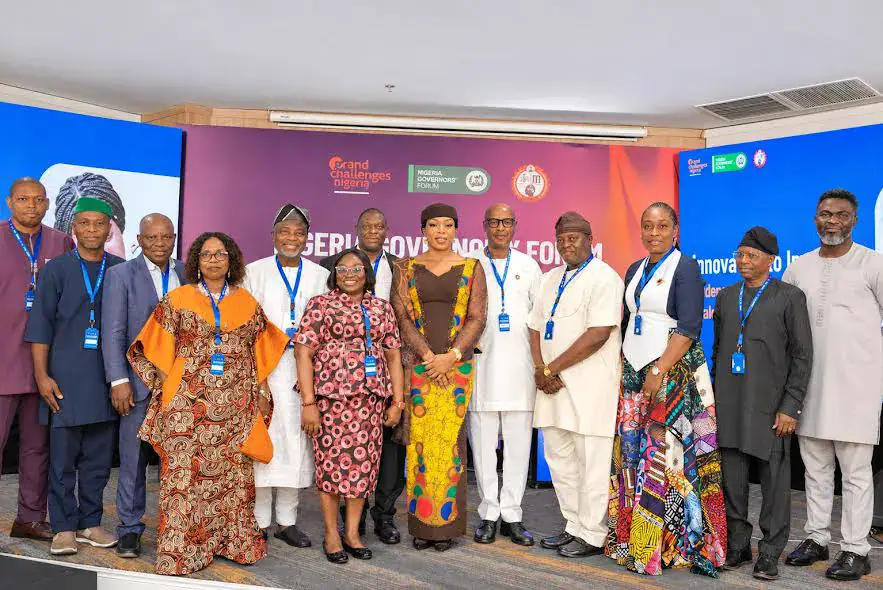
The Nigerian government has taken a significant step towards reducing maternal and newborn mortality rates by partnering with Grand Challenges Nigeria to scale up research and implement locally developed health innovations. Senior Special Assistant to President Bola Tinubu on Public Health, Uju-Rochas Anwukah, emphasized the need for state governments to prioritize health research by adopting and funding innovations that can improve healthcare delivery and save lives. Anwukah made this call at the Nigerian Governors' Forum and Grand Challenges Nigeria Annual Meeting and Innovation Exchange.
Anwukah warned that research findings would be ineffective if they remained on paper without translating into practical interventions that improve healthcare delivery. She urged federal and state governments to demonstrate a stronger commitment to research by providing institutional support, funding, and policy frameworks required to sustain successful innovations. The presidential aide disclosed that 10 Nigerian-led projects had received seed funding of up to N60 million each from Grand Challenges Nigeria since its inception.
The meeting brought together stakeholders to review locally driven healthcare innovations and explore strategies for scaling up successful interventions. Anwukah identified credible evidence, institutional ownership, adequately equipped frontline health workers, and sustainable financing as critical requirements for scaling up promising healthcare innovations. She urged governments and development partners to make concrete commitments on the innovations they intend to adopt, specifying implementation timelines and responsible officials.
Vice-President Kashim Shettima launched the Grand Challenges Nigeria initiative at the State House two years ago, making Nigeria the seventh African country to join the network. Anwukah stressed that investment in healthcare must begin with mothers and newborn children, as a healthy start remains fundamental to human capital development and national productivity. She cautioned that healthcare interventions that collapse immediately after the expiration of donor grants should not be regarded as successful.
Alem Hadera Abay, Senior Programme Officer, Nutrition at the Gates Foundation, described maternal and child health as critical areas requiring urgent intervention. Abay noted that the foundation is working to support Nigeria's efforts to reduce maternal and child mortality rates. The Gates Foundation's involvement highlights the need for partnerships between governments, development partners, and local stakeholders to address the country's health challenges.
Anwukah emphasized the need for a collaborative approach to implement and sustain successful health innovations. She called on governments, development partners, and local stakeholders to work together to ensure that promising ideas are translated into practical interventions that improve healthcare delivery. The presidential aide expressed hope that the meeting would lead to concrete commitments and tangible progress in reducing maternal and newborn mortality rates.
The Nigerian government faces significant challenges in addressing the country's high maternal and newborn mortality rates. However, the partnership with Grand Challenges Nigeria and the involvement of development partners like the Gates Foundation offer a promising approach to addressing these challenges. With a focus on locally driven innovations and sustainable financing, Nigeria may be able to make progress in reducing maternal and newborn mortality rates and improving healthcare delivery.
Key points
- The Nigerian government has partnered with Grand Challenges Nigeria to scale up research and implement locally developed health innovations to combat high maternal and newborn mortality rates.
- The government has urged state governments to prioritize health research by adopting and funding locally developed innovations capable of reducing maternal and newborn mortality.
- The partnership aims to translate research findings into practical interventions that improve healthcare delivery and save lives, particularly those of women and newborn children.