Nigeria is grappling with a deep-seated governance crisis, which columnist Donald Ikenna Ofoegbu attributes to the country's leadership. The character of a leader sets the tone for the institutions they control, influencing the conduct of subordinates and shaping societal norms. When leadership is corrupt, violent, or dishonest, these behaviours spread downwards, permeating the system. This crisis is not just about individual misconduct but also about the signals sent from the top, which communicate that power is above accountability.
The data reflects the severity of Nigeria's corruption problem. In Transparency International's 2024 Corruption Perceptions Index, Nigeria scored 26 out of 100 and ranked 140th out of 180 countries, falling below the sub-Saharan African average of 33. The 2023 Nigeria Corruption Survey estimated that approximately 87 million bribes were paid to public officials, with cash bribes valued at around ₦721 billion, roughly 0.35 per cent of Nigeria's GDP. These figures demonstrate how corruption has become a system of incentives and protection.
The survey's findings should not be seen as evidence that Nigerians are inherently corrupt but rather as a result of navigating institutions where informal payments and personal connections determine access to public services. When citizens encounter corrupt practices, they may resort to petty extortion as their share of the system. Leadership, therefore, plays a crucial role in multiplying either integrity or corruption. The negative multiplier effect is also visible in elections, where political leadership often speaks the language of war rather than democratic service.
Elections in Nigeria are frequently described as "battles" where political territories must be "captured" and opponents "crushed." This inflammatory language establishes permission for violent actions, leading to a familiar chain of events: political leaders use aggressive rhetoric, party operatives recruit enforcers, and thugs intimidate voters and disrupt polling. During the 2023 general elections, observer groups documented killings, physical attacks, and voter intimidation, with Kimpact Development Initiative reporting 238 incidents of election-related violence and 24 deaths.
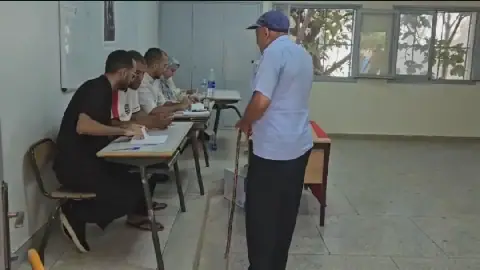
The consequences of this violence are far-reaching, with only about 26.7 per cent of registered voters participating in the 2023 presidential election, the lowest turnout since 1999. Logistics, distrust, and voter-registration problems contributed to this decline, but fear and the expectation of violence also played a significant role. As the 2027 elections approach, there are already reports of local government chairmen and political party officials threatening citizens, from forceful eviction of voters who support opposition parties to chasing people for not backing their candidates.
The use of force during elections does not disappear after results are announced, as those recruited to intimidate opponents are rarely demobilised, and weapons remain in circulation. Political thugs become instruments for extortion, cult violence, and other crimes. A leader who benefits from violence becomes morally and politically constrained from confronting its perpetrators, creating a system of mutual dependence between formal political authority and informal violence.
The consequences also affect public institutions, as officials who know that leaders gained or retained power through violence or manipulation may prioritise political loyalty over professional rules. Civil servants may falsify records, procurement officers may favour connected companies, and security personnel may enforce partisan interests. To address these challenges, Nigeria needs to re-evaluate its leadership and the signals it sends to the public.
Key points
- Corruption in Nigeria is driven by a system of incentives and protection.
- The country's governance crisis is linked to negative leadership.
- Electoral violence and intimidation have contributed to low voter turnout.