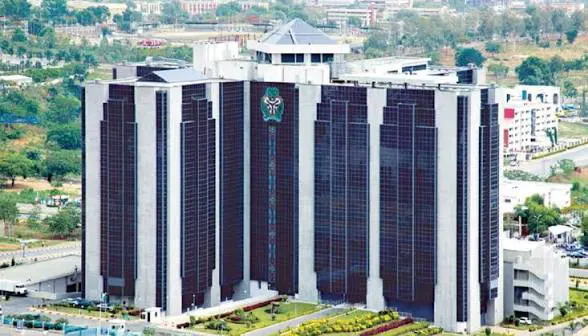
Nigeria's external reserves have experienced a significant boost, climbing by $9.29 billion in the first nine months of 2026. This substantial increase, which is more than seven times the gain recorded during the same period in 2025, has strengthened the country's foreign-exchange buffer. According to data from the Central Bank of Nigeria (CBN), reserves rose from $45.57 billion on January 2 to $54.86 billion on September 24.
The growth in reserves has been steady, with notable milestones achieved throughout the year. Reserves crossed the $50 billion mark on June 4 and reached $51.92 billion by August 12. The stock continued to rise, surpassing $53 billion on August 24, and then $54.08 billion on September 3. By September 10, reserves had reached $54.41 billion, increasing further to $54.69 billion on September 17 and $54.86 billion a week later.
This development is attributed to improved foreign-exchange liquidity and stronger capital inflows. National Bureau of Statistics data show that Nigeria recorded $10.37 billion in capital importation in the first quarter of 2026, a significant increase from $5.64 billion in the corresponding period of 2025. Foreign portfolio investment accounted for a substantial portion of these inflows.
Analysts believe that the stronger reserve position provides the CBN with a larger buffer for managing external shocks and foreign-exchange market pressures. Olumide Adesina, an economist and financial analyst, noted that rising reserves could improve confidence in the naira by strengthening the country's capacity to meet legitimate foreign-exchange obligations and absorb temporary external shocks.
However, Adesina also cautioned that the quality and sustainability of the reserve accumulation are crucial, particularly where inflows are driven by portfolio funds rather than stable export earnings or long-term investment. Ayo Akinwumi, another analyst, stated that the reserve growth provides greater room for the CBN to manage volatility in the foreign-exchange market but does not necessarily indicate that underlying external vulnerabilities have disappeared.
Akinwumi emphasized that sustained improvement would require stronger non-oil exports, stable crude-oil receipts, higher remittance inflows, and continued investor confidence. The CBN had projected that reserves would reach $51.04 billion by the end of 2026, based partly on expectations of stronger oil earnings, sovereign borrowing, diaspora remittances, and improved foreign-exchange conditions.
The stronger external position coincides with recent efforts by the apex bank to stabilize monetary and foreign-exchange conditions. At its September 21–22 meeting, the CBN reset the Monetary Policy Rate to 23 percent from 26.5 percent while retaining the Cash Reserve Ratio for deposit money banks at 45 percent. This move aims to maintain stability in the financial markets and support the country's economic growth.
Key points
- Nigeria's foreign reserves have reached $54.86 billion, exceeding the CBN's 2026 projection of $51.04 billion.
- The growth in reserves is attributed to improved foreign-exchange liquidity and stronger capital inflows.
- Analysts emphasize the need for sustained improvement through stronger non-oil exports, stable crude-oil receipts, and continued investor confidence.