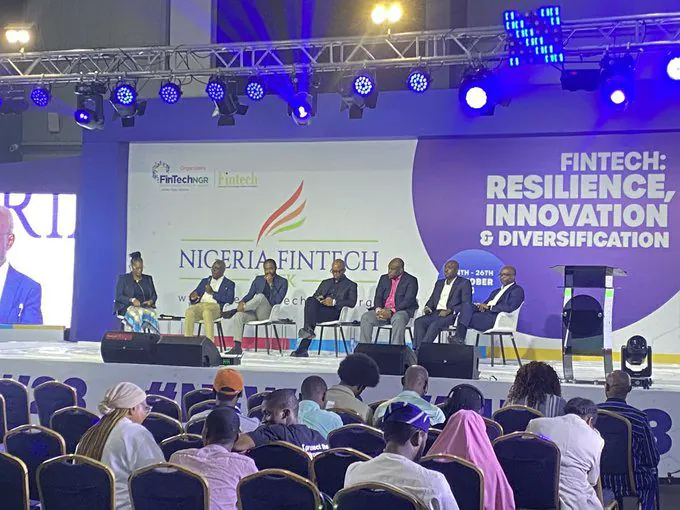
Nigeria's fintech leaders are pushing artificial intelligence, skills development, and trust to the centre of the industry's next growth phase. The sector is moving beyond payments to become a broader layer of Nigeria's economic infrastructure. Industry leaders made this call at the Nigeria Fintech Week 2026 in Lagos, emphasizing that the next stage of digital finance will depend on technological innovation, secure systems, talent development, and consumer trust.
The fintech ecosystem in Nigeria has evolved rapidly from mobile money and agency banking to payment gateways, super apps, and embedded finance. Stanley Jacobs, president of the Fintech Association of Nigeria, said the industry must focus on building institutional trust and security, unlocking next-generation AI and skills, and ensuring financial inclusion and cross-border integration. Segun Aina, chairman of the association's Board of Trustees, emphasized that innovation should respond to real economic problems and improve people's lives.
The growing role of AI is creating a new skills requirement for Nigeria's fintech ecosystem. Industry leaders argue that technology adoption alone will not determine whether Nigerian companies can compete in the next phase of digital finance. The country will also need people capable of developing, deploying, and governing emerging technologies. Jacobs said the industry's focus includes unlocking next-generation AI and skills, alongside institutional trust and security.
The emphasis on skills comes as Nigerian fintech companies increasingly look beyond the domestic market. According to the Central Bank of Nigeria's 2026 Fintech Report, 62.5 percent of surveyed fintech firms plan regional expansion. This expansion could increase demand for technology workers with expertise in AI, cybersecurity, data management, digital payments, and regulatory compliance.
The industry's evolution is changing the role of fintech in Nigeria's economy. Ganiu Oseni, special adviser to the Lagos State governor on technology, broadband, and innovation, said Nigeria has reached a point where the question is no longer whether digital finance will exist. The focus is now on building on top of the digital infrastructure, capabilities, and behaviours created by the fintech ecosystem.
Trust becomes critical as the expansion of data-driven finance increases the importance of consumer protection and trust. Aina said customers must have confidence that their money, information, and transactions are protected. Oseni warned that the growing use of financial and business data must be accompanied by safeguards, including data protection and automated decision-making safeguards.
Lagos is positioning itself around the wider digital transformation of government and business. The Lagos State Digital Service Portal provides access to over 300 public services, and the state is working on the Lagos State Innovation Bill to establish a legislative framework for innovation, startups, infrastructure, and stakeholder participation. The state is also developing a framework for responsible AI adoption through its Generative AI Governance Assessment Platform.
Key points
- Nigeria's fintech industry is shifting focus to AI, skills development, and trust as it evolves beyond payments.
- The industry's growth is driven by the need for secure systems, talent development, and consumer trust.
- Lagos is positioning itself for a broader digital transformation of government and business.