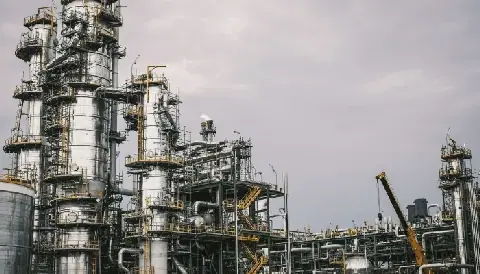
Nigeria's energy landscape has become increasingly reliant on the Dangote Refinery, owned by billionaire Aliko Dangote, as a solution to the country's downstream vulnerabilities. The refinery, located in Lekki, Lagos, has become an economic shrine, with millions of Nigerians treating it as a symbol of hope for affordable fuel and stable pricing. However, experts argue that a single private asset cannot substitute for sovereign institution-building, highlighting the need for a more sustainable infrastructure. The Dangote Refinery's influence on fuel pricing has significant implications for the country's economy and citizens.
The Nigerian National Petroleum Company Limited (NNPCL) has reported an impressive net profit after tax of N2.28 trillion off historic revenues of N19.04 trillion in the first half of 2026. However, despite this corporate shining, certain functional anxieties persist, including issues regarding refinery capacity utilisation, domestic fuel pricing politics, and the lack of full automated Supervisory Control and Data Acquisition (SCADA) metering across pipeline nodes. These systemic flaws raise concerns about the corporation's internal accounting mechanisms and the need for greater transparency.
President Bola Tinubu's administration has taken steps to professionalise the NNPCL, including the appointment of Bashir Bayo Ojulari as the Group Chief Executive Officer. The administration has also mandated that all net oil and gas revenues, royalties, and taxes flow directly into the Federation Account, decoupling the NNPCL from its role as an autonomous middleman. This move aims to prevent the corporation from slipping down the path of systemic gaming and ensure greater accountability.
To prevent independent marketers and state executives from out-maneuvering the directive, Nigeria must automate its institutional mechanisms. The country has made multi-billion-dollar infrastructure and financing arrangements with global energy partners, but these agreements have often served as an incubator for systemic leakage. To prevent these newly minted pacts from being exploited, every deal signed must be bound by the Petroleum Industry Act (PIA), requiring co-signing and oversight by independent regulators.
The Tinubu administration can study successful oil-producing nations that have tamed their national oil corporations to serve the citizenry. Saudi Aramco, for instance, erected a rigid, impenetrable wall between the company's technical operations and the political establishment, subjecting contracts to meritorious, international competitive bidding. Norway achieved fiscal transparency by listing state-owned Equinor on public stock exchanges, retaining a majority stake while forcing the company to comply with the uncompromising standards of public companies.
The NNPCL's vulnerability to allegations of opaque asset valuations and push-back from internal stakeholders raises concerns about its preparedness for a transparent Initial Public Offering (IPO). The corporation's internal accounting mechanisms must be transparent and accountable to ensure that its historic revenues and net profits are not tainted by allegations of corruption. The administration must ensure that the NNPCL is truly prepared for an IPO or has not resorted to frantic corporate varnishing to protect constituted political interests.
Ultimately, Nigeria's energy sector requires a balanced approach that leverages private investment while strengthening state institutions. The Dangote Refinery's significant impact on fuel pricing is undeniable, but it is crucial to address the systemic flaws in the NNPCL and ensure that the country's energy sector serves the citizenry, rather than a select few. By automating institutional mechanisms, implementing transparent accounting practices, and studying successful international models, Nigeria can create a more sustainable energy sector that benefits all its citizens.
Key points
- The Dangote Refinery has become an economic shrine in Nigeria, symbolizing hope for affordable fuel and stable pricing.
- The Nigerian National Petroleum Company Limited (NNPCL) has reported an impressive net profit, but systemic flaws persist, including issues regarding refinery capacity utilisation and domestic fuel pricing politics.
- The Tinubu administration must balance private investment and state institution-building to create a sustainable energy sector that serves the citizenry.