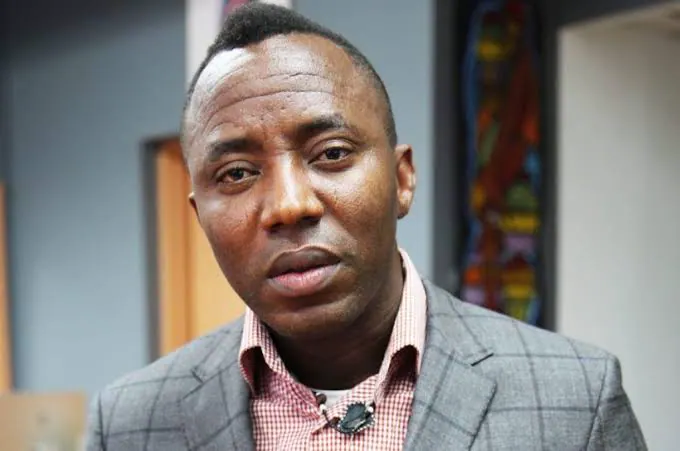
Nigerian politics has long been dominated by two major tendencies, with the PDP ruling for 16 years and the APC taking over in 2015. Despite the change in parties, the fundamental grammar of elite politics has remained remarkably resilient. Many Nigerians have expressed frustration with the current state of politics, seeking change, but the definition of this change remains unclear. This has led to increased scrutiny of politicians like Omoyele Sowore, who has sought the presidency since 2018. Sowore's unconventional approach and outsider status have sparked both interest and skepticism.
Omoyele Sowore, a well-known figure in Nigerian politics, has been a vocal critic of the country's establishment. His political temperament was shaped by his involvement in radical student activism during the late military era. He later founded Sahara Reporters, a platform that has been critical of successive governments. Sowore's presidential ambitions have been met with mixed reactions, with some finding his ideas outlandish and others regarding him as abrasive. Despite this, he remains a significant figure in Nigerian politics, with a dedicated following.
Sowore's 2023 presidential campaign, run on the platform of the African Action Congress, has raised questions about his economic proposals. His suggestion of a N500,000 minimum wage has sparked debate about inflation, productivity, and public revenue. Sowore claims that between N3 trillion and N4 trillion can be recovered by eliminating government waste, and additional revenue can come from unpaid oil royalties and plugging financial leakages. These claims deserve scrutiny, but what is more interesting is the political sociology of his persistent marginality.
One key factor contributing to Sowore's marginality is his lack of symbolic capital. Unlike many Nigerian politicians, Sowore has never held a governorship, ministership, or senatorial position. He also lacks a sprawling business empire that could be seen as a symbol of importance. In a political culture where wealth and office are often mistaken for substance, this is a significant handicap. Furthermore, Sowore's conception of political experience differs from the conventional understanding, which often prioritizes proximity to power over actual accomplishments.
Another crucial factor is Sowore's absence of a primordial constituency. Successful Nigerian politicians often have an ethnic, regional, or religious home base that serves as a foundation for their political support. Sowore, however, does not organize his politics around ethnic ownership, and his ancestry is not closely tied to a specific ethnic group. His Christian background also does not play a significant role in his politics. This makes it challenging for him to mobilize support based on primordial identities.
Sowore's natural constituency consists of people who understand themselves through their experience of exclusion, economic deprivation, or abuse of state power. However, class and subaltern identities often lose out to primordial ones in Nigerian politics. This has made it difficult for Sowore to gain widespread support, despite his efforts to challenge the status quo. The question remains as to whether Nigerians will continue to seek change through conventional means or if alternative voices like Sowore will gain traction.
As Nigeria continues to experiment with its political establishment, the case of Omoyele Sowore serves as a reminder of the complexities of the country's politics. With his persistent marginality and unconventional approach, Sowore has sparked a necessary conversation about what constitutes change in Nigerian politics. Ultimately, it is up to Nigerians to decide whether they want to continue with the current trajectory or seek alternative paths to change.
Key points
- Omoyele Sowore's presidential ambitions have been met with skepticism due to his lack of symbolic capital and absence of a primordial constituency.
- Sowore's conception of political experience differs from the conventional understanding, prioritizing agitation, organization, and confrontation with authority over proximity to power.
- The case of Omoyele Sowore serves as a reminder of the complexities of Nigerian politics, highlighting the challenges of seeking change in a system dominated by primordial identities.