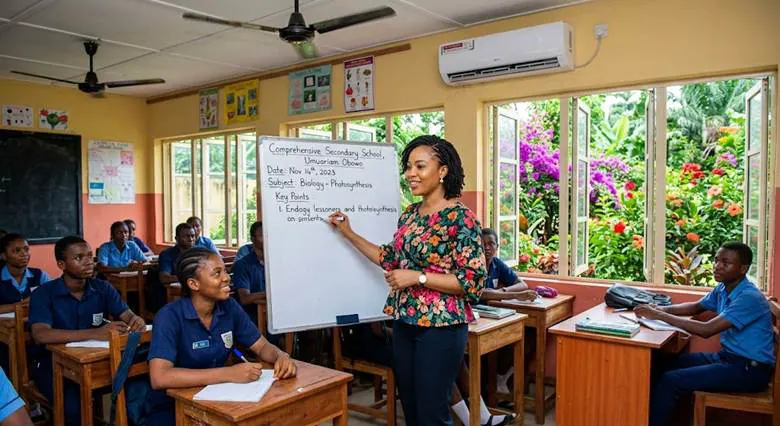
Nigeria's education system is experiencing a profound transformation, driven by the need for practical skills and technological integration. The traditional focus on theoretical knowledge and white-collar career preparation is giving way to a more practical approach, with schools and tertiary institutions incorporating coding, data analytics, and hands-on trade skills into their curricula. This shift aims to bridge the gap between graduate capabilities and industry requirements, equipping young people with self-reliance and immediate employability. As a result, Nigerian students are better prepared to compete in an increasingly competitive market.
The rise of educational technology platforms has democratized access to quality learning resources, particularly for high-stakes national examinations. Mobile applications and digital tools, powered by artificial intelligence and interactive digital content, enable personalized learning experiences, allowing students to learn at their own pace. Hybrid and remote learning models, which gained momentum during global disruptions, continue to offer flexible educational pathways for thousands of learners. This digital shift has expanded access to education, particularly for students in remote or underserved communities.
There is a growing emphasis on Science, Technology, Engineering, Arts, and Mathematics (STEAM) education in Nigeria. Private institutions, non-governmental organizations, and government agencies are promoting critical thinking, creativity, and problem-solving skills among young learners. By incorporating the arts into traditional STEM disciplines, educators are nurturing a generation of innovators capable of tackling complex local issues. This approach aims to equip Nigerian students with the skills needed to drive economic growth and development.
The popularity of micro-credentials and short-term online certifications is increasing in Nigeria. University students and young graduates are pairing their formal education with targeted boot camps and globally recognized certifications in software engineering, digital marketing, and product design. This trend enables young Nigerians to enter the global gig economy quickly, bypassing traditional structural delays. As a result, they are better equipped to compete in the global job market.
The Nigerian government has begun to reflect these changing priorities, with periodic reviews of basic and secondary education curricula aimed at embedding entrepreneurship, digital literacy, and civic education deeper into the instructional fabric. These policy adjustments signal a clear institutional recognition that the future of Nigeria depends on a digitally literate and entrepreneurial populace capable of driving economic diversification. By making these changes, the government aims to equip Nigerian students with the skills needed to drive economic growth.
Despite these prospects, Nigeria's education system faces deep-seated challenges, including a severe digital divide and infrastructure deficit. Millions of children in rural and underserved communities lack basic electricity, functional computer laboratories, or reliable network connectivity. This threatens to exacerbate pre-existing educational inequalities, as urban, affluent students have greater access to high-speed internet, smart devices, and private STEM academies. As a result, the digital divide may widen, perpetuating inequality.
To overcome these challenges, the government must prioritize substantial budgetary allocations to the education sector, approaching or meeting international benchmarks. This funding must be channeled directly into foundational infrastructure, ensuring that schools in both urban and rural areas are equipped with stable electricity, solar power alternatives, and functional internet. Additionally, the government must address the issue of inadequate funding and resource allocation, as well as the need for trained personnel and modern teaching materials.
Key points
- The Nigerian education system is shifting towards practical skills and technological integration.
- The rise of educational technology platforms has expanded access to quality learning resources.
- The government must prioritize budgetary allocations to address infrastructure deficits and promote inclusive education.