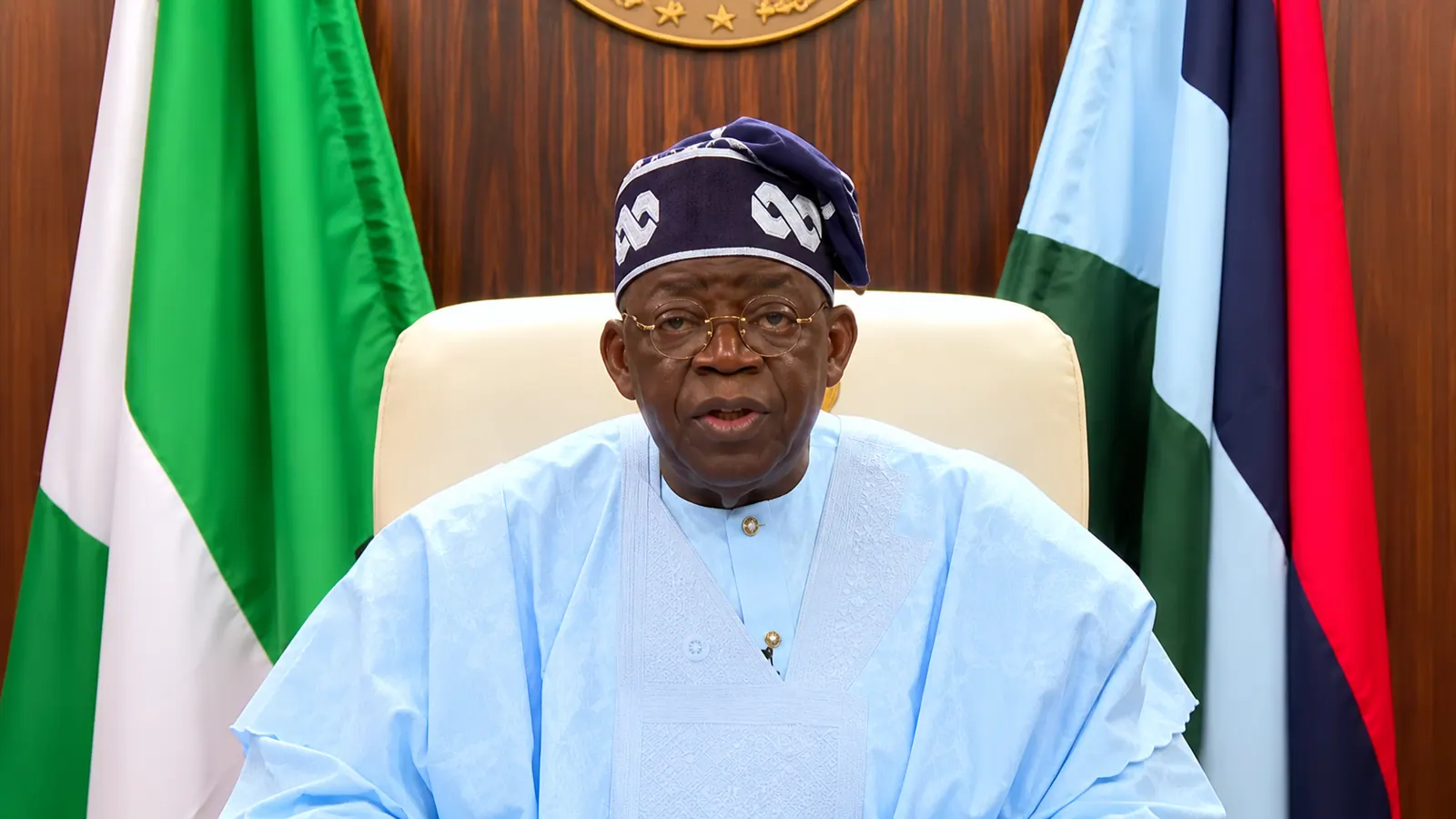
President Bola Tinubu announced that Nigeria's economy grew by more than 4% in 2026, marking a significant milestone in the country's economic recovery. In his Independence Day address, Tinubu stated that both the oil and non-oil sectors contributed to this growth, indicating a renewed period of stable economic expansion. This announcement comes after the National Bureau of Statistics reported a 4.43% year-on-year growth in real Gross Domestic Product in the second quarter of 2026.
The National Bureau of Statistics reported that Nigeria's real GDP grew by 4.43% year-on-year in the second quarter of 2026, up from 3.89% in the first quarter and 4.23% in the corresponding quarter of 2025. This growth brought the first-half growth to about 4.16%, up from 3.68% in the first half of 2025. The non-oil sector accounted for 95.84% of real GDP in the second quarter and grew by 4.31% year-on-year, driven by activities such as agriculture, information and communication, real estate, trade, financial services, manufacturing, and construction.
The services sector remained the largest contributor to output, accounting for 56.62% of real GDP and growing by 4.60% during the quarter. Agriculture, which contributed 26.15% to real GDP, also grew faster, rising 4.39% compared with 2.82% in the second quarter of 2025. The oil sector recorded real growth of 7.31% year on year in the second quarter, although it accounted for only 4.16% of total real GDP. The sector's average daily crude oil production increased to 1.72 million barrels per day in the second quarter, from 1.68 million barrels per day in the corresponding period of 2025.
Nigeria's economy has been gradually recovering from years of weak growth. According to the National Bureau of Statistics, the economy grew by 3.87% in real terms in 2025, up from 3.38% in 2024. The second-quarter 2026 expansion was the strongest quarterly growth recorded since the third quarter of 2024, and the 4.43% growth represented the fastest second-quarter expansion in five years.
Despite the positive growth, analysts have cautioned that the headline growth rate does not necessarily mean that households are experiencing a corresponding improvement in living standards. The Nigeria Employers’ Consultative Association described the second-quarter growth as a positive signal but cautioned that the recovery remained fragile, particularly because businesses continued to face difficult operating conditions.
President Tinubu also highlighted other positive economic indicators, including a decline in oil theft, a fall in inflation from its peak, rebuilt foreign reserves, and a stabilised foreign exchange market. He noted that Nigeria recorded more than $6 billion in non-oil export revenue in 2025, the highest in the country's history, and that foreign direct investment was also increasing.
Tinubu stated that the government's economic priority was shifting from correcting structural weaknesses to generating broader, more sustained prosperity. He outlined plans to reduce the cost of living by lowering the cost of producing and transporting goods, investing in infrastructure, and expanding mechanised irrigation and dry-season farming. The President emphasised that the government would focus on creating jobs, enterprise, and industrial growth, and that economic growth alone would not immediately resolve the hardship faced by millions of Nigerians.
Key points
- Nigeria's economy grew by over 4% in 2026, driven by both oil and non-oil sectors.
- The non-oil sector accounted for 95.84% of real GDP in the second quarter and grew by 4.31% year-on-year.
- President Tinubu announced plans to shift the government's economic priority from reforms to driving broader prosperity.