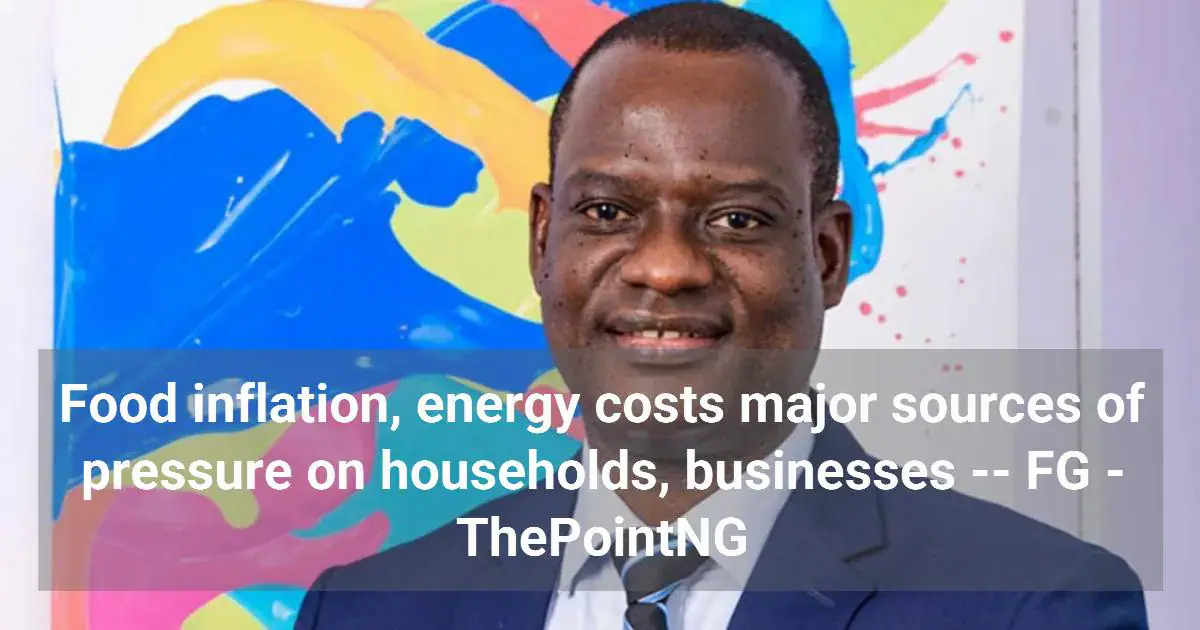
Nigeria's economy sustained its growth momentum in the second quarter of 2026, with a 4.43% expansion in real Gross Domestic Product, an improvement from 4.23% in the same period of 2025. Despite this growth, households and businesses continue to face high living and operating costs. The Minister of Finance and Coordinating Minister of the Economy, Taiwo Oyedele, presented an update on the economy at the 162nd meeting of the National Economic Council.
The country's inflation rate has been moderating, falling for the fifth consecutive month to 14.06% in October 2026, the lowest since September 2020. However, food inflation remains a major concern at 19.13% in October, above the headline inflation rate. Oyedele identified elevated lending rates and energy costs as continuing sources of pressure on businesses and household earnings.
Nigeria's external reserves have strengthened, reaching $54.87bn as of November 12, 2026, reflecting an improvement in the country's external position. The nation's trade surplus nearly doubled from N10.2trn in the first half of 2025 to N20.1trn in the corresponding period of 2026. Net revenue shared among the three tiers of government through the Federation Account Allocation Committee increased by 44% from N15.2trn in 2024 to N21.9trn in 2025.
Despite these positive developments, the benefits of the economic recovery have not translated into adequate relief for ordinary Nigerians and businesses. The Minister noted that improvements in macroeconomic performance have not sufficiently relieved households and businesses, particularly in areas of food prices, electricity costs, access to affordable credit, and employment opportunities.
Vice President Kashim Shettima, Chairman of the National Economic Council, stressed that the durability of the economic reforms introduced by President Bola Tinubu depends on the strength and effectiveness of the country's institutions. He called on federal ministries and state governments to focus on the welfare of citizens affected by government interventions and to establish structures capable of sustaining economic stability.
Shettima urged government institutions at all levels to play their part in consolidating the gains of the reforms, ensuring that policy decisions and administrative responsibilities remain focused on citizens' welfare. He encouraged governments to learn from successful policy approaches in other jurisdictions while respecting differences in capacity and circumstance.
The Tinubu administration has pursued economic policy changes aimed at stabilising the economy, strengthening public finances, and attracting investment. Although international development institutions have described these reforms as bold measures, their implementation has had significant consequences for Nigerians, including higher costs across the economy. The extent to which recent economic gains can improve living standards and ease the financial burden on businesses remains a critical test of the reforms.
Key points
- Food inflation remains a major concern at 19.13% in October 2026.
- Nigeria's economy grew 4.43% in Q2 2026.
- The country's external reserves have strengthened, reaching $54.87bn as of November 12, 2026.