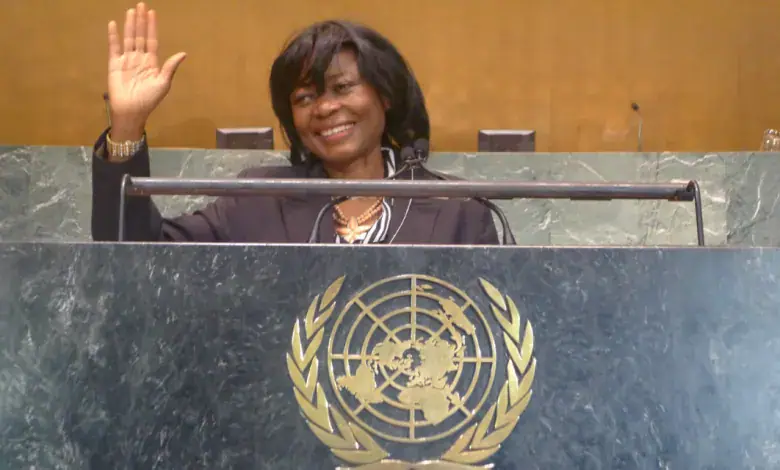
As the international community approaches a crucial moment in electing the tenth Secretary-General of the United Nations, attention is focused on Nigeria and the potential candidacy of Akasoba Zainab Duke-Abiola. Duke-Abiola, a respected international constitutional lawyer, politician, and widow of Nigerian politician and presumed winner of the June 12, 1993 presidential election, Chief M.K.O. Abiola, has become a focal point for advocacy efforts by African policy institutions and global networks seeking greater African representation in world leadership.
The selection process has entered a sensitive phase following eight informal opinion polls by the Security Council, without a formal proposal to the General Assembly. The current Secretary-General, António Guterres, is expected to complete his term on December 31, 2026, and the Security Council is seeking to conclude the succession process before the end of the year. Stakeholders emphasize that Nigeria faces a critical diplomatic decision: whether to seize the remaining opportunity to present a qualified African woman for the highest global leadership position.
Recent diplomatic signals from Washington and Moscow have brought new momentum to the succession debate. The United States has stressed the importance of merit, leadership ability, institutional reform, and performance over geographical or gender considerations. Russia, while acknowledging existing regional rotation preferences, has shown willingness to consider candidates from regions outside South America and the Caribbean if current candidates fail to secure necessary support in the Security Council.
The withdrawal of former Senegalese President Macky Sall has further altered Africa's landscape in the contest, even as Olara Otunnu of Uganda remains among formally nominated candidates, with indicators suggesting the UN is leaning towards a female candidate. In this context, advocates argue that Nigeria can bring a unique African woman's perspective to the selection process, which currently lacks a formally nominated female candidate from the continent.
Stakeholders consulted on the candidacy emphasize that despite growing institutional and international advocacy surrounding Duke-Abiola, one fundamental requirement remains outside her supporters' control: formal nomination by a fully empowered Member State. UN General Assembly Resolution 79/327 explicitly encourages Member States to prioritize the nomination of women, recognizing that no woman has ever held the Secretary-General position since the organization's inception.
Analysts argue that Nigeria, as Africa's most populous country and influential participant in African diplomacy, regional security, peacebuilding, and global governance, has the international stature and historical credentials to present a strong candidacy. The question, they stress, is no longer whether Nigeria has the diplomatic legitimacy to participate but whether it will seize the opportunity before the global selection process concludes.
The case for Duke-Abiola centers on the argument that she brings a multidisciplinary blend of legal scholarship, public administration, strategic leadership, international engagement, and public policy experience that aligns with the responsibilities of the UN Secretary-General. Her supporters believe her candidacy, if properly driven through diplomatic channels, can demonstrate Nigeria's commitment to grounded international engagement and productive global leadership.
Key points
- Duke-Abiola's unique blend of experience in constitutional law, public administration, and international policy makes her a strong contender for the UN Secretary-General post.
Reporting sources
- Iko wapi nafasi ya Mnaigeria Duke-Abiola kiti cha Katibu Mkuu UN? · habarileo.co.tz