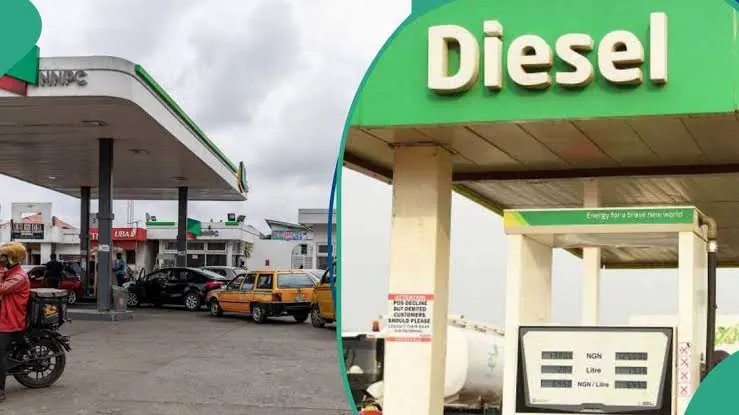
Nigeria has recorded the world's highest diesel price increase between February and August 2026, with pump prices rising by 82.7 per cent, according to the United Nations Conference on Trade and Development (UNCTAD). This finding is part of UNCTAD's Trade and Development Report 2026: The Geoeconomics of Development, released on Friday, October 9, 2026. The report used fuel-price data as of August 31, 2026, for its comparison.
The UNCTAD report shows that Nigeria's diesel increase was followed by Lebanon at 73.6 per cent, Peru at 66.7 per cent, and Guatemala at 66.3 per cent. In contrast, petrol prices in Nigeria rose by 48.1 per cent over the same period, making it the fourth-highest increase among countries and territories covered by the report.
Myanmar recorded the highest petrol-price increase at 50.7 per cent, ahead of the United Arab Emirates at 49.8 per cent and Malaysia at 48.4 per cent. The report highlights that the energy shock was global but its effects were uneven, with developing countries—especially in Asia and Africa—recording the sharpest domestic fuel-price increases.
According to UNCTAD, higher energy costs reduce households' real incomes and constrain consumption. The report linked the surge to damage to energy infrastructure and disruptions to shipments through the Strait of Hormuz, which it described as the largest monthly loss of global energy supply on record.
The report noted that Brent crude rose from about $70 to more than $110 per barrel after the conflict began, and UNCTAD expects prices to remain more than $30 per barrel above pre-conflict levels through the end of 2026. This development could have varying impacts on countries depending on their position in the global energy market.
UNCTAD identified Nigeria, Angola, Guyana, and Kazakhstan as oil and gas exporters positioned to benefit from higher global energy prices. For Nigeria, stronger crude prices could lift export earnings. However, the report cautioned that the benefit could be partly offset where domestic refining capacity is insufficient, because higher refined-product prices raise the cost of imported fuel.
Despite some improvement in Nigeria's refining capacity and a decrease in petrol imports, the country still relies on import licences. A Federal High Court in Abuja recently ordered the Nigerian Midstream and Downstream Petroleum Regulatory Authority to continue issuing import licences to certain companies. Meanwhile, UNCTAD pointed to electric mobility as a longer-term buffer against fuel-price shocks.
Key points
- Nigeria recorded the world's highest diesel price increase of 82.7 per cent between February and August 2026.
- The surge in energy prices is expected to have a lasting impact through the end of 2026.
- Electric mobility could serve as a longer-term solution to reduce dependence on petrol and diesel.