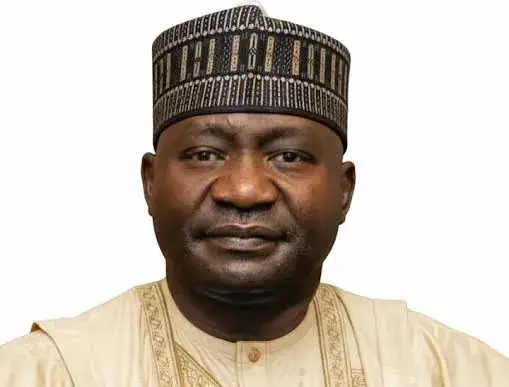
Nigeria's Defence Minister, General Christopher Musa, has advocated for the reintroduction of modernised tollgates on major highways to enhance security and track criminal elements. He described tollgates as critical non-kinetic security infrastructure essential for safeguarding lives and livelihoods. According to the Minister's Special Assistant on Media, Leah Katung-Babatunde, Musa made this call at the Abuja Round Table, a session focused on 'Safe to Farm, Travel and Trade: Protecting Lives and Livelihoods in Every Community.'
General Musa noted that the removal and destruction of tollgates was a strategic mistake. He emphasised that with modern Information and Communications Technology (ICT) and automation, toll collection no longer requires cash transactions. Automated systems can instantly capture vehicle registration numbers, track vehicular movements, and seamlessly trace or apprehend suspects. This, he believes, can help address the country's security challenges.
The Minister highlighted the need for a streamlined, foolproof national identification system to address broader national security challenges. He stressed that integrating unique identification numbers, facial recognition, and biometric data is vital for verifying records and eliminating identity ambiguity. A comprehensive and centralised digital identification architecture, according to Musa, will effectively close security loopholes and enhance real-time intelligence gathering.
General Musa also discussed the role of the military in internal security. He clarified that while the Armed Forces of Nigeria's constitutional mandate is to defend the nation's territorial integrity, the military supports internal security when challenges exceed the police's capacity. However, Musa expressed concern over personnel fatigue resulting from prolonged internal deployments, with troops spending years deployed in regions such as the North-west.
To address this, Musa said active measures are underway to strengthen police recruitment, training, and operational capacity. The goal is to build a robust civil policing system, enabling the military to gradually withdraw and return to barracks. This shift aims to change the national security apparatus from reactive to proactive measures ahead of 2027.
General Musa emphasised that Nigeria's greatest strength lies in its unity. He asserted that the country's primary challenge is not a shortage of resources or firepower but internal divisions and a lack of cohesion among citizens. Musa's proposals aim to address these underlying issues and enhance the country's security infrastructure.
The Defence Minister's call for modernised tollgates and a national identification system is part of a broader effort to enhance Nigeria's security. His proposals have sparked discussions on the need for a comprehensive approach to addressing the country's security challenges.
Key points
- The proposed modernised tollgates would utilise ICT and automation to track vehicular movements and apprehend suspects.
- A national identification system with unique identification numbers, facial recognition, and biometric data is seen as vital for verifying records and eliminating identity ambiguity.
- The military is working to strengthen police recruitment, training, and operational capacity to build a robust civil policing system.