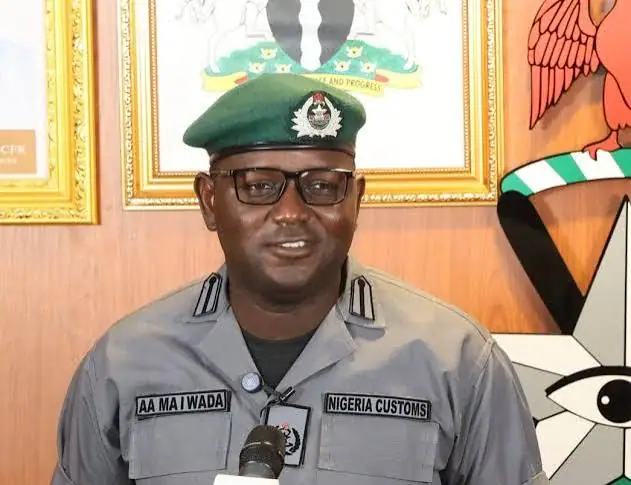
The Nigeria Customs Service has initiated a partnership with six security and regulatory agencies to combat cross-border money laundering, terrorism financing, and other financial crimes. The agencies involved include the Economic and Financial Crimes Commission, the National Drug Law Enforcement Agency, the Nigeria Police Force, and the Nigerian Financial Intelligence Unit. This collaboration aims to strengthen coordinated action against illicit financial flows and criminal networks operating across Nigeria's borders.
The partnership follows a three-day engagement between the Customs Service and the agencies from October 27 to 29, 2026. The exercise was led by Assistant Comptroller-General Muhammad Shuaibu, who emphasized the need for improved coordination among institutions responsible for tackling financial crimes and national security threats. The initiative will examine practical Customs controls at border stations and strengthen cooperation among relevant agencies to effectively detect and disrupt cross-border illicit financial flows.
The engagement comes amid concerns over the use of Nigeria's borders for smuggling, drug trafficking, and movement of illicit funds. Financial crimes and terrorism financing often involve complex networks that cut across different jurisdictions, requiring intelligence from multiple institutions. Customs officers are strategically positioned to identify suspicious trade transactions and movements linked to criminal activities. However, the effectiveness of such interventions depends on the ability of security and financial intelligence agencies to exchange information and act on shared intelligence.
The Chief Executive Officer of the Nigerian Financial Intelligence Unit, represented by Muhammed-Mustapha, commended the Customs Service for its role in border security and efforts to combat smuggling. He described the relationship between both institutions as longstanding, noting that Customs was among the earliest agencies to collaborate with the financial intelligence unit when it was established. The World Customs Organisation mentoring team also participated in the engagements, sharing approaches to combating money laundering and terrorism financing.
Despite the renewed commitment, the discussions exposed some challenges that could undermine the proposed cooperation. Participants identified communication gaps, bureaucratic bottlenecks, and concerns over database privacy as obstacles affecting information sharing among government agencies. The agencies subsequently examined ways to address the problems and improve institutional coordination to ensure that intelligence could be exchanged and acted upon more efficiently.
The engagement featured the presentation of Nigeria Customs Service awards and World Customs Organisation certificates to participating agencies in recognition of their contributions to the initiative. The Customs Service has also taken its modernisation programme to the international stage, showcasing its digital transformation efforts and the deployment of emerging technologies to improve border management and facilitate legitimate trade.
The Nigeria Customs Service presented its reforms at the World Customs Organisation Smart Customs Project Global Event 2026, held in Brussels, Belgium, from October 29 to 30. The Service highlighted its Unified Customs Management System, known as B'Odogwu, alongside its investments in artificial intelligence, data analytics, and electronic cargo tracking. The modernisation programme aims to improve operational efficiency, strengthen risk management, and make trade processes more transparent.
Key points
- The Nigeria Customs Service partners with EFCC, NDLEA, and other agencies to combat cross-border money laundering and terrorism financing.
- The partnership aims to strengthen coordinated action against illicit financial flows and criminal networks operating across Nigeria's borders.
- The Customs Service has also taken its modernisation programme to the international stage, showcasing its digital transformation efforts.