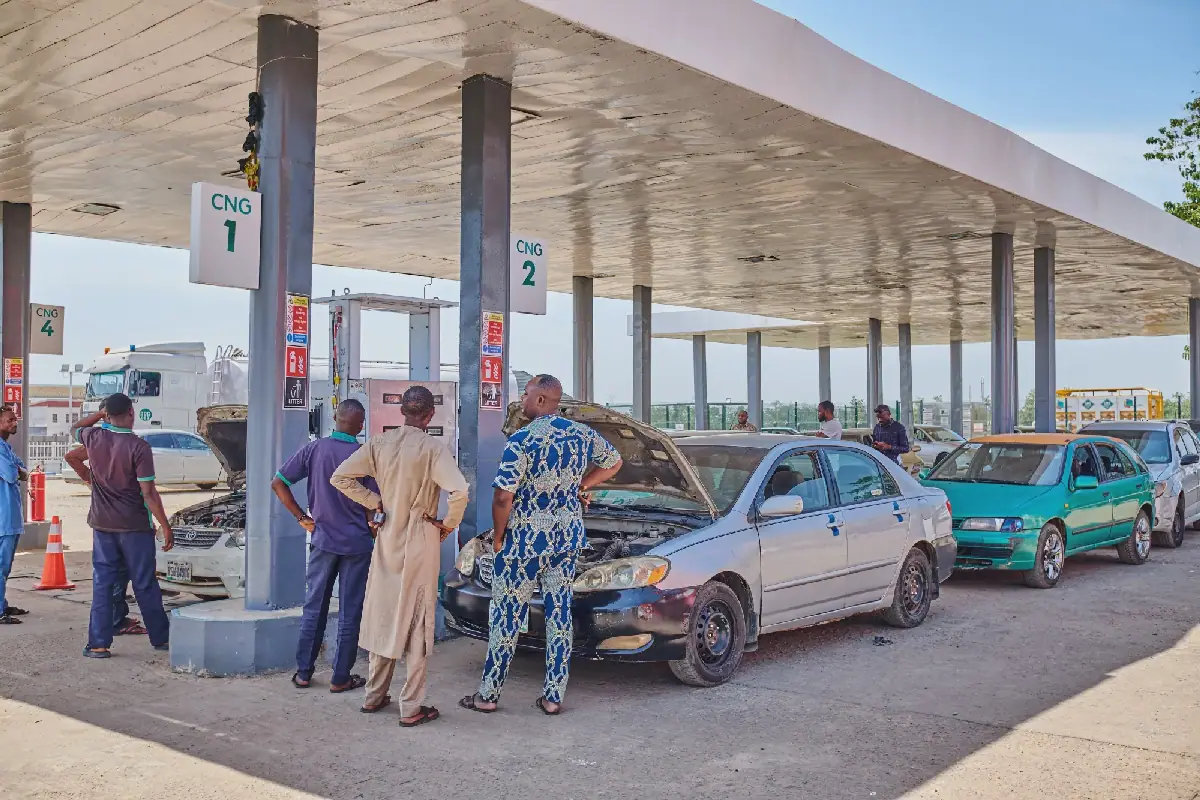
In May 2023, President Bola Ahmed Tinubu removed the petrol subsidy, aiming to redirect public resources towards productive sectors and strengthen the economy. However, this led to an immediate increase in living costs, with transportation becoming a significant challenge for millions of Nigerians. The rising petrol prices affected household incomes, access to education, healthcare, employment, and small businesses, making it difficult for people to manage their daily expenses.
In response to the economic challenges, the Federal Government introduced the Compressed Natural Gas (CNG) initiative as an alternative to petrol-powered transportation. The Presidential CNG Initiative, launched in October 2023, aimed to reduce vehicle operating costs, encourage domestic gas utilization, create employment, and lower transportation fares. Nigeria, with approximately 215 trillion cubic feet of proven natural gas reserves, has the resources to support this transition.
Nearly three years after the program began, the impact of CNG on Nigerian commuters remains limited. While there is evidence that CNG has benefited some vehicle owners and public transport corridors, the majority of Nigerians have not felt the promised relief. The Presidential Initiative on CNG and Electric Vehicles reported that over 140,000 vehicles have been converted, with more than 400 certified conversion centers established nationwide and over $2.5 billion in secured investment.
The initiative's progress is notable, with 105 CNG refueling stations across 24 states and the Federal Capital Territory, up from 61 operational stations in January 2026. However, this expansion highlights the gap between the country's ambition and current infrastructure. At the National CNG Summit in Abuja on November 4, 2026, the Executive Chairman of the Presidential Initiative on CNG and Electric Vehicles, Ahmad Ismael, announced plans to establish 1,000 additional stations.
A critical concern is the geographical distribution of CNG infrastructure, which is not adequately represented in all states. The published register shows that while some states have CNG infrastructure, others remain underrepresented. A resident of a state without a conveniently accessible refueling facility cannot enjoy the economic advantage of CNG simply because a station has been commissioned in another state.
Furthermore, there is a need for a detailed, consolidated, and independently verifiable public inventory of dedicated CNG manufacturing factories operating in Nigeria, their production capacities, and locations. The government must publish this information to clarify the distinction between local manufacturing, gas compression, vehicle conversion, and retail dispensing.
The CNG initiative's success will ultimately be measured by its impact on transportation costs and the overall well-being of Nigerians. While the government continues to work towards expanding the infrastructure and promoting the use of CNG, it is essential to address the existing challenges and ensure that the benefits of the initiative are equitably distributed across the country.
Key points
- The CNG initiative has converted over 140,000 vehicles and established more than 400 certified conversion centers nationwide.
- The initiative aims to establish 1,000 additional CNG refueling stations across Nigeria.
- The geographical distribution of CNG infrastructure remains a significant concern, with many states underrepresented in the current network.
Reporting sources
- What Succour Has CNG Brought? By Alabidun Shuaib AbdulRahman · citizenfm.ng