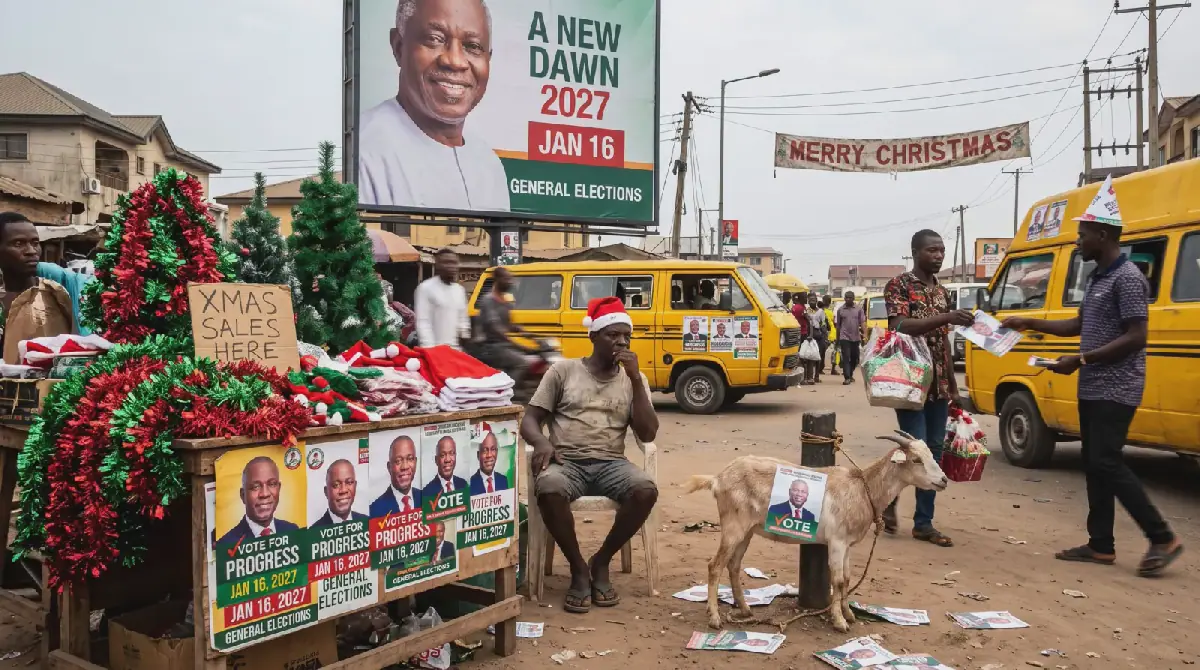
As Christmas approaches in Nigeria, the usual festive atmosphere is noticeably absent. Instead of the typical holiday preparations, Nigerians are bracing for a subdued celebration due to economic hardship and the upcoming 2027 general elections. Concerts and events are still selling out, but the focus has shifted from festivities to campaign rallies and tight budgets. The country's economic woes have taken center stage, with many Nigerians struggling to make ends meet.
The 2027 general elections, scheduled for January 16, have brought campaign activities to a fever pitch, encroaching on the traditional December festivities. With 18 presidential candidates vying for votes, weekends are now dominated by party convoys and stadium rallies, leaving little room for holiday preparations. This has resulted in a decline in consumer spending, with shoppers becoming increasingly cautious with their finances. Traders in major markets, such as Balogun and Oke-Arin, have reported a significant drop in sales.
Olamide Jinadu, a wholesale trader in rice, cooking oil, and other foodstuffs, has been forced to reduce her orders due to decreased demand. She attributes this to customers questioning prices and seeking cheaper alternatives. Jinadu's sales have plummeted, with her current numbers less than half of what she sold in November over the past two years. Even during the COVID-19 pandemic, her business was not as severely impacted. She remains hopeful that sales may pick up closer to Christmas, but the outlook appears bleak.
The economic hardship is further exacerbated by rising food prices. A 50kg bag of imported long-grain rice sells for between N62,000 and N75,000, while local brands cost anywhere from N53,000 to N73,000. The National Bureau of Statistics reported that headline inflation eased to 14.06 per cent in October, but this has not translated to relief in food markets. The Central Bank of Nigeria has warned that the combination of festive spending and election-related cash injections could push prices upwards again.
The foreign exchange market is also feeling the strain, with the naira strengthening to N1,387.89 to the dollar at the official Nigerian Foreign Exchange Market, while parallel-market dealers quote between N1,450 and N1,460. This tug-of-war is affecting regular salary earners, who are exercising financial discipline in anticipation of the post-election disruptions and potential price increases. Corporate hampers and office parties are noticeably lighter this year, a testament to the economic constraints.
Food vendors are also feeling the pinch, with one popular vendor resorting to reducing portion sizes to keep her restaurant afloat. She has had to adjust her business strategy, maintaining quality but reducing quantity, to cope with the decreased demand. The vendor's situation is not unique, with many small businesses struggling to stay afloat amidst the economic hardship.
The confluence of economic hardship and election fever has created a challenging environment for Nigerians as they prepare for Christmas. With the elections scheduled for January 16, 2027, and the festive season already underway, it remains to be seen how the country will navigate this difficult period. One thing is certain, however: Nigerians will be approaching the holiday season with caution and a tight grip on their finances.
Key points
- Economic hardship and election fever are threatening Nigeria's Christmas celebrations.
- The 2027 general elections have brought campaign activities to a fever pitch, encroaching on traditional December festivities.
- Nigerians are bracing for a subdued Christmas celebration due to decreased consumer spending and rising food prices.
Reporting sources
- Elections Fever, Economic Hardship Threaten Nigeria’s Christmas Celebrations · Independent Nigeria