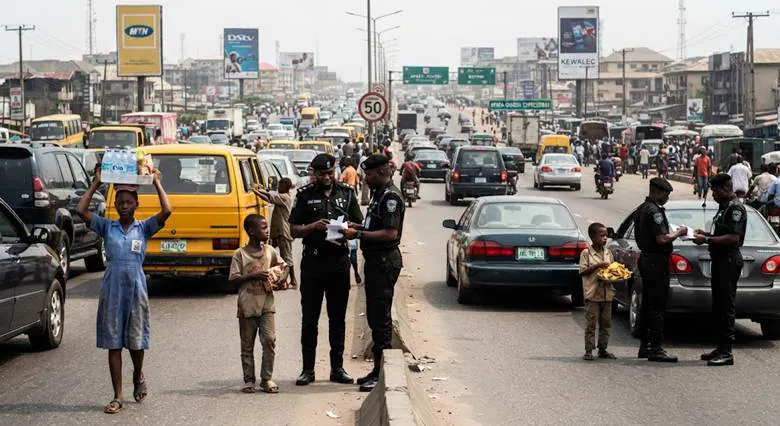
Nigeria is grappling with a disturbing trend of child labour, with millions of children forced to work on streets, in markets, and workshops, instead of attending school. The sight of children hawking goods, selling food and drinks, and carrying heavy loads has become a norm in many parts of the country. Despite being a violation of children's rights, child labour remains a significant challenge in Nigeria, with far-reaching consequences for the children and the nation as a whole.
According to the International Labour Organization and Nigeria's National Bureau of Statistics, about 24.7 million Nigerian children are engaged in child labour, with over 14 million involved in hazardous work. The 2022 National Child Labour Survey also revealed that 35.3 per cent of children aged 5–14 are simultaneously in school and working, while 11.2 per cent are working without being in school. These statistics paint a devastating picture of the state of child labour in Nigeria.
The consequences of child labour are dire, with children exposed to physical harm, exploitation, and abuse. UNICEF reports that about 10.5 million Nigerian children aged 5–14 are out of school, despite primary education being officially free and compulsory. The organization also notes that one in every five of the world's out-of-school children is a Nigerian. The lack of access to education and the prevalence of child labour have severe implications for the future of Nigeria's children and the country as a whole.
The reasons for child labour are complex and multifaceted, with poverty and economic hardship being significant factors. Many families rely on their children's earnings to survive, with school expenses, transportation, and other costs becoming overwhelming. However, compassion for these families must not excuse government inaction. The answer to a poor family's dependence on a child's earnings lies in attacking the poverty that pushed the child onto the street in the first place.
The Nigerian government has taken steps to address child labour, including the validation of the National Child Labour Policy and National Action Plan 2026–2030. The plan aims to reduce hazardous child labour, strengthen institutions, and help children remain in or return to school. Additionally, the World Bank approved $500 million in additional financing in 2025 for HOPE-EDU, an education programme intended to support foundational literacy and numeracy and strengthen school management and education systems.
Despite these efforts, the street continues to fill with children, highlighting the challenges faced by the government in addressing the issue. The argument that "the child is only selling something for a few hours" is dangerously simplistic, as there is no harmless street when a child is supposed to be in school. The economic exploitation of children cannot be regarded as an ordinary feature of urban life, and the government must take decisive action to protect its children.
Ultimately, addressing child labour in Nigeria requires a comprehensive approach that involves government, citizens, and international partners. The government must prioritize education, social protection, and enforcement of child-labour laws, while also addressing the root causes of poverty and economic hardship. By working together, Nigeria can create a safer, more prosperous future for its children and break the cycle of child labour that has held back so many for so long.
Key points
- 24.7 million Nigerian children are engaged in child labour.
- 10.5 million Nigerian children aged 5–14 are out of school.
- The Nigerian government has validated the National Child Labour Policy and National Action Plan 2026–2030 to address the issue.