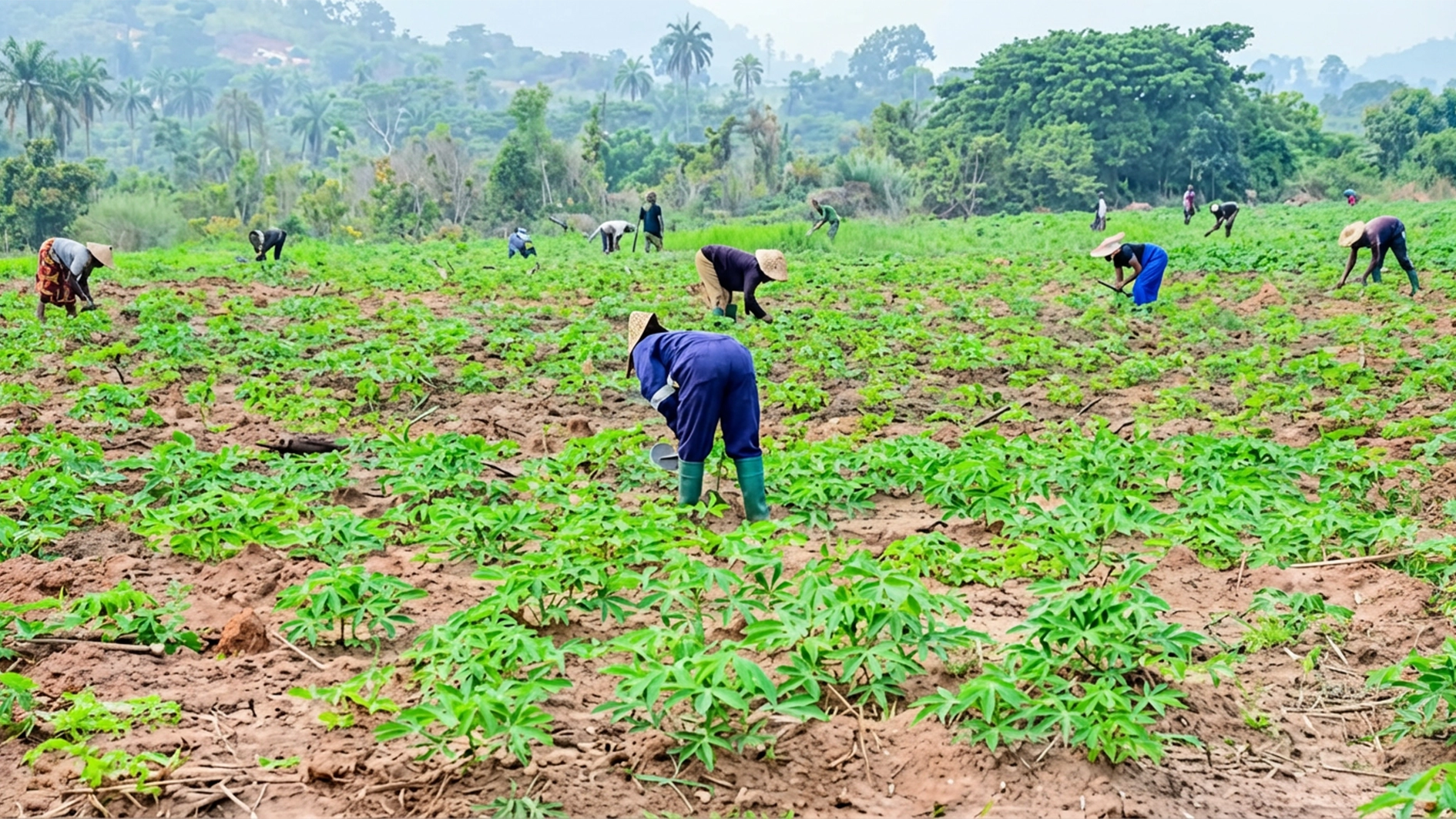
Nigerian farmers are facing significant challenges due to changes in the country's agricultural calendar, caused by unpredictable rainfall patterns and extreme weather events. For decades, farmers have relied on experience passed down through generations to determine when to plant, but changing temperatures and rainfall patterns are disrupting traditional indicators. This has resulted in farmers having to adjust to a new reality, where the familiar sequence of early rains, planting, steady rainfall, harvesting, and the onset of the dry season is becoming less predictable.
The consequences of these changes are being felt most sharply by smallholder farmers who depend largely on rain-fed agriculture. A farmer who plants after an early rainfall may discover that the rains disappear for weeks, leaving seeds and seedlings vulnerable. Another who delays planting in anticipation of more reliable rainfall may face a shortened growing season. Heavy rainfall can also destroy crops that have barely emerged from the soil, leading to significant losses.
Climate change is not eliminating Nigeria's wet and dry seasons, but it is altering the conditions under which farmers have traditionally operated. The uncertainty is transforming farming from a practice governed by familiar seasonal patterns into one requiring constant adjustment. This has significant implications for food production and the livelihoods of farmers who depend on agriculture.
Insecurity is another major challenge facing farmers in Nigeria. Suspected bandits have attacked farmers working on farmlands in various parts of the country, killing and abducting people. In June 2026, four farmers were killed and 12 abducted in Sokoto State, while in July, at least 23 farmers were killed in Zamfara State. These attacks have forced many farmers to abandon their fields or prevented them from accessing their farms due to fear of attacks, kidnapping, or violence.
The impact of insecurity on food production cannot be overstated. When farmers are unable to cultivate their land during the planting season, it means more than a missed opportunity; it translates into lost income, reduced food production, and further pressure on an already strained food supply. In some farming communities, insecurity has forced farmers to abandon their fields, while others are unable to travel to farms for fear of attacks.
Experts have warned that the situation is having a devastating impact on food production and security. A Principal Consultant at Greenfield Agroallied Consult and Farming Systems Limited, Durojaiye Olusegun Philip, said climate change has significantly disrupted Nigeria's agricultural calendar, with erratic rainfall, rising temperatures, and prolonged dry spells contributing to crop failures, food inflation, and growing food insecurity.
To address the challenges facing farmers, Philip called for a comprehensive assessment of agricultural losses, covering the entire agricultural value chain. He said losses should not be attributed solely to post-harvest waste, as farmers also suffer losses when crops fail on the field due to excessive heat, inadequate rainfall, or prolonged dry spells. The assessment should also cover losses from planting through harvesting, sorting, transportation, storage, and processing.
Key points
- Insecurity is preventing some farmers from participating in the agricultural calendar.
- Climate change is disrupting traditional farming practices in Nigeria.
- Unpredictable rainfall patterns are affecting food production in Nigeria.