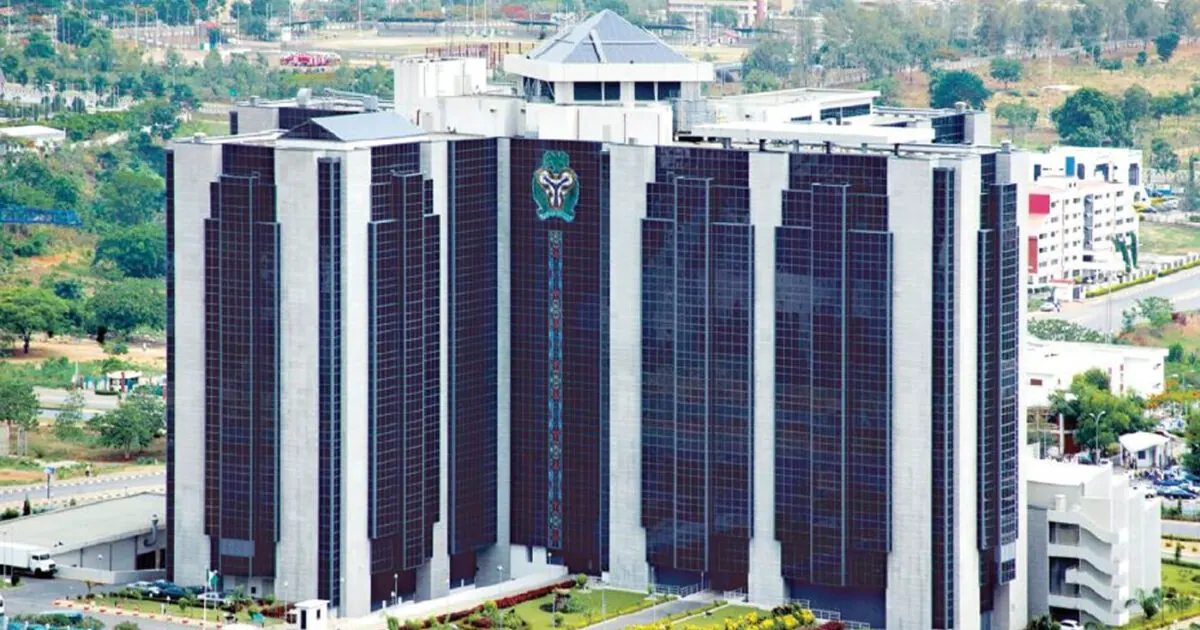
The Central Bank of Nigeria has reduced the benchmark interest rate by 350 basis points to 23 per cent from 26.5 per cent, as announced by CBN Governor, Olayemi Cardoso, at the end of the Monetary Policy Committee's 307th meeting in Abuja. This decision marks a significant shift in the country's monetary policy, aimed at improving access to credit for businesses and stimulating economic growth. The rate cut follows two consecutive holds at 26.5 per cent in May and July.
The Monetary Policy Committee also recalibrated the standing facilities corridor to +50/-300 basis points around the Monetary Policy Rate, while retaining the Cash Reserve Requirement for deposit money banks at 45 per cent, merchant banks at 16 per cent, and non-Treasury Single Account public sector deposits at 75 per cent. According to Cardoso, the decision should not be interpreted as a shift to monetary easing but rather as an operational adjustment intended to improve monetary policy transmission. The committee aims to restore the Monetary Policy Rate as the principal signal of monetary policy.
Organised Private Sector leaders have demanded that commercial banks pass on the benefits of the Central Bank of Nigeria's interest rate cut to borrowers, warning that the reduction in the benchmark rate alone would not solve the country's financing challenge. They called for lower lending rates and other measures to improve access to credit for businesses. The private sector leaders emphasized that the rate cut is a step in the right direction but urged banks to make credit more accessible and affordable for businesses.
The rate cut comes on the back of improved macroeconomic conditions, including a significant increase in Nigeria's gross external reserves, which stood at $55.25bn as of September 18, 2026, their highest level in 18 years. This is sufficient to finance about 11.3 months of imports of goods and services. The balance of payments surplus also increased to $3.51bn in the second quarter from $2.38bn in the first quarter, while the current account surplus jumped by 67.92 per cent to $7.54bn from $4.49bn.
Cardoso attributed part of the stronger external buffers to increased diaspora remittances, which have risen from about $200m when the CBN intensified its reforms to almost $1bn by July. The reforms include expanding access to Bank Verification Numbers for Nigerians abroad, strengthening oversight of International Money Transfer Operators, and requiring dedicated settlement accounts. The CBN is optimistic that remittances will continue to support the country's external position.
The Monetary Policy Committee also noted that headline inflation eased to 15.39 per cent in August from 15.43 per cent in July, marking a third consecutive monthly decline. Food inflation fell to 19.57 per cent from 20.31 per cent, while core inflation moderated to 13.29 per cent from 14.97 per cent. The committee expects inflation to moderate further in the short to medium term, supported by foreign exchange stability, the lagged effects of previous tightening, and improved food supply during the harvest season.
The CBN is prepared to contain excess liquidity as Nigeria approaches another election cycle, with Cardoso stating that the bank has analysed previous election cycles and developed different scenarios. The CBN will monitor currency in circulation, banking system liquidity, monetary aggregates, and foreign exchange demand, and will proactively deploy tools and instruments to mop up any excess liquidity. The governor also encouraged greater use of electronic payments, noting that digital transactions improve transparency and leave an audit trail.
Key points
- The Central Bank of Nigeria has cut the benchmark interest rate to 23% from 26.5% to improve access to credit for businesses and stimulate economic growth.
- The rate cut follows improved macroeconomic conditions, including increased diaspora remittances and a significant increase in Nigeria's gross external reserves.
- The CBN is prepared to contain excess liquidity as Nigeria approaches another election cycle and will monitor currency in circulation and banking system liquidity.