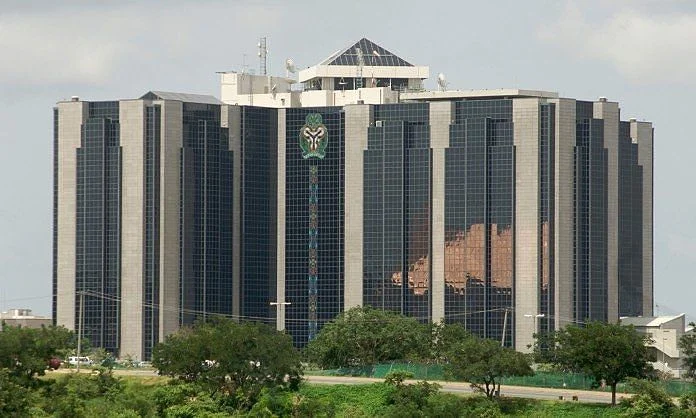
The Central Bank of Nigeria (CBN) has reduced the Monetary Policy Rate (MPR) from 26.5% to 23%, the lowest level in 20 years, in a move aimed at stimulating economic growth. The rate cut was announced after the CBN's Monetary Policy Committee meeting on September 21-22. The committee also narrowed the standing-facilities corridor to +50/-300 basis points and kept the Cash Reserve Requirement at 45% for deposit money banks. This decision is expected to have a positive impact on the economy, particularly for businesses and individuals seeking loans.
The CBN's decision to cut the interest rate is significant, but the more important question is how much of that reduction will pass through to credit prices. For entrepreneurs confronting bank loans priced at up to 45%, the CBN's calculations may remain largely academic. The central paradox is that the Bank has reduced the price of its policy signal without necessarily reducing the price businesses actually pay for loans. Governor Olayemi Cardoso has described the decision as a "reset" and "recalibration," rather than conventional monetary easing.
The CBN's own data explain the decision, with the Nigerian Overnight Financing Rate, which the Bank wants to establish as the transaction-based operational reference rate, around 22% immediately before the announcement. The old 26.5% MPR had increasingly become disconnected from actual money-market conditions. Cardoso was therefore partly correcting a monetary-policy signalling problem. The MPR had become a number that said one thing while the money market said another.
There is also a credible macroeconomic case for the move, with headline inflation at 15.39% in August, while real GDP growth accelerated to 4.43% in the second quarter from 3.89% in the first. External reserves of $55.25 billion represented an 18-year high and approximately 11.3 months of import cover. The balance-of-payments surplus rose to $3.51 billion in Q2 from $2.38 billion in the first, while the current-account surplus increased to $7.54 billion.
However, monetary policy is ultimately judged not by the details of its announcement, but by its transmission into the economy. Less than a week after the rate cut, reports indicated that commercial lending rates remained between 20% and 46%, depending on borrower risk, funding costs and individual bank pricing. Some banks were still reviewing their loan books through their asset-liability committees before deciding whether to reprice credit.
The trade-off for maintaining the reserve requirement is that banks must earn sufficient returns from a smaller pool of lendable funds to cover funding costs, capital requirements, operating expenses, credit losses and shareholder expectations. The elephant in the room, however, is aggressive government borrowing, with FGN bond allotments rising by 106% to N7.15 trillion in the first nine months of 2026 compared with N3.48 trillion in the year-ago period.
Nigeria therefore faces a peculiar policy contradiction, with the government wanting banks to finance productive businesses, but it is itself a major competitor for available domestic savings. Until fiscal borrowing becomes less aggressive and government securities cease to offer such compelling risk-adjusted returns, monetary policy alone cannot solve the private-sector credit problem. Nigeria's risk premium is another challenge and is becoming an economic tax, with lenders facing power shortages, insecurity, weak infrastructure, exchange-rate volatility, uncertain collateral recovery, elevated default risk and expensive technology and branch networks.
Key points
- The CBN's decision to cut the interest rate aims to stimulate economic growth.
- The rate cut may not necessarily lead to a reduction in credit prices for businesses.
- Aggressive government borrowing is a major challenge to monetary policy transmission.