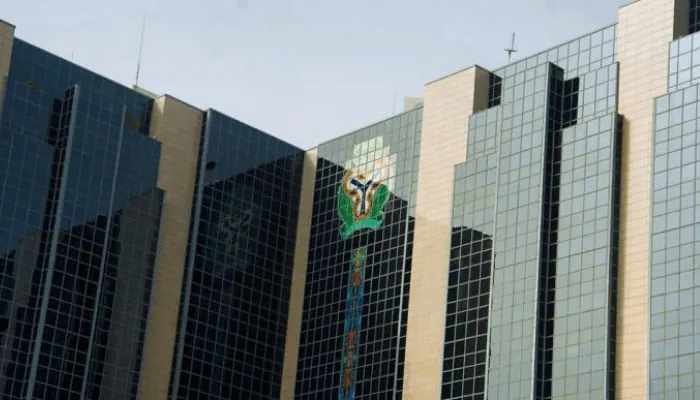
The Financial Markets Dealers Association (FMDA) has projected that Nigeria's banking system will receive an estimated N13.25 trillion in liquidity inflows in October. This represents a 14.82 percent decrease from the N15.56 trillion estimated for September. The expected inflows are attributed to various financial instruments, including OMO maturities, Treasury bill maturities, and Federal Government of Nigeria bond coupons.
OMO maturities are expected to account for the largest portion of the October inflows, estimated at N9.05 trillion, down from N11.60 trillion in September. Additionally, Treasury bill maturities are projected at N1.22 trillion, while Federal Government of Nigeria bond coupons are expected to provide N434.16 billion. The banking system is also expected to receive N23.32 billion from corporate bond coupons and N18.84 billion from commercial paper maturities.
The expected liquidity inflows come amid the Central Bank of Nigeria's (CBN) continued aggressive liquidity management. In September, system liquidity rose marginally by 1.14 percent to N4.703 trillion from N4.65 trillion in August. However, liquidity conditions remained volatile during the month, reaching about N8.84 trillion following Federation Account Allocation Committee (FAAC) inflows before moderating due to cash reserve requirement (CRR) debits, OMO sterilisation, and primary-market issuances.
The CBN sterilised N17.51 trillion through OMO operations during September, helping to offset a significant portion of the liquidity entering the financial system. The FMDA noted that October's projected N13.25 trillion inflow was about 14.82 percent lower than the N15.56 trillion estimated for September, with OMO maturities expected to account for a significant share.
The liquidity outlook follows the CBN's decision in September to cut the Monetary Policy Rate by 350 basis points to 23 percent from 26.5 percent. Following the rate cut, the Overnight Funding Rate declined 9.09 percent to 20 percent, while the overnight rate fell 7.86 percent to 20.39 percent. The easing in monetary conditions was also reflected in the fixed-income market, where the average Treasury bill yield fell by 147 basis points to 17.74 percent in September.
FAAC distributions to the federal, state, and local governments are estimated at N2.5 trillion in October, compared with N2.34 trillion actually distributed in September. The expected liquidity inflows are expected to have a significant impact on the banking system, with system liquidity conditions expected to remain sensitive to the CBN's sterilisation stance.
The FMDA's projection highlights the ongoing efforts of the CBN to manage liquidity in the financial system. The association's report also underscores the importance of monitoring liquidity conditions to ensure financial stability. As the banking system prepares for the expected liquidity inflows, stakeholders will be watching closely to see how the CBN responds to the changing liquidity landscape.
Key points
- The banking system is expected to receive N13.25 trillion in liquidity inflows in October.
- OMO maturities are expected to account for the largest portion of the October inflows, estimated at N9.05 trillion.
- The CBN sterilised N17.51 trillion through OMO operations during September to manage liquidity.