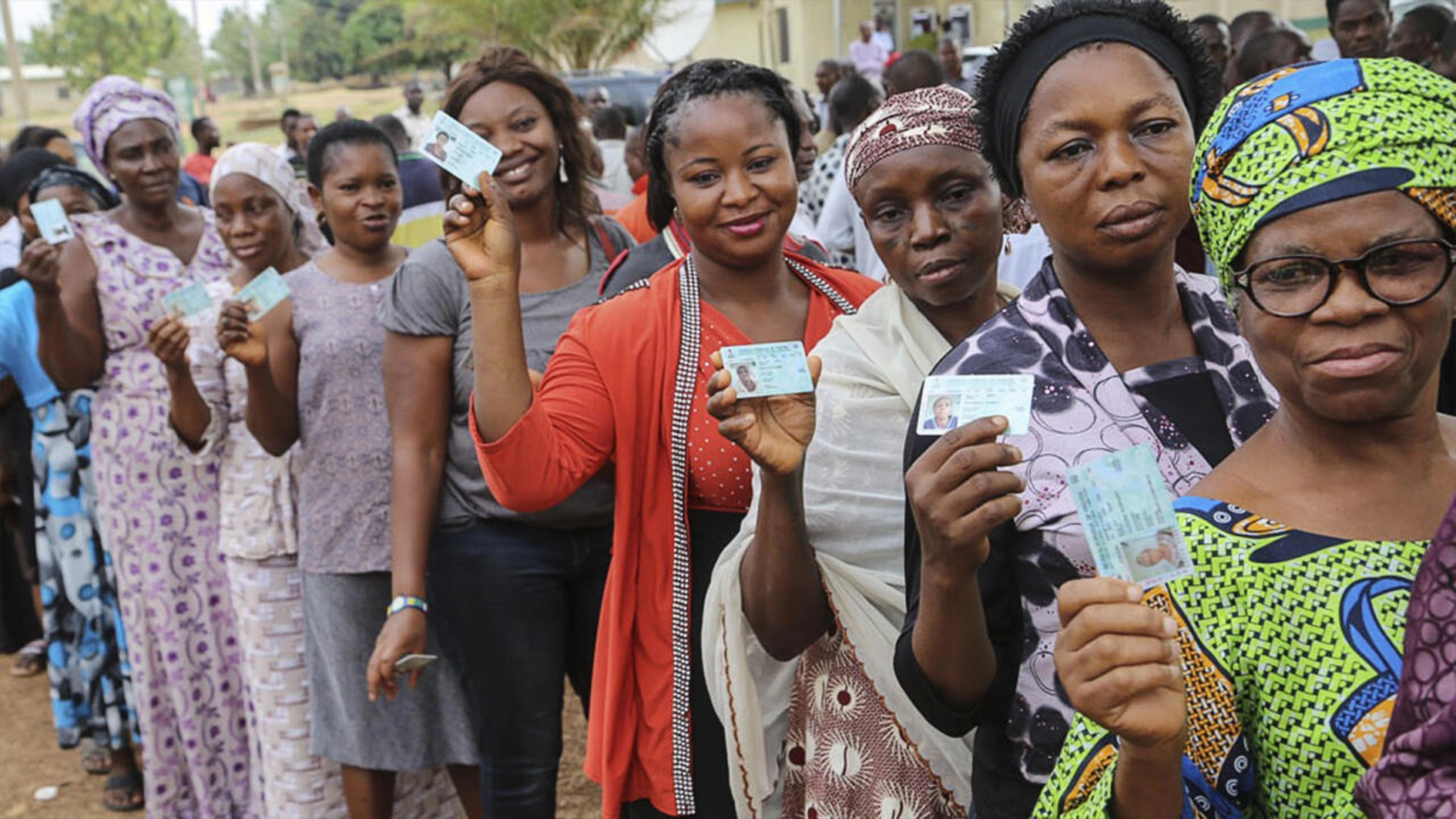
Ahead of the 2027 general election, Nigeria's political landscape is witnessing a significant shift. Grassroots support and candidate appeal are becoming increasingly important alongside party structures. Recent elections suggest that party machinery alone may not guarantee victory as voters assert greater influence over electoral outcomes. This change is evident in various parts of the country, where civic organisations are engaging communities on governance, accountability, and citizens' rights.
The 2019 general election in Kwara State demonstrated the power of grassroots mobilisation. The 'O To Gẹ́' movement, a coalition seeking to end the dominance of the Saraki political structure, led to a decisive victory for the All Progressives Congress (APC) candidate, AbdulRahman AbdulRazaq. He defeated the Peoples Democratic Party (PDP) candidate, Razak Atunwa, with 331,546 votes to 114,754. The APC also won all 16 local councils, showcasing the impact of a broad coalition operating against an established political structure.
In Ogun State, a non-partisan grassroots civic advocacy group, Make Ogun State Great Again (MOGA), has emerged from community-based activism around infrastructure and governance concerns in Ado-Odo/Ota Local Council. MOGA is mobilising citizens to demand accountability, monitor public projects, and encourage participation in governance ahead of the 2027 elections. This reflects a wider development in which some civic organisations are attempting to move beyond election-day observation to sustained engagement with communities.
A similar initiative, the Coalition for Participatory Governance (CPG), was established in May by civil society and civic technology organisations. The coalition aims to promote transparency, accountability, and improved service delivery, beginning at the local government level. CPG was convened by TriAfrica Empowerment Foundation and supported by BudgIT and Lagos Island Connect, alongside other civil society organisations.
The recent Osun governorship election provides a clear example of the changing relationship between candidate identity and party platform. Governor Ademola Adeleke contested the 2026 election on the platform of the Accord Party, having won his first term in 2022 on the PDP platform. He was re-elected with 511,067 votes, defeating APC candidate Bola Oyebamiji, who polled 444,815 votes. Adeleke's victory raises questions about the extent to which an incumbent's personal political identity, record, grassroots networks, and relationship with voters can travel across party platforms.
Political commentator Sanusi Muhammad argues that federal influence should not be equated with electoral support. "Federal power is not the same thing as electoral power," he said, noting that the number of governors, ministers, National Assembly members, appointments, financial resources, rallies, and endorsements does not necessarily translate directly into votes. Muhammad emphasises the importance of examining polling-unit performance, vote margins, and turnout.
The changing political environment does not mean that party structures have disappeared. Rather, the relationship between the party, candidate, and voter is becoming more complex. A party may possess governors, lawmakers, political appointees, and extensive organisational structures, yet still have to convert those advantages into votes at the polling-unit level. The coordinator of MOGA, Apostle Kayode Olawoye, believes grassroots mobilisation will be critical in 2027, saying, "The grassroots are the real voters."
Key points
- The 2019 Kwara State election demonstrated the power of grassroots mobilisation in shaping electoral outcomes.
- Civic organisations are engaging communities on governance, accountability, and citizens' rights ahead of the 2027 elections.
- The relationship between party structures, candidates, and voters is becoming increasingly complex in Nigeria's electoral politics.