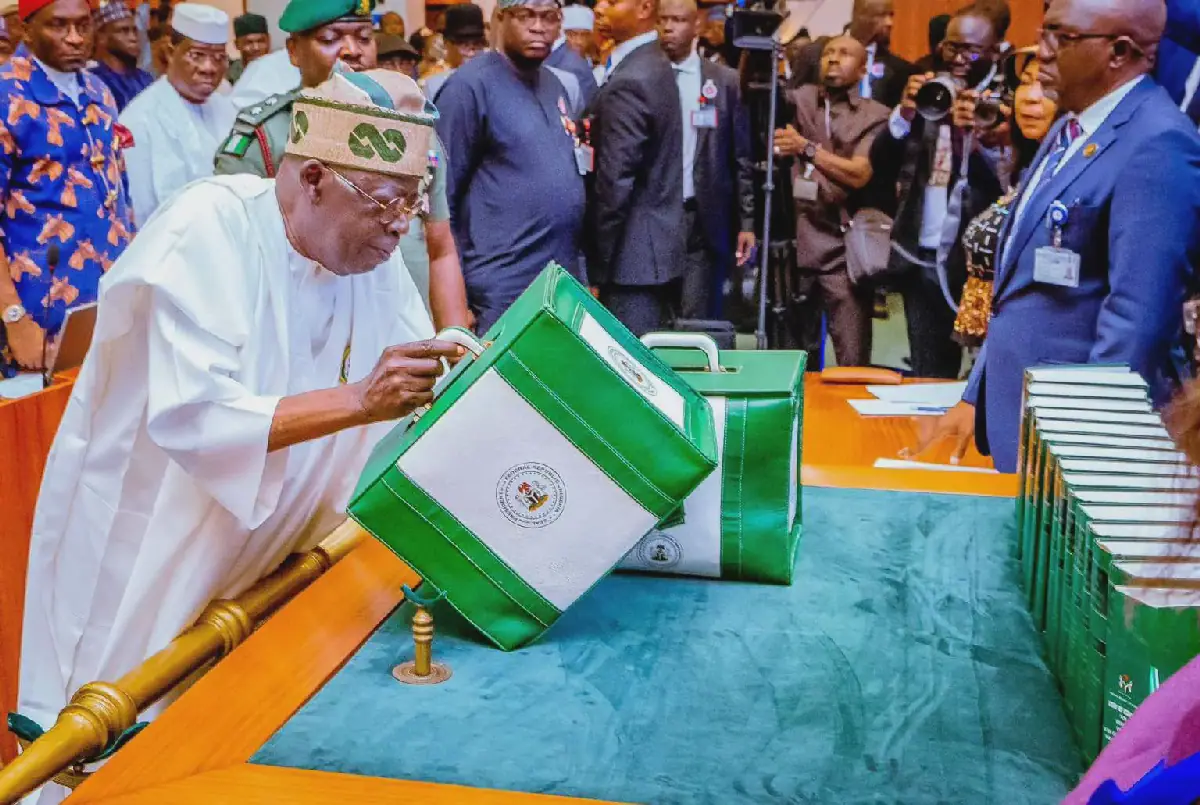
As Nigeria's President Bola Ahmed Tinubu prepares to present the 2027 budget to the National Assembly, citizens and stakeholders are eagerly awaiting details on how the government plans to generate revenue, execute its projects, service its debt, and provide essential infrastructure. The Minister of State for Budget and Economic Planning, Dr. Doris Uzoka-Anite, recently stated that the government aims to present the budget before the end of 2026. However, she did not provide a specific date for the presentation.
One of the key questions surrounding the 2027 budget is when it will be presented and when it will take effect. The Federal Government has expressed its desire to present the budget before the end of 2026 to allow the National Assembly sufficient time to review and approve it before the start of the new budget year. Nevertheless, the exact date of presentation and the measures to ensure timely completion of the budget process remain unclear. This is crucial, given Nigeria's history of delayed budget implementation.
Nigeria has consistently faced challenges in implementing its budget on time, with the 2025 and 2026 budgets still in operation as of October 29, 2026. The government extended the implementation period of the previous budget to December 31, 2026. To avoid a similar situation in 2027, the government must provide a clear plan for ensuring that projects allocated funds are completed within the stipulated timeframe.
Another significant question is the government's revenue projection for 2027 and the sources of these funds. The budget should clearly state the expected revenue from oil, taxes, and other government agencies. Additionally, the government should disclose its assumptions on global crude oil prices, daily production levels, and exchange rates used for budget calculations. These details will help assess the realism of the revenue projections and the likelihood of achieving them.
In the 2026 budget, the government projected ₦34.33 trillion in revenue, assuming a crude oil price of $64.85 per barrel and daily production of 1.84 million barrels. However, these figures relate to the 2026 budget, not the 2027 budget. For 2027, a new set of projections and contingency plans in case of revenue shortfalls are necessary.
The government must also clarify its debt servicing plans and borrowing strategy for 2027. If projected revenues are insufficient to cover expenditures, the government will need to outline its borrowing plans and debt servicing strategy. This includes specifying the amount of debt to be incurred, the terms of borrowing, and the sources of funds.
The 2027 budget must provide answers to these critical questions to ensure transparency and accountability. The government must prioritize timely budget implementation, realistic revenue projections, and prudent debt management to promote economic stability and growth. Ultimately, the budget should serve the needs of Nigerians by allocating resources effectively and efficiently.
Key points
- The Nigerian government must provide a clear plan for ensuring timely implementation of the 2027 budget.
- The government should disclose its assumptions on global crude oil prices, daily production levels, and exchange rates used for budget calculations.
- The 2027 budget must outline the government's debt servicing plans and borrowing strategy.