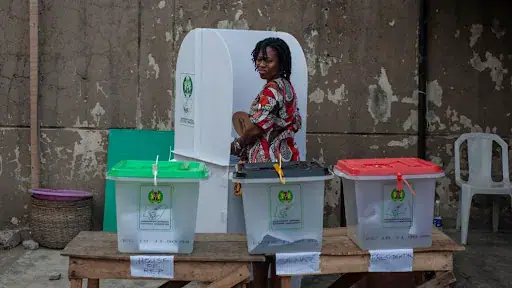
Nigeria's political landscape is bracing for the 2027 general elections, with the recently repealed 2026 Electoral Act introducing substantial changes to the existing legal framework. Enacted on February 18, 2026, the new Act aims to ensure free, fair, and transparent elections. The legislation governs the organization of elections, participation of political parties and candidates, and the voting process, including electoral offenses.
A significant innovation in the 2026 Electoral Act is the mandatory use of technology during voter accreditation. Section 47 of the Act requires the use of the Bimodal Voter Accreditation System (BVAS) or other technological devices prescribed by the Independent National Electoral Commission (INEC) to verify and authenticate voters' particulars. If BVAS or any other technological device fails and no replacement is available, the election in the affected polling unit will be canceled and rescheduled within 24 hours.
The new Act also introduces electronic transmission of results from each polling unit to the INEC Result Viewing Portal (IReV). According to Section 60(3), presiding officers must electronically transmit results after signing and stamping the prescribed Form EC8A and, where available, having it countersigned by candidates or their polling agents. In cases where electronic transmission is not possible due to communication issues, a physical result form will be used.
The 2026 Electoral Act has also revised campaign spending limits for candidates. The spending limit for presidential candidates has been increased to ₦10 billion, while gubernatorial candidates can now spend up to ₦3 billion. Senatorial candidates can spend up to ₦500 million, and those seeking election to the House of Representatives can spend up to ₦250 million. State house of assembly candidates can spend up to ₦100 million.
The new Act has also introduced changes to the nomination of candidates. Section 84(2) stipulates that political parties can only nominate candidates through direct primaries or consensus, removing indirect primaries. Direct primaries allow party members to participate in selecting candidates, while consensus requires the written consent of all cleared aspirants for the position.
The 2026 Electoral Act also emphasizes the importance of transparency in the electoral process. Section 19(1) requires INEC to make copies of the voters' register available for public access on its website and at every registration area for seven days before the 90-day deadline to the general election. Failure to display or publish the register as required will attract a penalty.
Furthermore, the new Act provides for a National Electronic Register of Election Results, which will be maintained continuously and electronically by INEC. This register will contain polling-unit results and collated results from elections conducted across the country, providing a centralized electronic database for preserving election results.
Key points
- The 2026 Electoral Act introduces the mandatory use of technology during voter accreditation.
- The Act revises campaign spending limits for candidates, increasing the spending limit for presidential candidates to ₦10 billion.
- The Act provides for a National Electronic Register of Election Results, which will be maintained continuously and electronically by INEC.