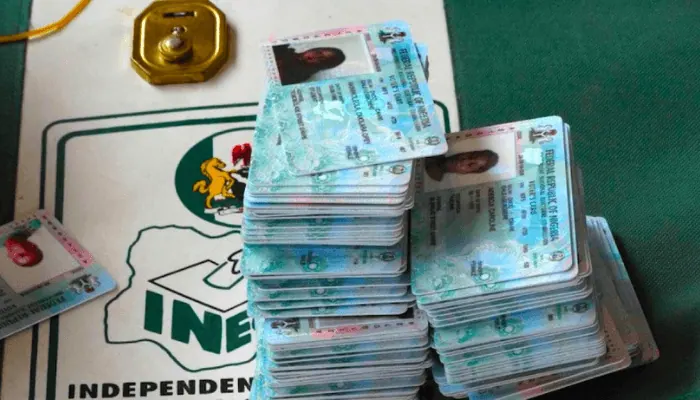
Ahead of Nigeria's 2027 election, concerns have resurfaced over the accuracy of the country's voter register. Civil society actors and legal experts are calling for stronger safeguards against erroneous voter records and improved access to Permanent Voter Cards (PVCs). The Independent National Electoral Commission (INEC) plans to commence nationwide collection of newly issued PVCs on October 9. INEC recently completed a three-phase Continuous Voter Registration exercise, which saw over 10.6 million people apply, bringing the national register to over 103 million following biometric checks.
The latest exercise comes three years after the European Union Election Observation Mission raised concerns about the quality of Nigeria's voter register following the 2023 general elections. The mission stated that there was no reliable information on the accuracy and inclusiveness of the register and no system for removing deceased voters and people who had emigrated. INEC Chairman, Joash Amupitan, said the commission had completed its final Automated Biometric Identification System clean-up of the register.
Despite INEC's assurance that the latest registrations have undergone biometric verification, questions remain over how erroneous records are identified and corrected. A woman, Chinwe Adebayo, alleged that she was classified as deceased in INEC's voter database when she visited an office in Surulere, Lagos, to collect her PVC. She claimed that officials insisted that the database recorded her as deceased in March 2025, and a death certificate had been issued in her name.
Legal practitioner, Okoi Obono-Obla, said wrongly classifying a living registered voter as deceased could prevent an eligible citizen from exercising the right to vote. He argued that INEC should maintain a clear procedure for restoring voters wrongly classified as deceased while continuously verifying and cleaning the register. Obono-Obla also suggested that identity databases could help strengthen verification.
The expansion of the register places greater attention on the systems INEC uses to identify duplicates, remove ineligible records, and correct errors before voting begins. BusinessDay's analysis showed that completing a biometric clean-up does not by itself establish that every record in a database of over 103 million voters is accurate. INEC's official timetable schedules the next general elections to begin on January 16, 2027.
Miliscient Nnwoka of Yiaga Africa cautioned against assessing access to the latest cards before the scheduled October 9 commencement. INEC has urged eligible citizens who registered during the latest CVR to collect their cards from designated centres. The PVC collection exercise is expected to be accessible to eligible voters.
The accuracy of the final register will remain a critical issue for voters. INEC's collaboration with the National Identity Management Commission (NIMC) on the use of the National Identification Number (NIN) could strengthen verification. However, Obono-Obla maintained that NIN should be used as an audit and verification tool rather than an additional barrier to voting.
Key points
- INEC's voter register has risen to over 103 million following biometric checks.
- Concerns have been raised over the accuracy and inclusiveness of the register.
- INEC will commence nationwide collection of newly issued PVCs on October 9.