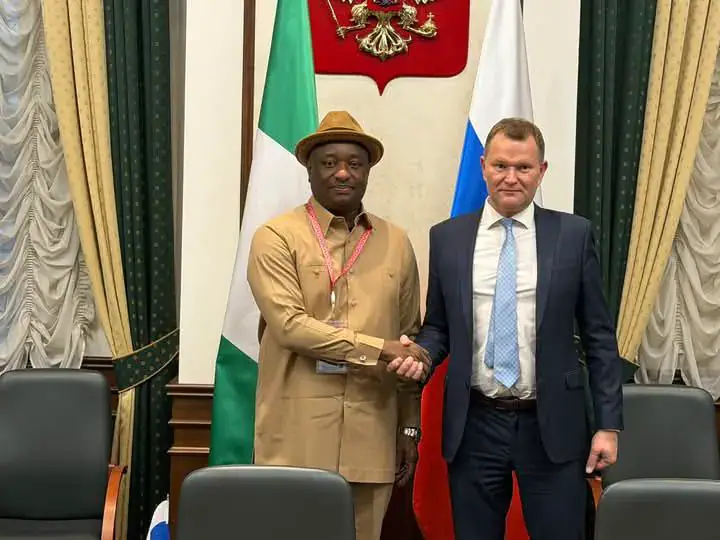
Nigeria and Russia have agreed to replace their 59-year-old aviation agreement, aiming to modernize air transport relations and create opportunities for stronger connectivity between the two countries. The agreement to renegotiate the Bilateral Air Services Agreement (BASA) was reached during a meeting between Nigeria's Minister of Aviation and Aerospace Development, Festus Keyamo, and Russian officials in Moscow. This meeting took place on the sidelines of the Third Russia-Africa Summit.
The 1967 agreement is expected to be updated to reflect changes in the international aviation industry over the past six decades. A new agreement will provide a framework for scheduled air services between Nigeria and Russia, setting out conditions for airlines from both countries to operate international flights. This includes routes, traffic rights, designated airlines, and other operational arrangements. Both countries have formed negotiating teams to begin work toward an agreement within six months.
Nigeria's Ministry of Aviation and Aerospace Development is responsible for negotiating and reviewing new and existing air services agreements and monitoring their implementation. The ministry works with the Nigerian Civil Aviation Authority and other aviation agencies to facilitate international air links and regulate airline operations. The proposed replacement of the Nigeria-Russia agreement could create opportunities for improved air connectivity and cooperation between their aviation sectors.
The meeting between Mr. Keyamo and Russian officials also examined other areas of cooperation between Nigeria and Russia. Both sides have resolved to explore additional opportunities in the coming months. The Nigerian delegation included the Director-General of the Nigerian Civil Aviation Authority, Capt. Chris Najomo, and the Registrar of the Nigerian College of Aviation Technology, Dr. Danjuma Adamu Ismaila.
Nigeria and Russia have maintained diplomatic relations since shortly after Nigeria gained independence in 1960. Their relationship has included cooperation in areas such as defense, trade, science, and technology. The Soviet Union provided political and military assistance to Nigeria during the 1967-1970 Civil War. Cooperation between the two countries has also extended to space technology, including the launch of Nigeria's satellites aboard Russian rockets in 2011.
The planned aviation agreement is expected to form part of broader efforts to deepen bilateral relations and identify further areas of cooperation. Both countries are expected to begin negotiations through their respective teams, aiming to conclude the process and sign the new agreement in Saint Petersburg in April 2027. Mr. Keyamo disclosed the development in a post on his X account, saying both countries had agreed to complete negotiations within six months.
The proposed renegotiation of the Bilateral Air Services Agreement between Nigeria and Russia is a significant step toward enhancing air transport relations between the two countries. The new agreement will likely create opportunities for improved air connectivity, cooperation between their aviation sectors, and further collaboration in other areas. Key points of the agreement include:
Key points
- Both countries aim to conclude negotiations within six months and sign a new agreement in Saint Petersburg in April 2027.
- The new agreement will update the framework governing air transport between Nigeria and Russia, reflecting changes in the international aviation industry.
- The planned aviation agreement is part of broader efforts to deepen bilateral relations and identify further areas of cooperation.