In a groundbreaking achievement, Nigeria has successfully conducted its first tele-robotic surgery, marking a significant milestone in the country's medical history. The procedure, performed on a patient in Abuja, involved a kidney cancer operation remotely carried out from a surgical console at the Redeemer's Health Village (RHV) in Ogun State. This innovative approach enables surgeons to operate on patients from different physical locations using robotic surgical technology and a remote console.
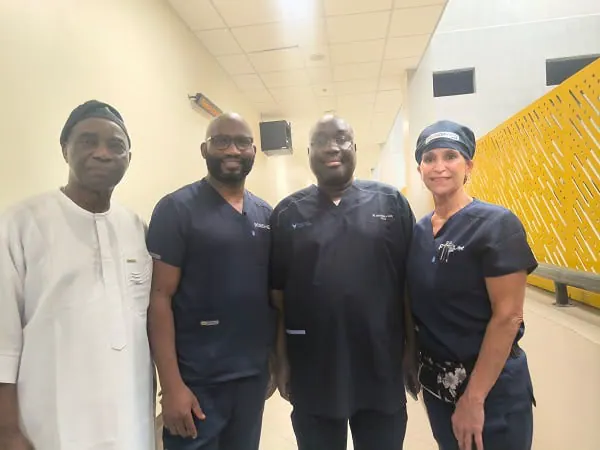
The telesurgery-assisted, robot-assisted right radical nephrectomy was a collaborative effort between RHV, RoboMed Global, and Nisa Premier Hospital. Prof. Obi Ekwenna-Davis, a Professor of Urology and Transplantation and the surgeon who led the operation, confirmed that the procedure was a success and the patient was in good condition after the surgery. The operation lasted about three hours, with brief pauses to ensure the equipment and supporting systems were functioning properly.
According to Prof. Ekwenna-Davis, the procedure demonstrated that telesurgery could be safely used to provide surgical care across different locations in Nigeria and beyond. He emphasized that distance should not determine who receives safe surgery, highlighting the potential of this technology to expand access to complex procedures. The collaboration also showcased how hospitals in different parts of Nigeria could work together to deliver specialist surgical care.
The development is also significant for West Africa, as it marks the first telesurgery procedure in the region. RHV's achievement demonstrates that Nigerians can access advanced surgical care without traveling outside the country. Dr. Adedamola Dada, Chief Executive Officer of RHV, stated that the milestone was a demonstration of the possibilities of modern healthcare in Nigeria, aligning with the vision of the General Overseer of the Redeemed Christian Church of God.
To build on this achievement, RHV plans to establish a robotic academy with RoboMed Global to train doctors, surgeons, nurses, biomedical engineers, and product specialists. The academy aims to train at least 150 surgeons within two years, with the goal of developing local expertise through continuous training. Prof. Ekwenna-Davis noted that the initiative has received support from the Minister of Health and other government institutions, and is seeking further backing from private organizations and non-governmental organizations.
The introduction of robotic and telesurgery technology is expected to reduce the need for Nigerians to seek specialist treatment abroad. Dr. Dada emphasized that the technology could serve as a channel for transferring specialist skills to patients across Nigeria, regardless of their location. He also addressed concerns about the reliability of remote surgery, highlighting measures put in place to minimize the impact of connectivity challenges.
The success of the tele-robotic surgery has been hailed as historic, with stakeholders calling for recognition of the contributions of those involved. RHV, a faith-based 300-bed multispecialty hospital established by the Redeemed Christian Church of God, has taken a significant step in promoting healthcare innovation and providing world-class medical services at affordable costs. The hospital's achievement has set a new standard for medical care in Nigeria and West Africa.
Key points
- Nigeria conducts its first tele-robotic surgery, a kidney cancer operation, remotely from Ogun State on a patient in Abuja.
- The procedure was a collaborative effort between RHV, RoboMed Global, and Nisa Premier Hospital.
- The development marks the first telesurgery procedure in West Africa, demonstrating Nigeria's capabilities in advanced surgical care.