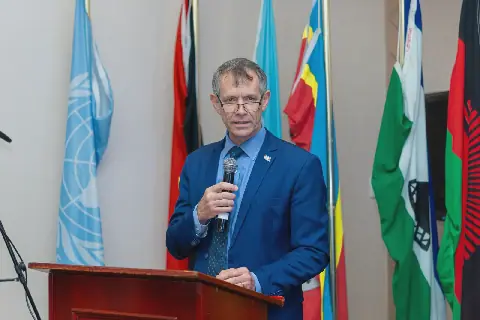
Nigeria is seeking to strengthen economic stability, control inflation, and promote sustainable growth by bringing fiscal and monetary policies into closer alignment. Policymakers aim to reduce policy conflicts, improve coordination, and create a more predictable environment for businesses and investors. A Memorandum of Understanding (MoU) on Fiscal-Monetary Policy Coordination was recently signed by the Federal Ministry of Finance and the Central Bank of Nigeria (CBN).
The agreement comes at a time when Nigeria is trying to consolidate gains from major economic reforms while dealing with the consequences of those adjustments, including inflation, high financing costs, and exchange-rate pressures. Finance Minister Taiwo Oyedele emphasized that the significance of the agreement goes beyond the signing of another government document, highlighting the need for fiscal and monetary authorities to recognize their interconnected roles in managing the economy.
Oyedele noted that fiscal and monetary authorities have distinct mandates, but their outcomes are interconnected. He cited examples of how government borrowing affects liquidity and interest rates, while monetary policy affects the government's financing costs. The Minister stressed that good economic management requires independent institutions, but independence does not mean isolation.
The International Monetary Fund (IMF) assessed Nigeria's economic reforms in June 2026, stating that they had improved macroeconomic outcomes and strengthened resilience. However, the IMF also noted that conditions remained difficult for many Nigerians, with inflation rising to 15.4% year-on-year in March 2026. Nigeria's consolidated government deficit was estimated at 4.4% of GDP in 2025, while oil revenues fell short of budget expectations.
The MoU aims to make the relationship between the Ministry of Finance and the CBN more deliberate and less dependent on personalities. Oyedele explained that the agreement will ensure stronger information-sharing, aligned macroeconomic assumptions, and clearer mechanisms for resolving areas where fiscal and monetary actions may pull in different directions.
CBN Governor Olayemi Cardoso emphasized that the relationship between the two institutions is not new and has been tested over several years. He noted that the MoU represents a shared commitment to deepen collaboration in the interest of the economy and the people. Cardoso added that the existing cooperation is being given a more permanent structure, providing a framework for regular consultation, information exchange, and policy coordination.
The timing of the MoU coincides with the CBN's move towards a more explicit inflation-targeting framework. Under such a framework, the quality of fiscal policy becomes particularly important, as monetary policy cannot operate in isolation from government spending, borrowing, and other economic decisions. The agreement is expected to enhance policy coherence and the effectiveness of economic management.
Key points
- The MoU aims to improve coordination between fiscal and monetary policies.
- The agreement seeks to reduce policy conflicts and create a more predictable environment for businesses and investors.
- The MoU is expected to enhance policy coherence and the effectiveness of economic management.