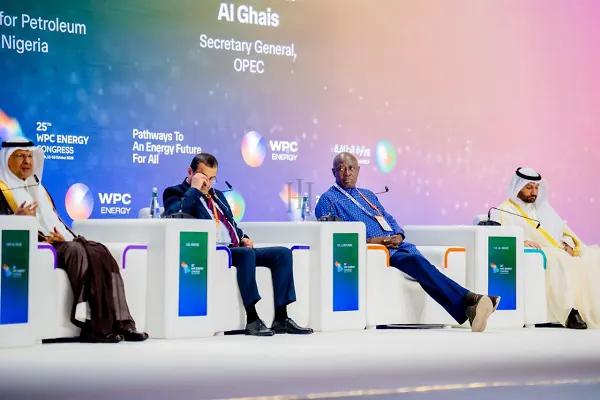
Nigeria is calling for increased international investment in its oil and gas industry, highlighting its vast hydrocarbon reserves, ongoing regulatory reforms, and strategic position as a gateway to Africa's growing energy market. The Minister of State for Petroleum Resources (Oil), Sen. Heineken Lokpobiri, made the call while chairing Nigeria's investment forum and participating in a ministerial panel on global energy at the 25th World Petroleum Congress in Riyadh, Saudi Arabia.
Lokpobiri emphasized that Nigeria remains committed to attracting sustainable, long-term investment capable of unlocking the country's energy potential and driving economic growth. He stressed that Nigeria must pursue energy security and a diversified energy mix simultaneously, with investment playing a central role in achieving both objectives. The minister noted that Nigeria's investment appeal extends beyond its substantial oil and gas reserves to include a large domestic market, a skilled and increasingly specialized workforce, established infrastructure, maritime access, and opportunities to serve the wider African market.
Nigeria's estimated reserves, as of January 2026, stand at about 37 billion barrels of oil and condensate and 215 trillion cubic feet of natural gas. These reserves offer significant opportunities for industrialization, job creation, and economic diversification. Lokpobiri identified the Petroleum Industry Act (PIA) 2021 and subsequent government initiatives as important components of efforts to establish a more predictable investment environment and encourage long-term capital inflows into the sector.
The Federal Government is implementing measures to strengthen the petroleum industry's regulatory framework, improve project economics, and enhance investor confidence. Lokpobiri highlighted investment opportunities across upstream oil and gas operations, natural gas development, liquefied natural gas (LNG), refining, petrochemicals, and energy infrastructure. He explained that expanding domestic refining and gas-processing capacity remains central to the government's efforts to increase local value addition, reduce dependence on imported petroleum products, and support manufacturing, power generation, and wider economic development.
Lokpobiri said Nigeria is prepared to work with international investors and strategic partners to channel capital into the petroleum industry while maximizing the economic benefits of its oil and gas resources. He urged governments to protect agreements and establish a framework to protect agreements. The minister also rallied women and health professionals to support President Tinubu's re-election bid in 2027.
The 25th World Petroleum Congress in Riyadh, Saudi Arabia, provided a platform for Nigeria to showcase its investment opportunities and potential in the energy sector. The event brought together international energy stakeholders, investors, and policymakers to discuss global energy trends, challenges, and opportunities. Nigeria's participation in the congress was aimed at promoting its energy sector and attracting foreign investment.
The Nigerian government is optimistic about the country's potential to become a major player in the global energy market. With its vast hydrocarbon reserves, strategic location, and ongoing reforms, Nigeria is well-positioned to attract international investment and drive economic growth. The government remains committed to creating a favorable investment environment and providing support to investors looking to explore opportunities in Nigeria's energy sector.
Key points
- Nigeria has an estimated 37 billion barrels of oil and condensate and 215 trillion cubic feet of natural gas reserves.
- The Petroleum Industry Act (PIA) 2021 is a key component of Nigeria's efforts to establish a more predictable investment environment.
- Nigeria is seeking increased international investment in its oil and gas industry to drive economic growth and unlock its energy potential.