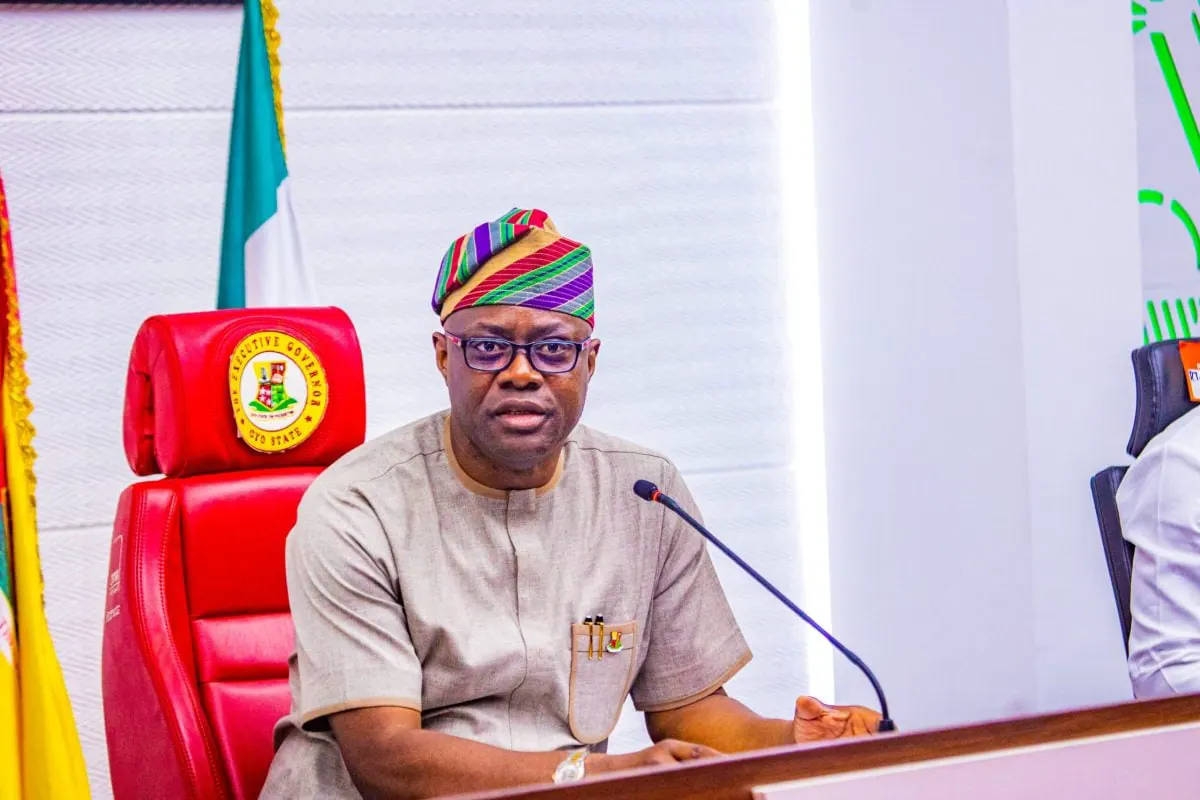
Oyo State Governor, Engr Seyi Makinde, has called for a holistic approach to Nigeria's agricultural sector, stating that the country must move beyond viewing agriculture solely as food production. He made this remark while delivering the keynote address at the launch of the Agri-Connect Nigeria Country Compact held at the International Institute of Tropical Agriculture (IITA), Ibadan. The event brought together key stakeholders, including the Minister of Agriculture and Food Security, Senator Abubakar Kyari, and development partners.
Makinde emphasized that Nigeria has the potential to excel in agriculture, with hardworking farmers, research institutions, young innovators, and a large domestic market. However, he noted that several challenges limit the sector's contribution to the economy. Many farmers remain poor, food prices are high, and significant quantities of agricultural produce are lost before reaching consumers. Makinde stressed that increasing production alone will not solve these challenges, and an integrated approach is needed.
The governor highlighted the importance of connecting farmers to processing, storage, transportation, finance, research, technology, and markets. He stated that agriculture must be treated as a complete economic system, where production is linked to research, extension efforts, finance, rural roads, storage, processing, standards, logistics, and markets. Failure in any part of the agricultural value chain, Makinde warned, will affect the entire system and ultimately increase the cost of food for consumers.
Makinde also emphasized the need for young Nigerians to consider agriculture as a viable career and business opportunity. He urged development partners and investors to focus on translating Nigeria's agricultural resources into measurable results. The governor assured that Oyo State is ready to contribute its quota to the Agri-Connect initiative, which aims to bring relevant stakeholders together around a common delivery plan.
The Minister of Agriculture and Food Security, Senator Abubakar Kyari, noted that Nigeria does not lack agricultural programmes, projects, or investments. However, he emphasized the need for better coordination and alignment among existing interventions. Kyari stated that substantial resources are already being committed to various agricultural initiatives, but the greatest challenge is ensuring that these investments reinforce one another.
Kyari disclosed that the Nigeria Agri-Connect Compact targets the creation of 2.5 million direct jobs by 2030, the provision of high-quality seeds and fertilisers to 9.5 million farmers, and the development of irrigation infrastructure covering 90,000 hectares. He stressed the importance of private-sector participation, saying Nigeria's agricultural transformation must be private-sector-led and government-enabled.
The World Bank Representative and IFC Division Director for Nigeria and Central Africa, Mr Olivier Buyoya, identified underutilisation of arable land and limited access to finance as major constraints to the growth of Nigeria's agricultural sector. He noted that about 37 million hectares of arable land remain underutilised, while farmers and businesses continue to face constraints in accessing quality inputs, infrastructure, finance, technology, and reliable markets.
Key points
- Nigeria must treat agriculture as a complete economic system to create jobs, reduce food prices, and strengthen rural economies.
- The Nigeria Agri-Connect Compact aims to create 2.5 million direct jobs by 2030 and provide high-quality seeds and fertilisers to 9.5 million farmers.
- Private-sector participation is crucial for Nigeria's agricultural transformation, with the government playing an enabling role.