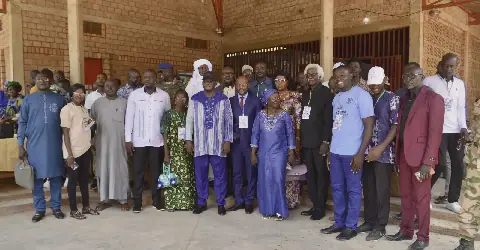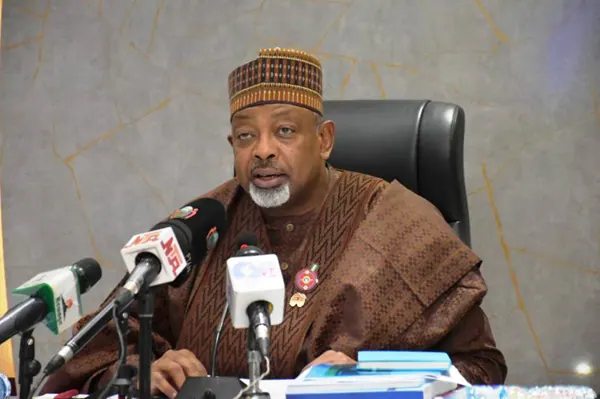
The Federal Government has emphasized the need for a comprehensive reform of Nigeria's agricultural extension system to boost farm productivity and meet the food demands of the country's growing population. Minister of Agriculture and Food Security, Senator Abubakar Kyari, made this call at the Africa Agribusiness Extension Summit 2026 in Abuja. The summit, organized by Extension Africa, brought together government officials, agribusinesses, research institutions, technology providers, development partners, and other stakeholders to discuss the future of agricultural advisory services across Africa.
According to Kyari, Nigeria cannot rely solely on increasing farmland to meet future food requirements; instead, improving productivity is crucial. He stressed that farmers need access to the right knowledge at the right time to achieve this. Kyari noted that agricultural extension was once a respected and trusted service in rural communities, with extension officers maintaining close contact with farmers. He recalled that when Agricultural Development Projects (ADPs) operated on a large scale with World Bank support, one extension agent served between 1,000 and 1,500 farm families.
However, the situation has changed, with an extension agent now sometimes expected to serve between 5,000 and 10,000 farmers. Kyari emphasized that no field officer, no matter how committed, can meaningfully serve that number through physical visits alone. He stated that the government is working to reposition extension as a sustainable agricultural infrastructure that combines professional expertise, technology, data, and partnerships. Digital technology is being deployed to bridge the gap between extension workers and farmers.
The Federal Government is rolling out a digital agricultural extension platform capable of providing advisory services through text and voice in Hausa, Igbo, Yoruba, and Pidgin. Over 100,000 farmers in six states currently receive weekly text messages on expected rainfall and measures to protect their crops through collaboration between the Federal Department of Agricultural Extension, the Nigerian Meteorological Agency (NiMet), and private-sector partners. More than 1,000 digital extension agents have been equipped with tablets with support from the National Agricultural Development Fund.
In addition, 774 agricultural desk officers are serving across the country's local government areas. Kyari has also approved a steering committee to harmonize the Ministry's extension programs and ensure better coordination among its departments and agencies. He urged stakeholders to make agricultural extension more attractive to young professionals, citing opportunities for young graduates to combine scientific knowledge, technology, and entrepreneurship.
The minister also emphasized the need for greater attention to women farmers, noting their significant roles in production, processing, and marketing. Kyari highlighted that Africa's population, which exceeded 1.5 billion in 2024, is projected to reach about 2.5 billion by 2050, while Nigeria's population could approach 400 million within the same period. He stressed that agriculture accounts for about 34 percent of employment in Nigeria, making the sector critical to food security and livelihoods.
Research has shown that access to agricultural extension services is associated with reduced food insecurity and improved household assets among Nigerian farming households. Kyari advocated for the integration of farmer registries with extension systems to enable farmers to receive advice tailored to their crops, locations, and specific needs. The summit aimed to promote investment in sustainable agricultural advisory systems and encourage discussions on policies, institutions, and business models capable of strengthening extension across Africa.
Key points
- The Federal Government is working to reposition extension as a sustainable agricultural infrastructure that combines professional expertise, technology, data, and partnerships.
- The minister urged stakeholders to make agricultural extension more attractive to young professionals.
- Research has shown that access to agricultural extension services is associated with reduced food insecurity and improved household assets among Nigerian farming households.