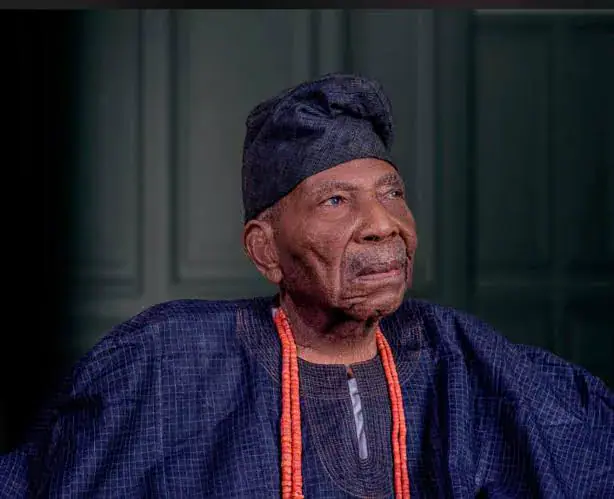
Pa Reuben Fasoranti, a Nigerian elder statesman and longtime leader of the pan-Yoruba socio-political organisation, Afenifere, passed away on October 20, 2026, at the age of 100. Born on May 11, 1926, in Uso, a community in the Owo Local Government Area of old Ondo State, Fasoranti's life was shaped by the British colonial administration. He was a bridge between colonial Nigeria and the country's contemporary complexities, and his dedication to service and the advancement of the Nigerian State earned him a reputation as a selfless leader.
Fasoranti's early life was marked by a passion for education and a desire to care for the sick. He studied medicine but was unable to pursue his dream due to structural flaws in colonial education. Instead, he became a teacher and earned a degree in English and Geography from the University College, Ibadan. He later acquired a postgraduate diploma in education from the University of Hull in the United Kingdom and undertook advanced studies in instructional administration in Sydney, Australia. Fasoranti served as a principal at prominent institutions, including Ondo Boys' High School and Olivet Baptist High School in Oyo.
Fasoranti entered mainstream politics at the twilight of colonial rule and was drawn to Chief Obafemi Awolowo's Action Group (AG). He became an Awoist, whose political philosophy focused on advancing social welfare, free education, and regional autonomy. In 1979, Fasoranti was appointed Commissioner for Finance in old Ondo State under Chief Michael Adekunle Ajasin. He set a gold standard in resource management, managing state resources with frugality and transparency. Fasoranti ensured the Ajasin administration's free education programme was funded without dragging the state into debt.
Fasoranti's passion for human capital development extended beyond his public service. He established several schools, including the Omolere Nursery and Primary School, Akure High School, and St. Francis Academy in Igoba, Akure. Through these schools, Fasoranti created platforms for leaders who have inspired and continue to shape Nigeria. During the political crisis caused by the annulment of the June 12, 1993, presidential poll, Fasoranti became a strategist and defender of freedom, co-founding the National Democratic Coalition (NADECO) alongside elder statesmen like Pa Adekunle Ajasin and Pa Abraham Adesanya.
Fasoranti played a key role in Nigeria's transition to democracy, providing financial sanctuary, ideological clarity, and moral leadership to the pro-democracy group until the military retreated to the barracks in 1999. In 2008, he assumed leadership of Afenifere and turned his Akure residence into a political shelter for leaders seeking counsel. Fasoranti prioritised consensus and regional solidarity over personal pride, insisting on constitutional restructuring and true federalism. He also launched a crusade for national security reform, state policing, and ancestral land protection after his daughter, Mrs Funke Olakunri, was brutally killed in 2019.
With Fasoranti's death, Nigeria has lost an exceptional moral anchor. His legacy provides perpetual lessons for future generations on national development in a diverse country like Nigeria. Fasoranti's dedication to service, selfless leadership, and passion for education and human capital development have left a lasting impact on the nation.
The Nigerian nation and the Yoruba people have lost a great leader, a true patriot, and a champion of democracy and human rights. Fasoranti's contributions to Nigeria's development will not be forgotten, and his memory will continue to inspire future generations to work towards a better Nigeria.
Key points
- Pa Reuben Fasoranti, a centenarian and former leader of Afenifere, died on October 20, 2026, at the age of 100.
- Fasoranti played a key role in Nigeria's transition to democracy and was a champion of constitutional restructuring and true federalism.
- Fasoranti's legacy provides perpetual lessons for future generations on national development in a diverse country like Nigeria.