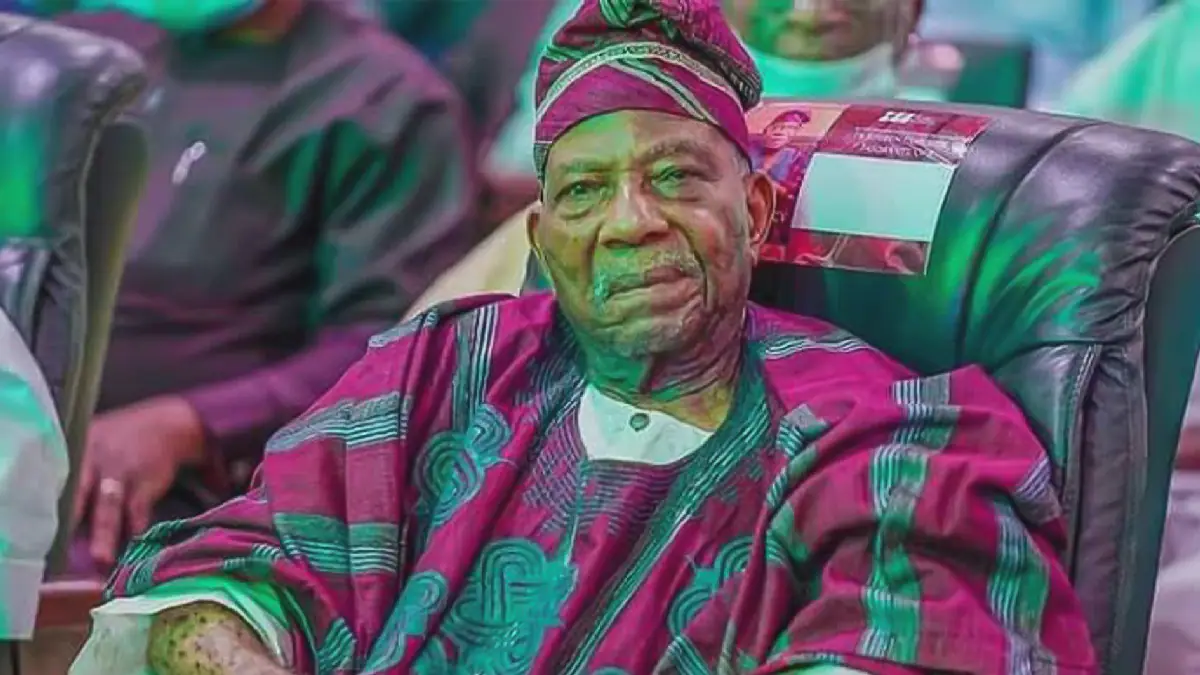
The Nigerian nation is in mourning following the passing of Chief Reuben Famuyide Fasoranti, a renowned elder statesman and National Leader of Afenifere, on October 20, 2026, at the age of 100. Fasoranti's life was a testament to integrity, discipline, and selflessness, inspiring many with his commitment to the progress of the Yoruba people and Nigeria's unity and development. Born on May 11, 1926, in Uso, Ondo State, he led a life marked by education, politics, and activism. His legacy will continue to influence national discourse as the country approaches the 2027 general elections.
Fasoranti was a product of Nigeria's early education system, having attended St. Andrew's Primary School, Owo; Ondo Boys High School; and Yaba Higher College, Lagos. He furthered his education at the University College, Ibadan, where he studied English and Geography. His pursuit of knowledge led him to obtain a postgraduate diploma in Education from the University of Hull, United Kingdom, and a master's degree in education administration and school management from Macquarie University in Australia. This educational background informed his career as an educationist and administrator.
As an educationist, Fasoranti had a distinguished career, serving in various institutions, including Oyemekun Grammar School, Akure, and Iju-Itaogbolu Grammar School, where he was the founding principal. After retiring from teaching, he established several schools, including Omolere Nursery and Primary School, Akure High School, and St Frances' Academy, Igoba. His contributions to education development were remarkable, showcasing the impact of educators on society. These institutions stand as a testament to his dedication to education and community development.
Fasoranti's political history was rooted in the ideals of his Yoruba nation, with a strong commitment to democratic principles. He was a member of the Action Group (AG) in the First Republic and played a significant role in the Unity Party of Nigeria (UPN). Between 1979 and 1983, he served as Commissioner for Finance under Chief Michael Adekunle Ajasin, the governor of Ondo State, where he made efforts to improve the state's financial management and development. His tenure was marked by integrity, dependability, and efficiency, earning him the trust of his peers.
As the leader of Afenifere, Fasoranti became a prominent voice on Yoruba interests, unity, development, and political ideals, including restructuring, true federalism, and accountable governance. He was a vocal critic of bad governance and an advocate for democratic principles. His activism was not without challenges, including an assassination attempt in 1996 and the tragic loss of his daughter, Funke Olakunrin, in 2019. Despite these challenges, Fasoranti remained committed to his cause, symbolizing the spirit of resistance against tyranny and oppression.
Tributes have poured in from across Nigeria, with President Bola Tinubu and other eminent Nigerians extolling Fasoranti's virtues and lauding his role in education and democratic governance. His life and legacy serve as an inspiration to many, particularly the youth, with his sincerity, eloquence, patriotism, and sense of purpose. As Nigeria continues to navigate its democratic journey, Fasoranti's contributions and ideals will remain a guiding light.
The passing of Fasoranti marks the end of an era, depleting the ranks of frontline nationalists who inspired their time with their vision and commitment to nation-building. His legacy, however, will endure through the ages, reminding future generations of the importance of integrity, discipline, and selflessness in leadership and nation-building.
Key points
- Fasoranti lived a life of integrity, discipline, and selflessness, inspiring many with his commitment to the progress of the Yoruba people and Nigeria's unity and development.
- He was a renowned educationist, administrator, and politician who made significant contributions to education development and democratic governance in Nigeria.
- Fasoranti's legacy will continue to influence national discourse, particularly as Nigeria approaches the 2027 general elections.