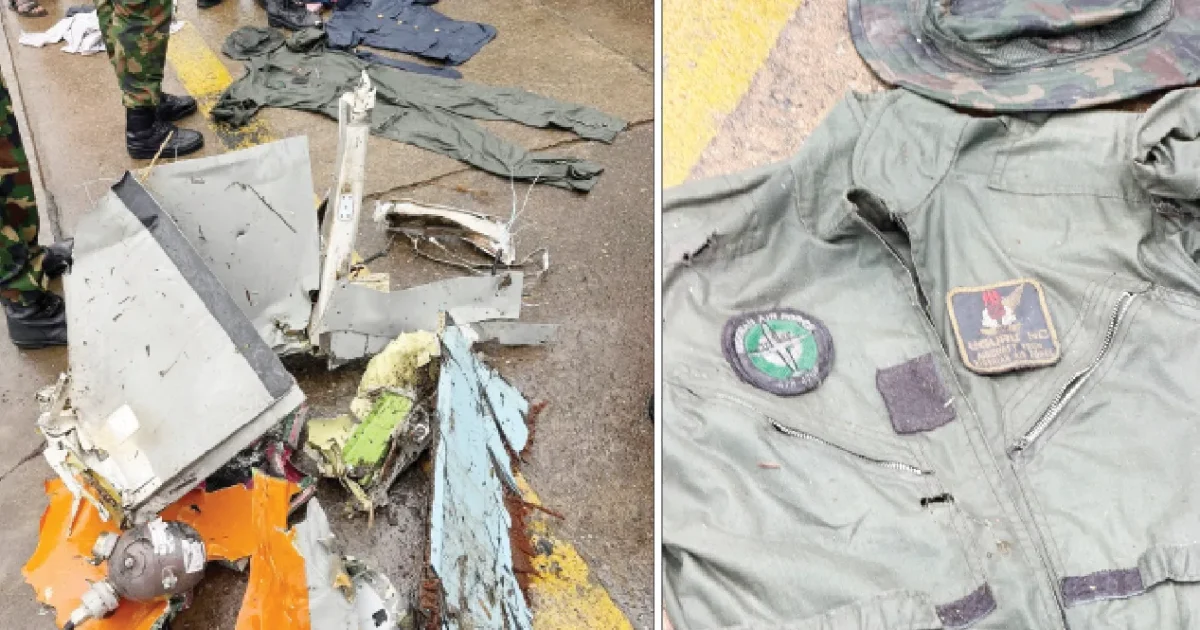
A devastating air crash occurred in Nigeria on October 5, claiming the lives of 25 people, including military personnel and civilians. The Nigerian Air Force (NAF) ATR-42 aircraft was traveling from Abuja to Lagos with a stop in Benin City when it crashed into the Obe-Rebby swamp in Igbokoda, Ondo State. The aircraft had experienced a technical fault in Benin City, but was cleared to fly again after repairs.
The crash has sparked widespread grief and renewed concerns over Nigeria's aviation safety record. President Bola Tinubu declared three days of national mourning and ordered a thorough investigation into the incident. The victims included a co-pilot who had recently gotten married, a couple on their way to formalize their wedding, and a prospective National Youth Service Corps member.
This latest incident is part of a disturbing trend of military aviation disasters in Nigeria over the past six years. According to reports, the Igbokoda crash was the 10th NAF aircraft accident since 2021. In 2021 alone, Nigeria recorded three NAF crashes, including the loss of a Beechcraft King Air B350i near Abuja, killing all seven personnel on board.
The cumulative toll of Nigeria's aviation accidents is staggering. Since 1992, the country has lost 254 military personnel in air crashes, with 1,437 lives lost in 16 major commercial and military aircraft crashes. The financial cost of these accidents is estimated to be over N170 billion, with losses of 40 personnel and aircraft worth $135.13 million between 2015 and 2022.
The recurring disasters have raised questions about the effectiveness of investigations and implementation of recommendations. The government has repeatedly announced probes into aircraft accidents, but the frequency of subsequent crashes suggests that lessons from previous incidents may not be being adequately implemented.
To prevent future accidents, the government must revisit previous crash investigations, publish their findings, and disclose the status of their recommendations. The investigation into the Igbokoda crash must be thorough, independent, and professionally conducted, with its findings made public to the fullest extent consistent with national security.
The government must also assess the country's aviation safety infrastructure, including aircraft maintenance, operational safety, and accident investigations. With Nigeria battling insurgency, banditry, and other security threats, the loss of aircraft and trained personnel weakens operational capacity, potentially giving armed groups greater room to maneuver.
Key points
- The crash has sparked concerns over Nigeria's aviation safety record, with 10 NAF aircraft accidents occurring since 2021.
- The government has been criticized for not implementing recommendations from previous crash investigations.
- The incident has significant implications for Nigeria's military operations, amid ongoing security challenges.