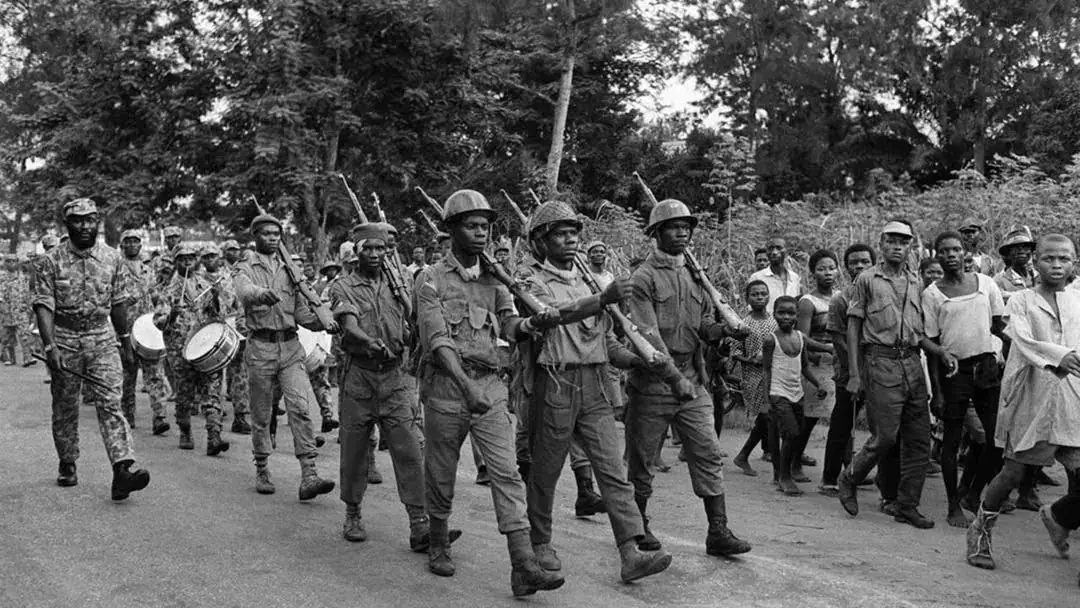
Today, Nigeria marks 59 years since the Asaba Massacre, a tragic event that occurred during the country's civil war from 1967 to 1970. The war, which pitted the Nigerian government against the secessionist state of Biafra, resulted in the deaths of an estimated 3,000,000 people, mostly children and women. Many died from hunger and starvation after Nigeria imposed a total economic blockade on the region. The conflict left deep scars, with many families losing loved ones and communities still feeling the effects today.
The Asaba Massacre is one of the most horrific events of the war. On October 7, 1967, Nigerian soldiers ordered the people of Asaba to gather at the village square, suspecting they had aided Biafran soldiers. Thousands of men and boys, dressed in traditional white attire, filed out, singing and chanting "One Nigeria," hoping to shield themselves from harm. However, it was a trap. Federal soldiers separated the men and boys from the women, surrounded and trapped them, and then opened fire with machine guns, killing over 1,000 innocent people.
The aftermath of the massacre was equally devastating. Surviving women and girls were systematically raped, maimed, and debased. The trauma of the event still resonates today, with many families and communities yet to heal. Despite the war ending over five decades ago, the scars have refused to heal, with stories of the carnage still dominating evening gatherings across Eastern Nigeria.
The civil war had far-reaching consequences for Eastern Nigeria. The region has recovered dramatically, with commerce, industry, and enterprise sprouting across the area. However, the region continues to face systemic marginalization, locked out of equitable participation in quota systems governing university admissions, civil service recruitment, and paramilitary enrollments.
Many writers have documented the civil war and its atrocities in books, memoirs, and poems. Festus Iyayi's Heroes, Isidore Okpewho's The Last Duty, and Chimamanda Ngozi Adichie's Half of a Yellow Sun are notable examples. These accounts provide a glimpse into the complex mix of inconsistencies, emotions, propaganda, and harrowing realities of the war.
The Nigerian government has not officially apologized or provided restitution for the estimated three million people who died during the war. The lack of acknowledgment and compensation has contributed to the ongoing marginalization of the Eastern region. Despite this, the region's resilient spirit is legendary, with many people rebuilding their lives and communities.
As Nigeria marks 59 years since the Asaba Massacre, the country is reminded of the devastating consequences of conflict and the importance of healing and reconciliation. The event serves as a poignant reminder of the need for the government to acknowledge the past and work towards justice and compensation for the victims and their families.
Key points
- An estimated 3,000,000 people died in Eastern Nigeria during the civil war, mostly due to hunger and starvation caused by a total economic blockade.
- The Asaba Massacre claimed over 1,000 lives, with Nigerian soldiers killing men and boys in a single afternoon.
- The Eastern region continues to face systemic marginalization, despite its dramatic recovery and economic growth.