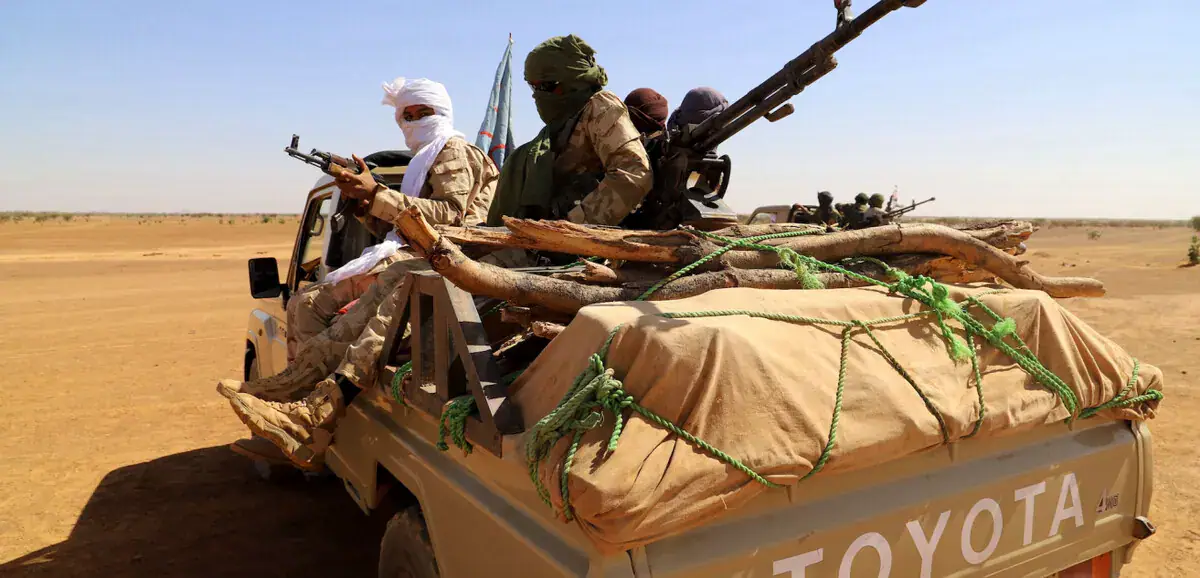
The Islamic State in West Africa (ISWAP) has significantly bolstered its technological capabilities, according to a report by the Institute for Security Studies (ISS). The jihadist group has incorporated armed drones, communication satellites, artificial intelligence, and international financial networks to support its operations in Nigeria. This development enables ISWAP to compete with its rival, Boko Haram, from which it split in 2016.
ISWAP initially utilized commercial drones for surveillance purposes before equipping them with explosives. These modified drones have been employed in repeated attacks on military positions in northeastern Nigeria. The group also receives technical training, financing, and media infrastructure support from the central Islamic State leadership. This assistance has provided ISWAP with a strategic advantage over Boko Haram.
The ISS report, authored by Taiwo Adebayo, is based on interviews conducted between April and September 2026 with 17 sources, including former fighters, security service members, and civilians. The study highlights ISWAP's adaptive technology program, which has evolved from using memory cards hidden in bread to employing Starlink and armed drones.
ISWAP's financial networks are complex and challenging to dismantle. The group has established supply chains in Lagos, Kano, and Dubai, as well as currency exchange systems that facilitate payments and equipment purchases. These networks often rely on legitimate economic activities, making them difficult to disrupt.
The group uses a remuneration system called "ghanimah," which rewards fighters for recovering weapons from raided military positions. In response to ISWAP's growing capabilities, the ISS recommends that Nigerian and regional authorities enhance military base protection, counter-drone measures, and financial circuit surveillance.
The ISS report also emphasizes the need for improved intelligence and cooperation to combat ISWAP's evolving threats. The group's ability to adapt and innovate has allowed it to stay ahead of its adversaries in the Lake Chad Basin region.
As ISWAP continues to develop its technological arsenal, regional security forces face increasing pressure to counter its advances. The Nigerian government and its international partners must develop effective strategies to address the group's growing capabilities and mitigate its impact on regional stability.
Key points
- ISWAP's use of advanced technologies, including armed drones and communication satellites, has significantly enhanced its operational capabilities.
- The group's financial networks, including those in Lagos, Kano, and Dubai, are complex and challenging to dismantle.
- The ISS recommends that authorities enhance military base protection, counter-drone measures, and financial circuit surveillance to counter ISWAP's growing threats.