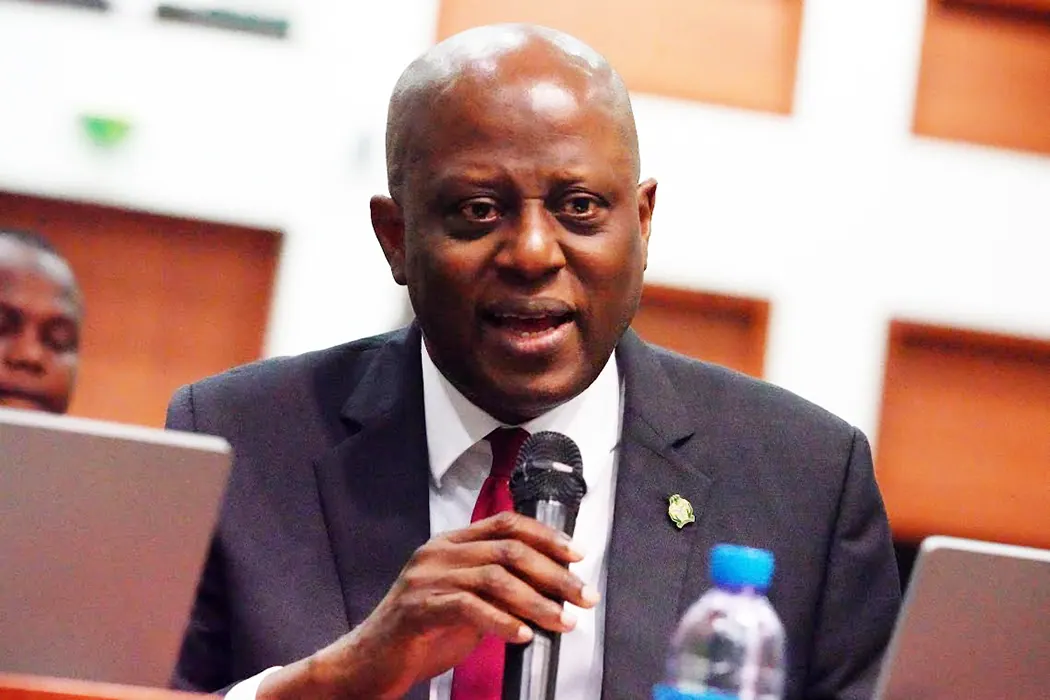
The Central Bank of Nigeria (CBN) and the Federal Ministry of Finance have signed a Memorandum of Understanding (MoU) aimed at fostering stronger collaboration between fiscal and monetary authorities. The agreement, signed on September 18, seeks to promote consultation, information-sharing, forecasting, government cash management, and debt issuance. This development marks a significant step towards ensuring that Nigeria's two principal macroeconomic policy engines work in tandem to achieve price stability.
For years, Nigeria's fiscal and monetary authorities have operated in the same economic space but have not always pulled in the same direction. Government borrowing has often injected liquidity that monetary policy subsequently had to restrain, while fiscal financing pressures have complicated the CBN's effort to contain inflation. High interest rates adopted to restore price stability have simultaneously increased the government's cost of borrowing, creating a longstanding tension between the two institutions.
The MoU represents a shift from informal engagement to a formal architecture of cooperation between the CBN and the Federal Ministry of Finance. According to CBN Governor Cardoso, the relationship is being formalized because "individuals come, individuals go." This move aims to institutionalize collaboration and ensure that macroeconomic policy coordination is not dependent on personal relationships. The CBN board already includes the Minister of Finance, the Permanent Secretary of the ministry, and the Accountant-General of the Federation.
The country's history provides evidence of the dangers of relying on personal relationships to coordinate macroeconomic policy. The legacy of this approach was visible in the CBN's financing of government deficits, with Ways and Means advances to the federal government accumulating to about N22.7 trillion before their securitization. Cardoso has identified the cessation of deficit financing through Ways and Means as one of the major changes under his administration.
The IMF had warned about fiscal vulnerabilities and the need for stronger macroeconomic policy coordination in Nigeria. The new fiscal-monetary covenant aims to address these concerns by ensuring that fiscal decisions, debt operations, liquidity management, and monetary policy are aligned around a common set of assumptions. This coordination is expected to help reduce inflation and promote economic stability.
The agreement is expected to have far-reaching implications for Nigeria's economic policy framework. By formalizing the relationship between the CBN and the Federal Ministry of Finance, the MoU provides a robust architecture for ensuring that macroeconomic policy coordination is not disrupted by changes in leadership or personal relationships. This development is seen as a positive step towards promoting economic stability and reducing inflation.
The success of the new fiscal-monetary covenant will depend on the effective implementation of the agreement and the commitment of both institutions to work together. The CBN and the Federal Ministry of Finance will need to work closely together to ensure that the objectives of the MoU are achieved and that Nigeria's macroeconomic policy framework is strengthened.
Key points
- The new fiscal-monetary covenant aims to promote stronger collaboration between Nigeria's fiscal and monetary authorities to achieve price stability.
- The agreement seeks to address the longstanding tension between the CBN and the Federal Ministry of Finance.
- The MoU provides a robust architecture for ensuring that macroeconomic policy coordination is not disrupted by changes in leadership or personal relationships.