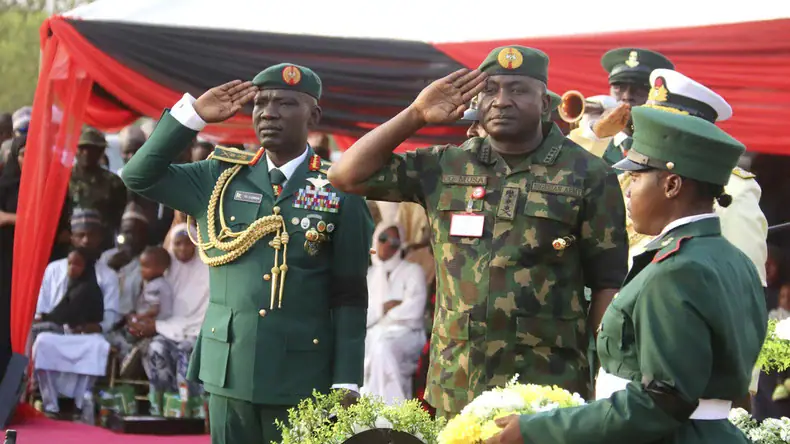
The Nigerian government has stepped up its military operations against jihadist groups and armed bands with strategic support from the United States. According to Defence Minister General Christopher Musa, the US provides real-time intelligence and satellite images to enhance the military's ability to locate and target leaders of armed groups. This cooperation has enabled several decisive nighttime operations in the northwest and northeast regions.
The military has achieved significant success, eliminating numerous leaders of bandit and terrorist groups. General Musa announced that new helicopters from the US and Italy will soon be delivered to bolster Nigeria's air fleet. This development is part of ongoing joint actions between Abuja and Washington against the Islamic State, including the May 2026 elimination of Abu-Bilal al-Minuki, a top IS leader.
The Nigerian government is also focused on securing the January 2027 presidential election, in which President Bola Tinubu will seek a second four-year term. The authorities aim to prevent destabilization before, during, and after the vote. Security services closely monitor technological tools used by armed groups, including the Starlink satellite network, cryptocurrencies, and commercial drones.
To counter these threats, Abuja collaborates with Washington to disrupt the financing networks of armed groups. The situation remains tense in the northeast, where Boko Haram and its dissident branch, the Islamic State in West Africa (ISWAP), have launched multiple attacks on military positions in recent weeks, despite 17 years of counter-insurgency operations.
On a regional level, Nigeria has concluded a security agreement with Cameroon, Niger, and Chad, granting armed forces a "right of pursuit" up to five kilometers beyond national borders. This move aims to prevent combatants from seeking refuge in border areas. General Musa also warned about the Islamic State's attempts to recruit members from criminal bands in northwest Nigeria.
The Islamic State's efforts to recruit from these groups raise concerns about the potential transformation of profit-driven groups into ideologically motivated movements. Although vast forest areas and porous borders with Niger and Benin still facilitate retreats, Abuja claims that enhanced surveillance is reducing their maneuverability.
General Musa emphasized that the military is blocking logistical support and eliminating combatants within Nigeria. The strengthened cooperation between Nigeria and the US demonstrates a concerted effort to address the country's security challenges ahead of the 2027 presidential election. The situation remains critical, with continued military operations and regional collaboration essential to mitigating these threats.
Key points
- Nigeria receives real-time US intelligence and satellite images to target leaders of armed groups.
- The country prepares for the 2027 presidential election by enhancing security measures and disrupting financing networks of armed groups.
- A regional security agreement allows for a "right of pursuit" across borders to prevent combatants from seeking refuge.
Reporting sources
- Abuja intensifie ses opérations militaires avec l’appui des États-Unis à l’approche de la présidentielle de 2027 · Le Quotidien de Nouakchott