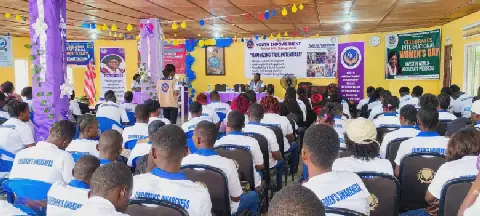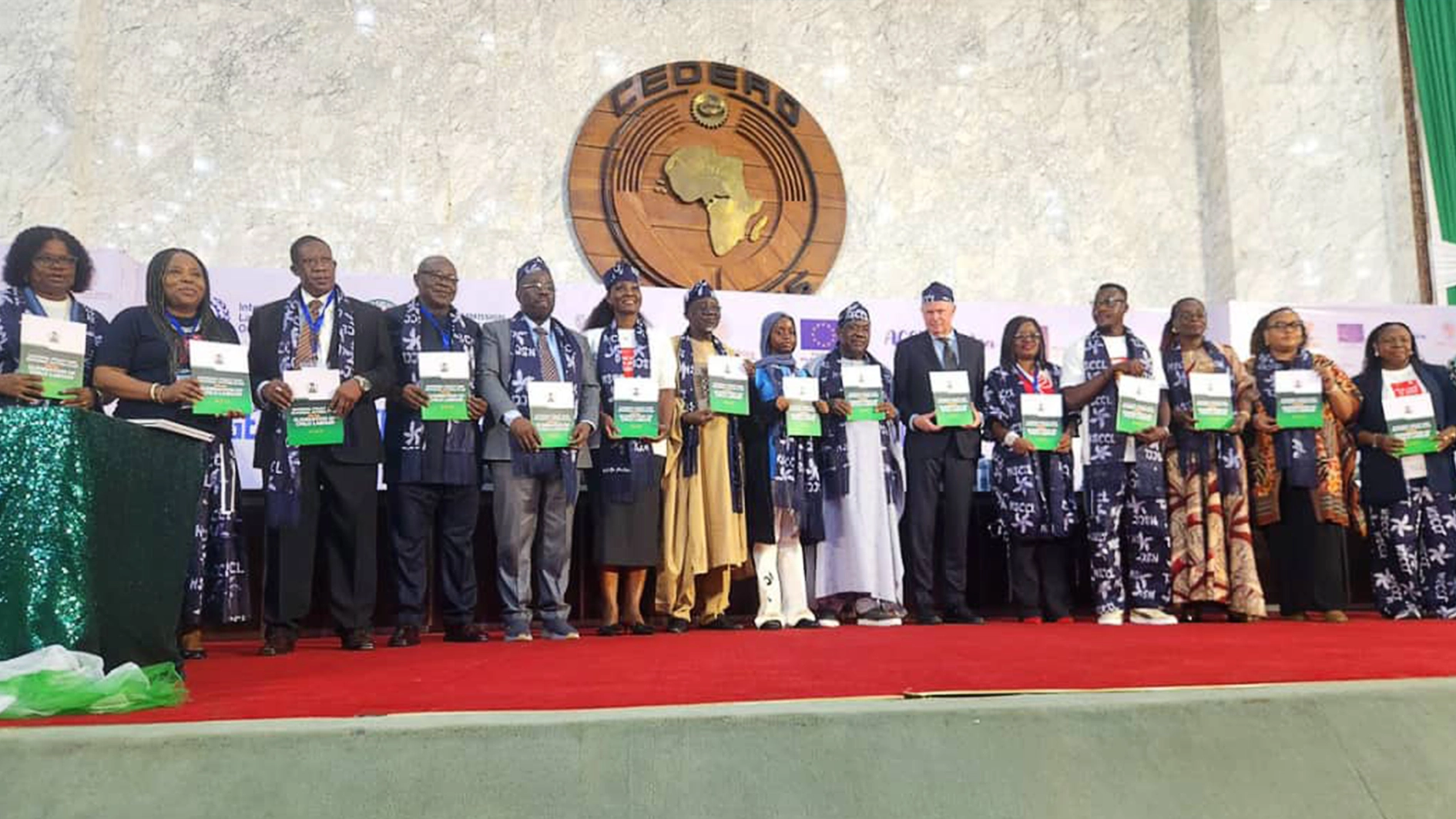
The Nigerian government has recently launched a national policy and action plan to combat child labour, with a focus on achieving economic security for households to reduce dependence on children's labour. The policy, unveiled by President Bola Tinubu, aims to accelerate efforts towards eliminating child labour and ensuring every Nigerian child is protected and educated. The 2024 National Child Labour Survey and the 2026–2030 National Action Plan on Child Labour were presented at a two-day national dialogue.
According to President Tinubu, eradicating child labour has become a national development priority, as it undermines education, poverty reduction, economic growth, food security, human capital development, and national security. He emphasized that the elimination of child labour is linked to education, social protection, economic growth, poverty reduction, food security, human capital development, and national security. The President declared that his administration would intensify efforts to tackle the root causes of child labour exploitation.
The National Child Labour Survey 2022 reported that approximately 25 million Nigerian children between the ages of five and 17 are engaged in child labour, representing nearly four out of every 10 children in that age bracket. The figures are even more alarming in rural communities, where the ratio of victims is 50 per cent. These statistics represent children working in various sectors, including farms, mines, and workshops, instead of attending school.
Globally, nearly 138 million children remain trapped in child labour, with 54 million engaged in hazardous work, according to the International Labour Organisation (ILO) Director-General, Gilbert Houngbo. He described the persistence of child labour as an unacceptable denial of childhood itself. The ILO and other advocates stress the urgency of translating commitments into concrete action to address the issue.
Poverty remains the single biggest driver of child labour, as many families struggling to survive rely on children's earnings to make ends meet. Limited access to quality education, weak social protection systems, and inadequate enforcement of labour laws further deepen the crisis. In Nigeria, the informal economy, where regulation is often weak and exploitation difficult to detect, contributes to the normalization of child labour.
Experts argue that implementation remains Nigeria's greatest challenge in eliminating child labour. Labour expert Lekan Olayiwola noted that Nigeria's drive to eliminate child labour by 2030 may face a major structural hurdle unless the Federal Government addresses the precarious livelihoods that push vulnerable households to depend on children's economic contributions. He emphasized that the informal labour market is a critical part of the child-labour debate.
The Nigerian government has reaffirmed its commitment to ending child labour and implementing resolutions agreed upon at international forums. The framework builds on previous interventions while aligning with regional and global initiatives, including the Marrakech Global Framework for Action and child protection strategies across West Africa. The government aims to strengthen labour administration and inspection systems, child protection mechanisms, and interventions aimed at addressing poverty, unemployment, and inadequate access to quality education.
Key points
- Nigeria has launched a national policy and action plan to eliminate child labour by 2030.
- Approximately 25 million Nigerian children between the ages of five and 17 are engaged in child labour.
- Poverty and limited access to quality education are major drivers of child labour in Nigeria.