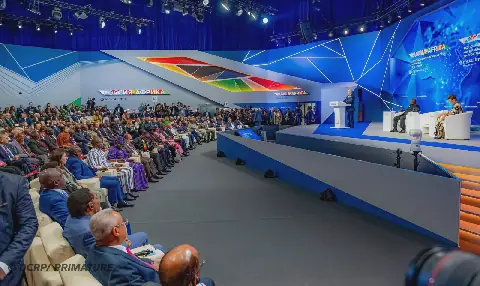
The Nigerian Upstream Petroleum Regulatory Commission (NUPRC) has announced plans to intensify efforts to end routine gas flaring by 2030. According to the commission's Chief Executive, Oritsemeyiwa Eyesan, this will be achieved through stricter penalties, improved infrastructure, and investments to convert wasted gas into commercially useful products. Eyesan made this statement at the Emogas International Natural Gas-Based Industry Conference and Exhibition (EINGICE 2026) in Abuja. The commission aims to build on progress made so far, having reduced gas flaring from about 90 per cent of production in the past to approximately seven per cent.
Despite the progress made, Nigeria still flares about 500 million standard cubic feet of gas daily. Eyesan identified inadequate infrastructure, high investment costs, and low gas volumes at some sites as major challenges to ending the practice. She stressed the need for further investment in gas development to achieve the 2030 target. To address this, the NUPRC launched the Nigerian Gas Flare Commercialisation Programme in 2021, which includes auctioning flare sites to third-party investors to support the utilisation of previously wasted gas.
The Nigerian Gas Flare Commercialisation Programme has seen 42 flare sites auctioned to third-party investors. The programme includes projects such as mini-liquefied natural gas (LNG) plants and liquefied petroleum gas (LPG) facilities, which are expected to turn flared gas into valuable products. This initiative aims to reduce gas flaring while creating new economic opportunities. The programme is part of the commission's efforts to implement the Petroleum Industry Act, which sets a gas-flaring penalty of two dollars per thousand standard cubic feet.
The Petroleum Industry Act also provides for additional penalties for operators who exceed approved limits. According to Eyesan, Nigeria had proven gas reserves of 215.19 trillion cubic feet as of January 1, representing an estimated reserve life of 85 years. The country produced an average of 7.42 billion standard cubic feet of gas daily in 2025, with about 92.4 per cent utilised. This indicates a significant level of gas production and utilisation in the country.
Increased investor interest in Nigeria's gas industry is attributed to regulatory reforms, including Executive Order 40 of 2024. This order has led to the development of gas projects such as Ubeta, HI, and Ima, which have a combined potential production capacity of about one billion cubic feet daily. The commission is also developing a gas-swap framework and has opened a licensing round offering 40 blocks. These initiatives aim to attract investment and drive growth in the gas sector.
Ainojie Irune, Managing Director of Oando Energy Resources Nigeria Limited, called on African countries to focus on turning their gas resources into economic value. He noted that Africa would need about one trillion dollars in investment in its gas industry by 2050 to unlock its full potential. Irune emphasised that natural gas could improve electricity supply, strengthen manufacturing, and promote industrial development, particularly in a region where nearly 600 million people lack access to electricity.
Irune identified inadequate infrastructure, uncertain payment arrangements, and delays in commercial decisions as major challenges facing Nigeria's gas industry. He stressed that gas projects required cooperation among producers, pipeline operators, power plants, industrial consumers, financiers, and governments. To attract investment and ensure consistent delivery, Irune called for better-connected gas supply systems, reliable infrastructure, bankable contracts, and stable regulatory policies.
Key points
- The Nigerian Upstream Petroleum Regulatory Commission (NUPRC) aims to end routine gas flaring by 2030 through stricter penalties and improved infrastructure.
- Nigeria still flares about 500 million standard cubic feet of gas daily, despite reducing gas flaring from 90 per cent to seven per cent of production.
- Africa needs about one trillion dollars in investment in its gas industry by 2050 to unlock its full potential, according to Ainojie Irune, Managing Director of Oando Energy Resources Nigeria Limited.