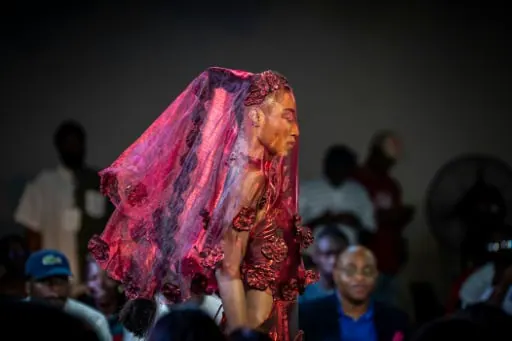
Nigeria Fashion Week, a premier event in the country's fashion industry, has made its debut in Abuja, the capital city, after being held in Lagos since 2002. The event, which wraps up on Sunday, features Nigerian models showcasing outfits with intricate designs and massive silhouettes. The colorful textiles on display evoke the vibrant Carnival celebrations in Nigeria and Rio de Janeiro. This year's event has brought a much-needed injection of creativity to Abuja, a city known for being the seat of government rather than a hub for fashion.
The decision to move Nigeria Fashion Week to Abuja was made to increase dialogue between the industry and government, according to organizers. The event aims to build Abuja as a fashion city and change the city's laid-back dynamics. Lexy Mojo-Eyes, the organizer of the fashion week, described Abuja as "slow" and "laid back," but expressed his desire to transform the city into a vibrant fashion hub. The event has attracted guests and attendees from across the country, who are bringing their own unique style to the runway.
Abuja, which officially became the capital of Nigeria in 1991, is still developing its arts scene. Despite being a planned administrative center, the city has a small but growing creative sector. The Nigeria Fashion Week has brought together industry professionals, designers, and artists to showcase their talents and promote Nigerian fashion. The event has also attracted international designers, including Libyan designer Rabia Ben Barka, who made her debut in Nigeria with her brand Azyaa Karima.
The fashion week features a range of designs, from shimmering dresses to metallic silver and black pinstripe suits. The event has also hosted vendors selling handbags, menswear, and leather goods, making it a one-stop destination for fashion enthusiasts. According to culture minister Hannatu Musa Musawa, the government has a role to play in creating an enabling environment for the fashion industry, including reforming tourism and intellectual property law.
The move to Abuja has also brought together longtime Lagos players, including Chinwe Ezenwa, a handbag designer who opened a second factory in the capital in 2021. Ezenwa described Abuja as "a bit of a sleepy town," but expressed optimism about the city's potential for growth. The event has also highlighted the challenges facing Abuja, including high housing costs and the government's decision to raze green areas and farms in favor of luxury development.
Despite the challenges, the Nigeria Fashion Week has brought a much-needed injection of creativity and energy to Abuja. The event has showcased the country's vibrant fashion scene and provided a platform for designers to showcase their talents. As the city continues to develop its arts scene, events like the Nigeria Fashion Week will play a crucial role in promoting Nigerian fashion and culture.
As the Nigeria Fashion Week comes to a close, attendees and designers are optimistic about the future of fashion in Abuja. The event has demonstrated that the city has the potential to become a major hub for fashion and creativity. With the government's support and investment in the arts, Abuja could become a major player in the country's fashion industry.
Key points
- The Nigeria Fashion Week has been held in Abuja for the first time in 2026, after being held in Lagos since 2002.
- The event aims to build Abuja as a fashion city and promote Nigerian fashion and culture.
- The move to Abuja has brought together industry professionals, designers, and artists to showcase their talents and promote Nigerian fashion.