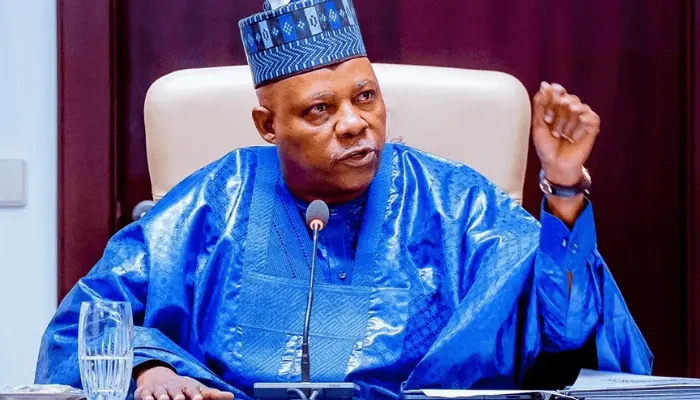
Nigeria's campaign for a permanent seat on the United Nations Security Council has gained momentum, but the country faces significant challenges. Vice President Kashim Shettima will present Nigeria's national statement at the 81st United Nations General Assembly in New York on September 24. Nigeria's bid is part of a broader push for reform of the Security Council, which still reflects the power structure created after World War II. The African Union is seeking at least two permanent seats with the same privileges as existing permanent members.
The African Union's common position leaves the selection of African representatives to the continent, creating a complicated contest for Nigeria. Nigeria, South Africa, and Egypt have different claims to a permanent seat. Nigeria has served on the Security Council five times and has a long record of UN and regional peacekeeping. Its strongest argument is the combination of population, regional influence, and peacekeeping experience. South Africa's claim rests on its multilateral diplomacy and position within the Global South.
Egypt brings a different strategic reach, spanning North Africa, the Arab world, and the Middle East. The three countries arrive at the debate with different sources of influence, but the African Union has not designated any one of them as Africa's permanent representative. Africa can agree on the need for permanent representation without agreeing on who should occupy the seats. Katchy Ononuju, a public affairs analyst, said Nigeria faces competition from countries including South Africa and Egypt, which would not easily yield ground to Abuja.
The veto power held by the five existing permanent members makes the campaign harder. A UN negotiating paper circulated in June 2026 shows that countries remain divided over whether new permanent members should receive veto rights. Nigeria has backed the African position that new permanent members should have the veto for as long as the existing veto survives. A seat with veto power would give an African country the ability to block substantive Council decisions.
Nigeria's domestic record is also being weighed against its international credentials. The country continues to face insurgency and other security threats while trying to strengthen its economy and attract investment. Abubakar Kari, an associate professor of sociology, said Nigeria's contribution to global peace and its position in Africa give it a strong case, but Abuja would need to strengthen its diplomatic lobbying capacity.
Aliyu Idi Hong, the former foreign affairs minister of state, said Nigeria's demographic position, peacekeeping record, and role in strengthening democracy in West Africa make it well positioned to represent the continent. He urged the government to strengthen its diplomatic machinery, warning that Nigeria cannot assume its historical role will automatically translate into international support.
A permanent seat would provide Nigeria with a continuing role in decisions involving international conflicts, sanctions, peacekeeping mandates, and other global security issues. It would also strengthen Abuja's diplomatic leverage as it seeks investment and a larger role in international economic affairs. However, permanent membership would come with significant responsibilities, requiring greater diplomatic capacity and the ability to maintain positions on conflicts involving major powers and strategic partners.
Key points
- Nigeria faces stiff competition from South Africa and Egypt for a permanent UN Security Council seat.
- The African Union's common position leaves the selection of African representatives to the continent.
- A permanent seat would provide Nigeria with a continuing role in global security decisions and strengthen its diplomatic leverage.