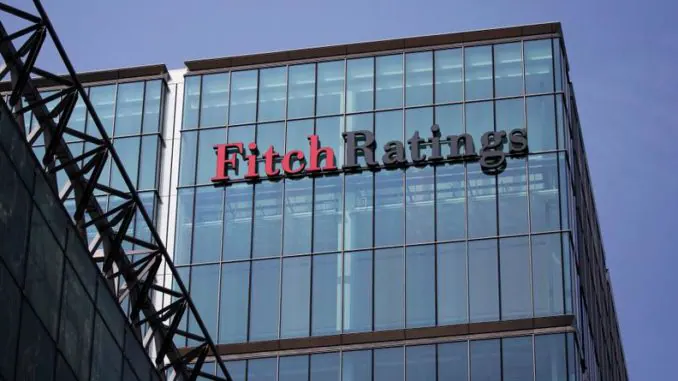
The federal government of Nigeria has set its sights on achieving investment-grade status, buoyed by recent positive rating actions from Fitch Ratings, S&P Global Ratings, and Moody’s Ratings. In 2026, these major international rating agencies have taken favorable stances on Nigeria's economic prospects. Fitch Ratings revised Nigeria's outlook to Positive from Stable, affirming its Long-Term Issuer Default Ratings at ‘B’. This development aligns with the government's medium-term ambition to elevate Nigeria's rating to investment grade.
Minister of Finance and Coordinating Minister of the Economy, Taiwo Oyedele, emphasized that the government's reforms, including the removal of fuel subsidies, unification of the exchange rate, and new tax laws, have contributed to the positive ratings. He noted that these reforms aim to lower Nigeria's cost of capital, attract private investment, and create jobs. Oyedele stated that the Fitch decision validates the Tinubu administration's efforts, highlighting the government's focus on sustainable economic growth.
The positive rating actions from Fitch, S&P, and Moody’s have significant implications for Nigeria's economic trajectory. S&P upgraded Nigeria to ‘B’ from ‘B-’ in May 2026, while Moody’s revised its outlook to Positive in August 2026. Additionally, FTSE Russell reclassified Nigeria to Frontier Market status, effective September 21, 2026. These decisions reflect a converging and increasingly favorable view of Nigeria's reform path.
Fitch's outlook revision is based on ongoing reforms and increased confidence that the momentum will not be disrupted by the upcoming elections in early 2027. The agency cited monetary and exchange rate reforms, leading to greater naira flexibility, disinflation, and faster accumulation of foreign exchange reserves. Nigeria's gross reserves rose to $54.9 billion on September 25, 2026, from $32 billion in mid-April 2024.
The increase in foreign exchange reserves is attributed to more formalized foreign exchange transactions, strong portfolio inflows, and higher export receipts and remittances. Fitch also noted that reserve quality has improved, as the Central Bank of Nigeria has reduced its foreign exchange liabilities. The agency expects reserve cover to reach 6.3 months of current external payments by the end of 2026.
Despite the positive outlook, Fitch identified potential risks, including large net errors and omissions, which remain a source of uncertainty. The agency forecast that the current account surplus will widen to 6.4 percent of GDP in 2026 but narrow in 2027, as global oil prices are expected to fall to $70 per barrel from $87 in 2026.
The upcoming elections in early 2027 are not expected to disrupt Nigeria's economic policy, with the ruling party well-positioned to win. Fitch expects broad continuity in economic policy, citing significant policy slippage as a potential risk. The government's commitment to reforms and investment-grade status will be crucial in determining Nigeria's future economic prospects.
Key points
- Nigeria aims to achieve investment-grade status following positive ratings from Fitch, S&P Global Ratings, and Moody’s Ratings in 2026.
- The government's reforms, including the removal of fuel subsidies and unification of the exchange rate, have contributed to the positive ratings.
- Nigeria's gross reserves have risen to $54.9 billion, driven by formalized foreign exchange transactions, strong portfolio inflows, and higher export receipts and remittances.