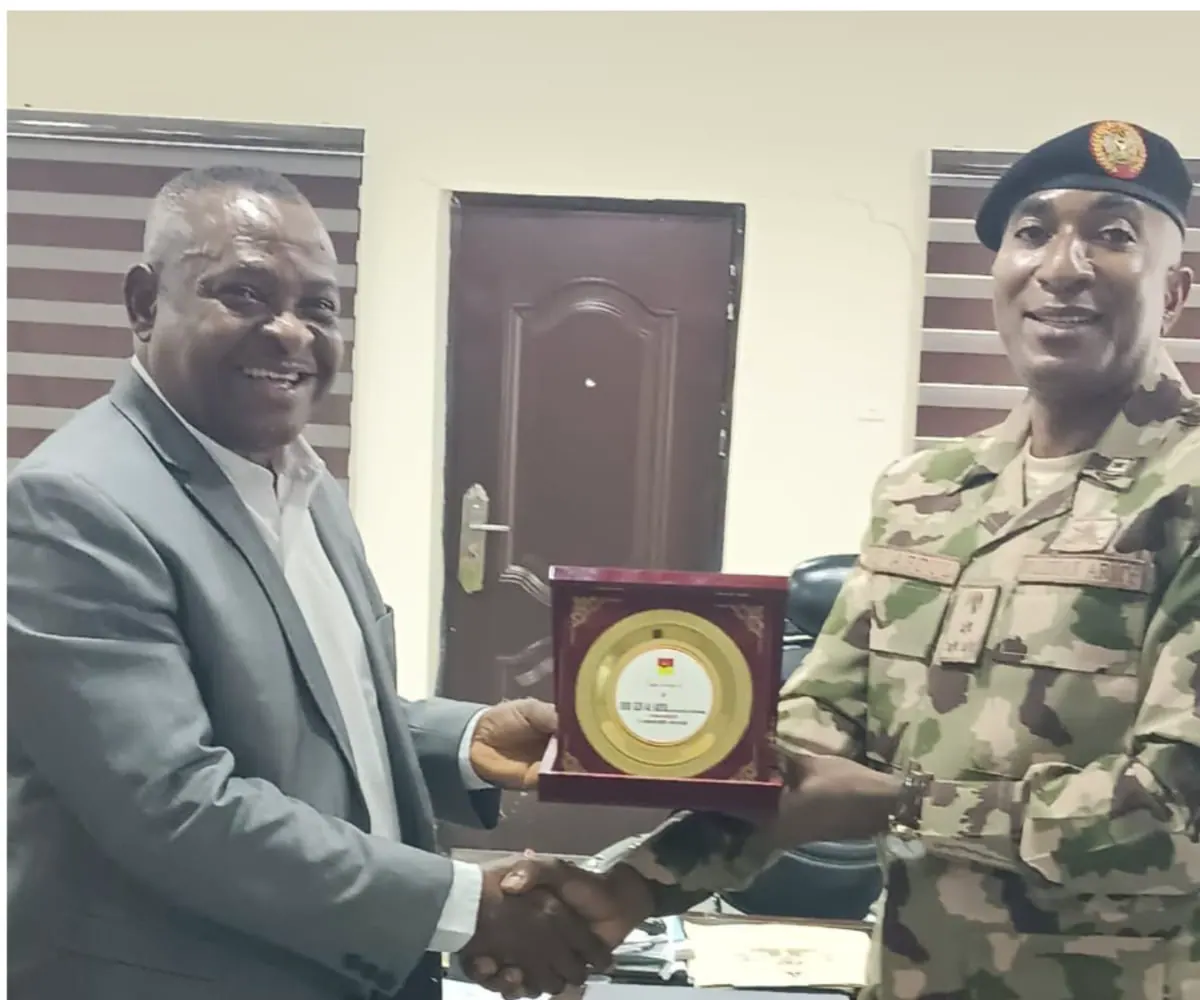
The Nigerian Army and the Independent Corrupt Practices and Other Related Offences Commission (ICPC) are strengthening their collaboration to combat terrorism financing in Nigeria. On a recent courtesy visit to the ICPC Adamawa State Command, Brigadier General Adamu Abdul, Commander of the 23 Armoured Brigade, discussed the importance of identifying and blocking financial networks suspected of supporting terrorism. This move aims to weaken insurgent groups and disrupt their operations by tackling the sources of their funding.
Brigadier General Abdul emphasized that addressing terrorism requires a comprehensive approach that goes beyond targeting fighters and their operational networks. He highlighted the need to also focus on the financial channels that enable terrorist groups to acquire logistics and sustain their activities. The Army commander cited Boko Haram, the Islamic State West Africa Province (ISWAP), and kidnapping as pressing security threats that require greater attention to their financial and logistical networks.
The ICPC has a crucial role to play in this collaboration through intelligence gathering, financial investigations, and information sharing with security agencies. Brigadier General Abdul expressed the Nigerian Army's eagerness to build a stronger partnership with the ICPC in these critical areas. The commander noted that the ICPC's expertise would be invaluable in identifying and blocking financial loopholes and clandestine channels used to fund terrorist activities.
In response, Resident Anti-Corruption Commissioner Okoro Ulu James reaffirmed the ICPC's commitment to working with the military on issues within its mandate. He highlighted that both institutions have a history of collaboration, including personnel training and information sharing. James emphasized that closer cooperation between anti-corruption and security agencies is increasingly important in addressing Nigeria's security and governance challenges.
The collaboration between the Army and ICPC aims to disrupt the financial networks of terrorist groups, including Boko Haram and ISWAP. These groups have been responsible for numerous attacks and kidnappings in Nigeria, causing widespread instability and insecurity. By targeting their financial channels, the authorities hope to significantly weaken their ability to operate.
Okoro Ulu James assured the Army that the ICPC would continue to support efforts involving financial and intelligence-related issues that could undermine the fight against terrorism and other criminal activities. The ICPC's support will be crucial in identifying and blocking financial networks used by terrorist groups. This joint effort is expected to enhance the effectiveness of Nigeria's counter-terrorism strategies.
The Nigerian government has been facing criticism for its handling of security issues, particularly in the north-central and north-east regions. The partnership between the Army and ICPC is seen as a positive step towards addressing these concerns. Key to this effort is the identification and disruption of financial networks used by terrorist groups, which will require sustained collaboration and intelligence sharing between the two agencies.
Key points
- The Nigerian Army and ICPC are collaborating to identify and block financial networks suspected of supporting terrorism in Nigeria.
- The partnership aims to weaken insurgent groups, including Boko Haram and ISWAP, by targeting their financial channels.
- The ICPC will support efforts involving financial and intelligence-related issues to undermine the fight against terrorism and other criminal activities.