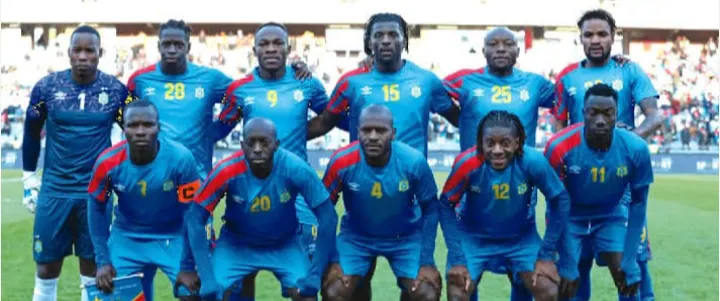
Nigeria's failure to qualify for the 2026 FIFA World Cup has come under fresh scrutiny following revelations that DR Congo may have used an ineligible player during the qualification process. An investigation found that DR Congo goalkeeper Lionel Mpasi had previously represented France at youth level and had not completed all necessary documentation required to switch his international allegiance. Nigeria challenged Mpasi's eligibility after the Super Eagles' defeat to DR Congo in the World Cup qualifying playoffs.
Documents reviewed showed that FIFA considered several possible actions after receiving Nigeria's complaint, including awarding the match to Nigeria, imposing a fine on DR Congo, replacing the Congolese team with Nigeria in the playoff against Jamaica, or taking no action due to Nigeria's late complaint. FIFA eventually allowed DR Congo to continue in the competition, and the Central African country went on to defeat Jamaica and secure a place at the 2026 World Cup, ending a 52-year wait.
FIFA did not challenge the findings of the investigation, stating that its committees operate independently and make decisions based on relevant regulations and facts presented in each case. FIFA president Gianni Infantino had no involvement in the decision. The revelation has raised questions about whether FIFA treated Nigeria's case differently from previous eligibility disputes, such as Greece being handed a 3-0 defeat in 2016 for fielding an ineligible player.
The controversy has also raised questions about FIFA's relationship with African football officials, particularly given Africa's 54 member associations form the largest voting bloc in FIFA's presidential elections. The case is linked to Véron Mosengo-Omba, an ally of Infantino involved in Congolese football administration, who was elected as the sole candidate for the presidency of DR Congo's football federation.
Mosengo-Omba later resigned as CAF secretary-general in March amid governance concerns. The latest revelations could increase pressure on FIFA to explain why DR Congo was allowed to continue its qualification campaign despite concerns over Mpasi's eligibility. Former Nigeria Football Federation president Ibrahim Musa Gusau has called for an investigation, arguing that the information could have significantly impacted Nigeria's World Cup qualification campaign.
Gusau reportedly was informed that Nigeria's complaint had been rejected on technical grounds but was not told that FIFA had identified an eligibility concern involving Mpasi. The Athletic reported that the controversy was not fully communicated to Nigerian football authorities. The case has sparked renewed calls for an explanation of FIFA's handling of the Nigeria and DR Congo case.
The issue has significant implications for Nigerian football, with many questioning the fairness of the qualification process. The country's football authorities are likely to continue pushing for answers on why FIFA allowed DR Congo to participate despite eligibility concerns. Key points include:
Key points
- FIFA allowed DR Congo to continue in the World Cup qualification despite concerns over Lionel Mpasi's eligibility.
- Nigeria challenged Mpasi's eligibility but was not awarded the World Cup spot.
- The case has raised questions about FIFA's relationship with African football officials and its handling of eligibility disputes.