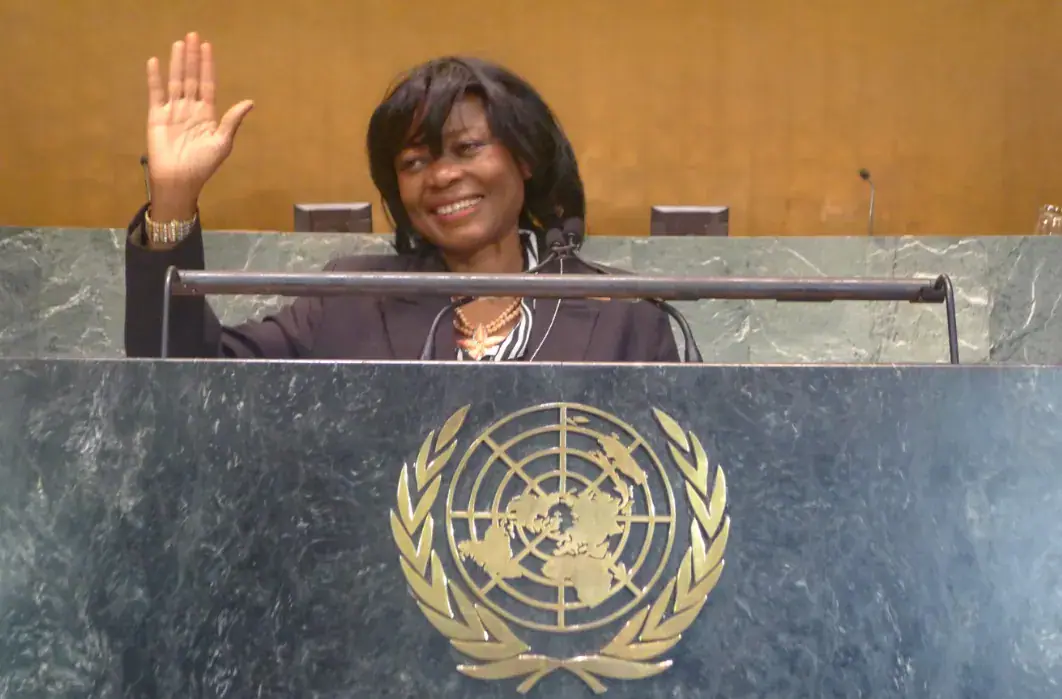
The international community is approaching a critical moment in the selection of the tenth Secretary-General of the United Nations. Nigeria has emerged as a potential player in the process with the possible nomination of Akasoba Zainab Duke-Abiola. As an internationally respected constitutional jurist and stateswoman, Duke-Abiola has garnered attention from African policy institutions and international networks seeking greater African representation in global leadership. Her background as a constitutional jurist, public administrator, and international mediator makes her a strong contender.
The selection process for the UN Secretary-General has entered a consequential phase with eight informal Security Council straw polls conducted, but no formal recommendation made to the General Assembly. The incumbent Secretary-General António Guterres will complete his tenure on December 31, 2026. Nigeria faces a diplomatic decision on whether to present a credible African woman for the world's foremost multilateral office. Stakeholders argue that Nigeria could seize the remaining opportunity to advance a credible African woman for the position.
Recent diplomatic signals from Washington and Moscow have added a new dimension to the succession debate. The United States emphasizes the importance of merit, leadership capability, and institutional reform. Russia has indicated a willingness to consider candidates from regions beyond Latin America and the Caribbean if existing contenders fail to secure necessary Security Council support. These positions reinforce the argument that the selection process should prioritize exceptional leadership credentials and diplomatic acceptability.
The withdrawal of former Senegalese President Macky Sall has altered the African dimension of the contest. Uganda's Olara Otunnu remains among the nominated candidates, while indicators suggest the UN is leaning towards a female candidate. Advocates argue that Nigeria could introduce a distinctive African woman's perspective into the selection process. They contend that the opportunity is increasingly measured in weeks rather than months.
Stakeholders maintain that formal nomination by a sovereign Member State is required, despite growing institutional and international advocacy surrounding Duke-Abiola's candidature. United Nations General Assembly Resolution 79/327 encourages Member States to consider nominating women for the position. Nigeria, as Africa's most populous country, possesses the international standing and historical credentials to present a serious candidature.
Analysts argue that Nigeria's decision could provide a platform for advancing its foreign policy doctrine of the Four Ds: Demography, Development, Diaspora, and Democracy. These priorities underscore Nigeria's aspirations for stronger international partnerships and more influential participation in global governance. Supporters believe a Nigerian candidature could demonstrate the country's commitment to principled international engagement and constructive global leadership.
Duke-Abiola's professional background encompasses constitutional governance, international law, human rights, diplomacy, security, and strategic studies. Advocates argue that her breadth of experience offers a foundation for addressing interconnected challenges confronting the contemporary international order. Her candidature could broaden the representation of African women in international leadership positions.
Key points
- Nigeria may nominate Akasoba Zainab Duke-Abiola for UN Secretary-General.
- The selection process prioritizes exceptional leadership credentials and diplomatic acceptability.
- Nigeria's nomination could introduce a distinctive African woman's perspective into the selection process.