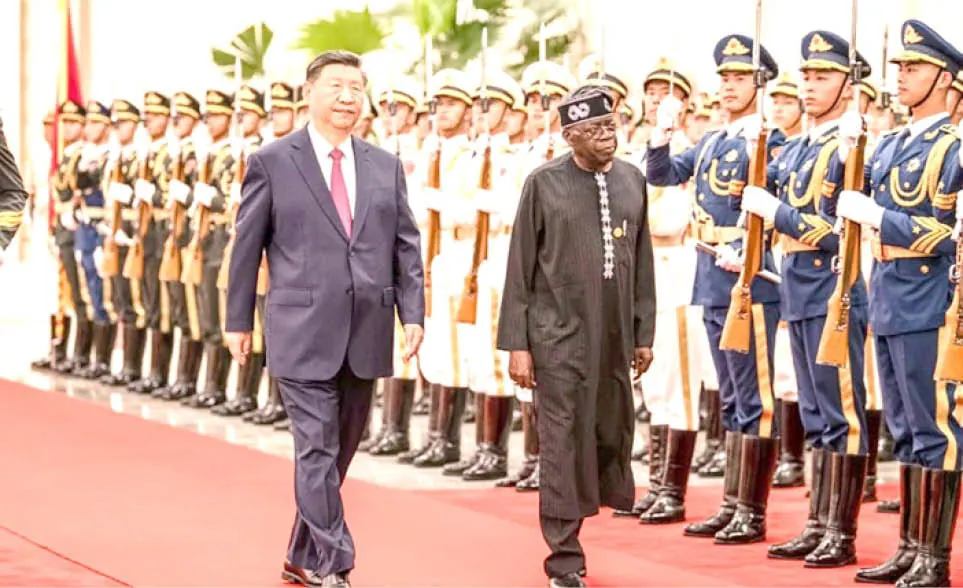
A shift in Nigeria-China trade relations is causing tension between local businesses and Chinese retailers. Chinese businesses are increasingly adopting a direct-to-retail consumer model, bypassing traditional Nigerian importers, wholesalers, and retailers. This trend has been evident in various markets across Nigeria, including the Lagos International Trade Fair Complex, Tejuosho Market, and China Town. Local businesses and traders are expressing concerns that this shift threatens their survival.
The growing presence of Chinese retail outlets in Nigeria is not limited to a few markets. Chinese merchants are renting shops, buildings, or using warehouses inside or near markets, importing goods in bulk, and selling at or near wholesale prices to end consumers or small retailers. This has enabled them to offer lower prices and more choices to Nigerians. The activities of Chinese retailers now dominate various sectors, including textiles, ICT accessories, tyres, and plumbing.
The traditional supplier-importer-wholesaler-retailer business model in Nigeria is facing severe economic friction due to the foray of Chinese merchants into direct-to-consumer retail. Nigerian middlemen are unable to match the lower retail prices offered by Chinese retailers, leading to concerns that local businesses are being displaced from markets. The National President of the Association of Small Business Owners of Nigeria, Dr. Femi Egbesola, has warned that the growing involvement of Chinese nationals in Nigeria's retail trade poses a threat to millions of small businesses.
The impact of the growing presence of Chinese retailers on Nigeria's economy cannot be overstated. A recent quarterly data from the National Bureau of Statistics shows that the trade sector recorded a GDP contribution of 17.89% in early 2026. The distributive trade sector accounts for approximately 27.5% of Nigeria's total workforce. The Centre for the Promotion of Private Enterprise has expressed concerns that the crowding out of small and medium enterprises from the distributive trade sector could have negative consequences for the economy.
The Nigerian government has been urged to establish clear boundaries for foreign participation in the country's trading sector. The government should initiate dialogue to ensure the safety of Chinese investments while guaranteeing fair competition and sustenance of the nation's distributive trade sector. The newspaper has called for clear delineation whereby foreign direct capital investment moves into manufacturing, infrastructure, technology, and processing sectors, away from retail outlets.
The Nigerian Investment Promotion Commission Act allows 100% foreign ownership of businesses, but the government must handle this issue with utmost dexterity to avoid arousing local resentment or potential tension. The government should review and enforce business permits, expatriate quotas, and immigration approvals limiting the involvement of non-citizens in specific approved roles. A policy clarifying limits on last-mile retail participation across the distribution chain and by foreigners is also necessary.
The issue requires urgent federal government intervention to prevent the strain of Nigeria-China commercial ties or the crowding out of Nigerians from their means of livelihood. Nigerian entrepreneurs are being urged to pool their resources and upgrade from importing to local assembling of products and possible migration to manufacturing. The government can support this by improving structural factors such as cheaper finance, reliable electricity, infrastructure, and simpler regulatory systems to enable local enterprises to thrive.
Key points
- The growing presence of Chinese retail outlets in Nigeria threatens the survival of local businesses and traders.
- The Nigerian government needs to establish clear boundaries for foreign participation in the country's trading sector.
- The government should encourage Nigerian entrepreneurs to upgrade from importing to local assembling of products and possible migration to manufacturing.