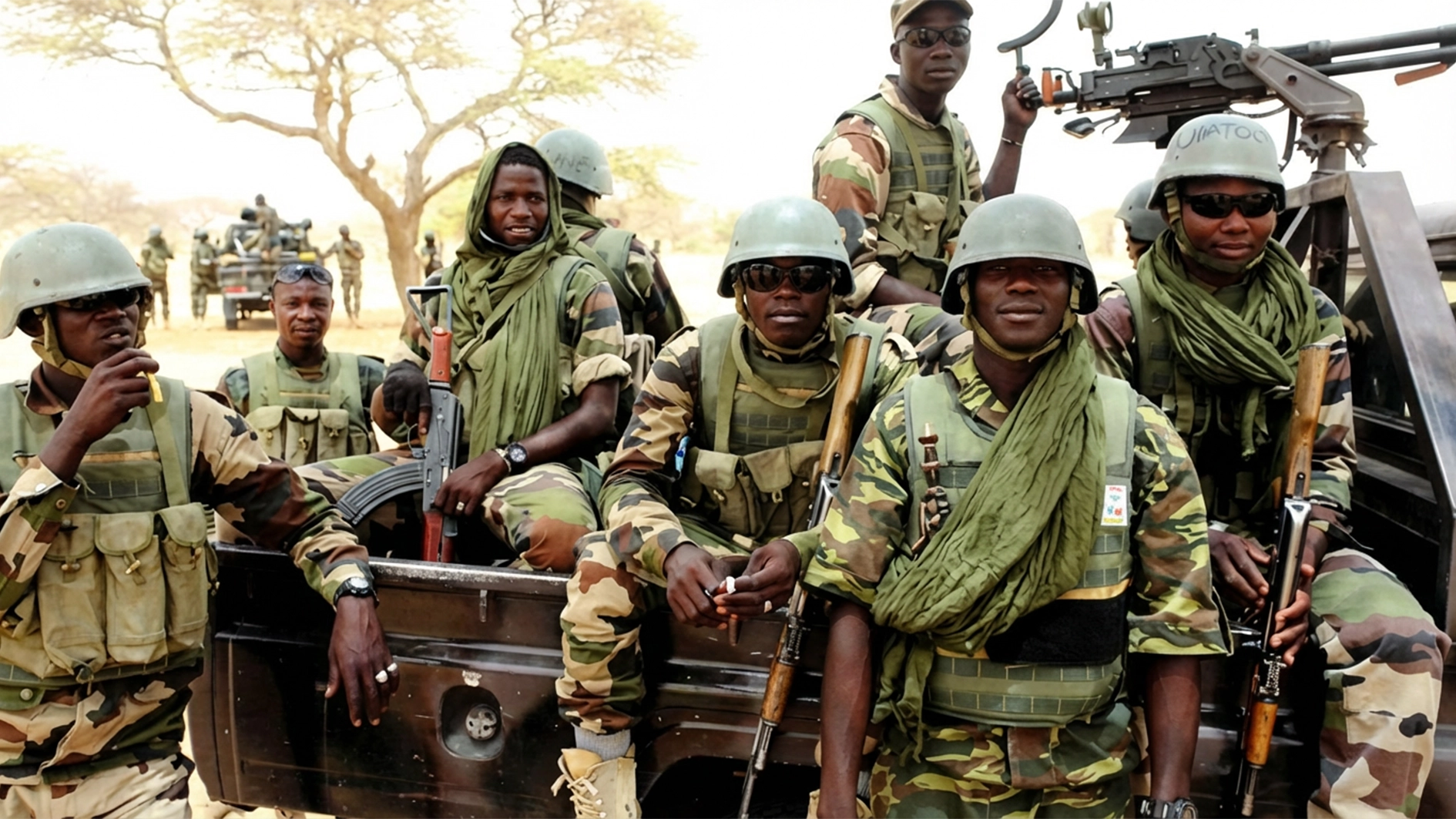
Nigeria is bearing a significant share of the financial and logistical burden of the Multinational Joint Task Force (MNJTF) in the fight against Boko Haram and Islamic State West Africa Province (ISWAP) in the Lake Chad Basin. The MNJTF, comprising Nigeria, Cameroon, Chad, Niger, and Benin, was established to respond to the Boko Haram insurgency and later expanded its focus to counter ISWAP. Despite various military operations, attacks have continued unabated, and the MNJTF faces persistent funding and capability gaps.
The Christian Association of Nigeria (CAN) has urged the Federal Government and security agencies to step up efforts to rescue 78 schoolchildren and other victims held captive for over 100 days. The state CAN Chairman, Most Reverend John Bakeni, appealed during a prayer session in Maiduguri, noting that the security situation in Borno had made it difficult for the Christian community to celebrate a milestone anniversary with usual festivities. Many residents are still grappling with insecurity and economic hardship.
The funding challenge of military operations has put the sustainability of the MNJTF regional force under scrutiny. Defence Minister Christopher Musa called for greater African ownership of the financing and sustenance of regional security mechanisms amid continued reliance on international partners. Musa raised the issue during a high-level discussion organised by the Ministry of Defence on the margins of the 81st United Nations General Assembly High-Level Week in New York.
Nigeria has continued to shoulder a significant portion of the financial, troop, and logistical burden of the regional force, with records showing that Nigeria directly disbursed about $209.08 million to the MNJTF between 2015 and 2021. However, the current consolidated financial contribution of each of the troop-contributing countries remains unclear. A senior defence official said the situation had persisted partly because Nigeria contributes a significant proportion of the troops and equipment deployed under the MNJTF.
The European Union, the largest external contributor to the MNJTF, has provided €234.4 million to date, covering areas including operational and logistical support, mobility, medical services, intelligence, surveillance, and reconnaissance, infrastructure, and equipment. The United Kingdom has also mobilised £5 million through the African Union Commission, while the African Union provided $1 million from its Peace Fund Crisis Reserve Facility in May 2026.
The MNJTF has identified gaps in equipment, logistics, and operational support, with communications systems, counter-drone technology, electronic warfare, and counter-IED capabilities listed among its operational needs. The force reviewed its requirements and support mechanisms during its 18th Joint Steering Committee meeting in N’Djamena, Chad, on September 7 and 8. Nigeria’s contribution has come alongside substantial international assistance to the regional force.
The insurgency has resulted in significant displacement, disruption of livelihoods, and pressure on military and humanitarian resources across the region. Borno remains the epicentre of the crisis, and the activities of Boko Haram and ISWAP continue to generate displacement. The MNJTF faces a challenge in sustaining operations due to funding gaps, and a more sustainable arrangement would require greater commitment from all participating countries.
Key points
- Nigeria bears 72% of regional displacement burden
- $209m disbursed by FG over six years, EU commits €234.4m in 10 years
- 80% rise in security incidents recorded in two years