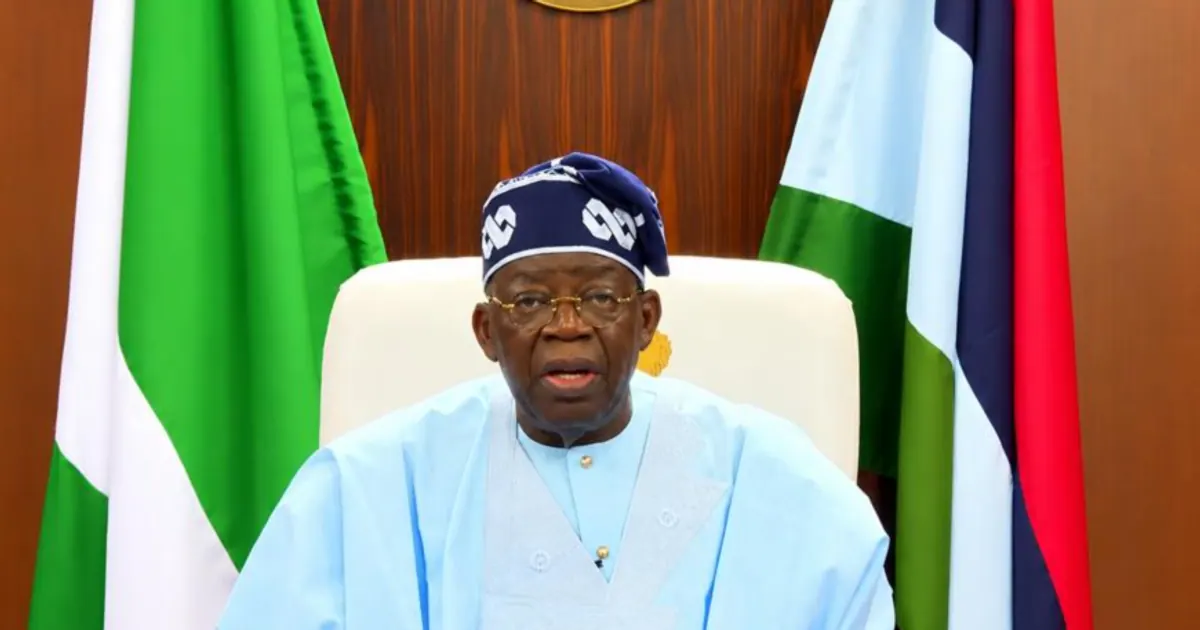
On October 1, 2026, President Bola Tinubu addressed Nigerians on the country's 66th Independence Day, marking a significant milestone. In his speech, titled "From Reform to Prosperity," Tinubu emphasized that Nigeria has moved beyond the most challenging phase of economic reforms and is now entering a new era of prosperity. He highlighted the administration's focus on reducing the cost of living, creating jobs, and ensuring economic growth translates into better living conditions for Nigerians.
Tinubu defended his administration's economic reforms, introduced since he assumed office in 2023, which he believes were necessary to address deeper economic problems. He used the analogy of a cancer patient choosing between painful treatment and medication that merely masks symptoms, arguing that previous governments had opted for the latter. According to Tinubu, the reforms have confronted and not created the weaknesses in the economy.
The President reported that Nigeria's economy has grown by more than 4% in 2026, with both the oil and non-oil sectors contributing to stable growth. He also mentioned that oil theft has declined, inflation has fallen substantially from its peak, foreign reserves have been rebuilt, and the foreign exchange market has stabilized. Additionally, Tinubu stated that Nigeria recorded its highest-ever revenue from non-oil exports in 2025, exceeding $6 billion.
Reducing the cost of living is now a central priority for the government, Tinubu announced. He plans to achieve this by reducing production and transportation costs of goods consumed by Nigerians. The government intends to intervene in areas such as agriculture, infrastructure, storage, and transportation. Tinubu mentioned expanding mechanized irrigation and dry-season farming, improving access to seeds and fertilizer, and investing in storage and transportation.
Tinubu emphasized that economic prosperity requires more than just cheaper goods; his government will prioritize jobs, enterprise, and industrial growth. He highlighted Nigeria's young population and the need to turn this demographic strength into productive economic activity. The President mentioned using Nigeria's gas resources to power industries, supporting businesses, expanding digital connectivity, and investing in skills demanded by employers.
The President called for a stronger domestic production base, wanting to see more Nigerian farms supplying cities and factories and more Nigerian companies selling locally produced goods internationally. He also expressed his ambition for young Nigerians to build major technology companies. Tinubu's economic strategy will focus on increasing production, strengthening businesses, and creating opportunities for Nigerians to participate in the economy.
Despite emphasizing economic improvements, Tinubu acknowledged that many Nigerians continue to face serious financial difficulties. He urged Nigerians to look ahead, saying the country has "passed through our own Red Sea." The President's speech outlined a comprehensive approach to addressing the country's economic challenges and creating a more prosperous future for its citizens.
Key points
- President Tinubu marks Nigeria's 66th anniversary with a speech outlining the country's transition from economic reforms to a new phase of prosperity.
- Tinubu reports a 4% economic growth in 2026 and highlights improvements in inflation, foreign reserves, and non-oil exports.
- The President prioritizes reducing the cost of living, creating jobs, and increasing domestic production to drive economic prosperity.