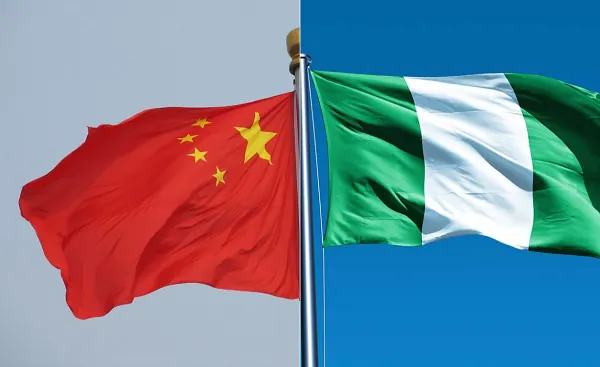
The recent protest by Nigerian traders at the Lagos Trade Fair Complex highlights the tension between local businesses and their Chinese counterparts. The protesters chanted "Chinese must go" as they marched past warehouses built by Chinese hands, selling goods at prices that Nigerian retailers couldn't match. This scenario has sparked a national conversation about the role of Chinese investment in Nigeria's economy.
Chinese investment has brought finished goods within the reach of Nigerian households who could not afford them before. It has also created factory-floor employment in areas abandoned by local industrialists decades ago. Furthermore, Chinese capital has poured into Nigeria at a scale that the country's anaemic domestic investment climate has not matched in a generation.
However, the presence of Chinese businesses has also raised concerns about the impact on local competitiveness. When Chinese factories sell directly to Nigerian consumers, bypassing local wholesalers and retailers, it can erode the competitiveness of Nigerian businesses. The protesters were not against Chinese investment per se, but against the practice of Chinese businesses replacing local traders.
The issue at hand is not whether disruption of the middleman chain is permitted, but who is doing the disrupting and under what rules. A Nigerian entrepreneur who builds a more efficient distribution model and undercuts inefficient middlemen is considered national progress. However, a foreign manufacturer that uses its home government's financing and access to raw materials to do the same thing is not competition in the sense that economic policy should welcome without conditions.
To address these concerns, the Nigerian government needs to enforce the distinction between wholesale and retail trade in its investment law. It should also tie major foreign manufacturing licenses to enforceable local-content and technology-transfer obligations, with real penalties for non-compliance. Additionally, the government needs to finance and insure Nigerian-owned manufacturing and distribution at a scale comparable to what is available to foreign capital.
The goal is to build industrial capacity in Nigeria, rather than simply becoming a market and assembly floor for foreign capacity. The risk is that Chinese factories on Nigerian soil, absent a deliberate technology-transfer and local-content policy, could become a comprador arrangement. This would mean that Nigeria supplies the land, labor, and consumer market, while China supplies the capital, machinery, and intellectual property, and repatriates the profit.
Ultimately, the question is at what point does foreign investment become economic dependence? Investment becomes dependence when Nigeria can no longer imagine producing, financing, or innovating without the foreign hand present at every stage. The government needs to take proactive steps to ensure that Nigeria's economy is not held hostage by foreign investment, but rather benefits from it in a way that promotes sustainable development and economic growth.
Key points
- The Nigerian government needs to enforce the distinction between wholesale and retail trade in its investment law to level the playing field for local businesses.
- The government should tie major foreign manufacturing licenses to enforceable local-content and technology-transfer obligations to promote technology transfer and local capacity building.
- The government needs to finance and insure Nigerian-owned manufacturing and distribution at a scale comparable to what is available to foreign capital to promote indigenous competitiveness.