Nigeria's education system has undergone significant expansion since gaining independence 66 years ago. However, despite this growth, the sector continues to grapple with numerous challenges that have hindered its development. According to Education Minister Tunji Alausa, some of the major issues facing the system include inadequate and inconsistent funding, which affects school infrastructure, teaching materials, and teacher development.
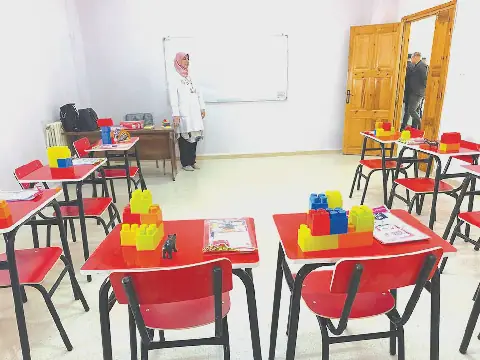
The country's education system is also plagued by poor infrastructure and overcrowding, particularly in public schools located in urban, rural, and disadvantaged communities. Many of these schools face inadequate classrooms, furniture, laboratories, libraries, and essential facilities like electricity, water, and sanitation. The rapid population growth has further increased pressure on existing schools, resulting in overcrowded classrooms that negatively impact the learning environment.
Another significant challenge facing Nigeria's education system is the shortage of qualified teachers in certain subjects and locations. According to the Universal Basic Education (UBE), there are 1,686,335 teaching staff for primary schools and Junior Secondary Schools. However, despite this number, the country still faces a shortage of qualified teachers, and existing teachers have concerns over salaries, working conditions, housing, professional development, and career progression.
The issue of policy formulation and implementation has also been a longstanding problem in Nigeria's education sector. Successive governments have introduced various education policies, curricula, examination arrangements, and institutional reforms since independence. However, the implementation of these policies has been weak, and the sector continues to grapple with challenges like malpractice in public examinations and unequal access to education.
Unequal access to education remains a significant problem in Nigeria, with children from poor households, rural communities, and conflict-affected areas facing greater barriers to enrolment, regular attendance, and completion. Factors like poverty, insecurity, child labour, early marriage, displacement, and inadequate schools have contributed to the problem, with large populations of children either not enrolled in school or having dropped out.
The education sector has also been affected by insurgency, banditry, kidnapping, and communal conflicts, which have disrupted education in parts of the country. School closures, attacks on educational institutions, and fear of abduction have affected attendance and forced some children and teachers out of school. Furthermore, there is a significant gap between what many students learn and the skills demanded by employers and modern industries.
Stakeholders have reacted to the state of Nigeria's education sector, with Dr. Femi Mosaku-Johnson, a corporate governance, education, and innovative business expert, acknowledging that the country has achieved significant milestones but still faces numerous challenges. He noted that successive administrations have made efforts to address these challenges but regretted that these endeavours have not yielded the desired results. Mosaku-Johnson listed some of the challenges as the menace of out-of-school children, geographical disadvantage, and lack of essential facilities in schools.
Key points
- Nigeria's education system faces challenges like inadequate funding, poor infrastructure, and teacher shortages.
- The country's education sector has been affected by insurgency, banditry, kidnapping, and communal conflicts.
- Stakeholders have called for improved funding, infrastructure, and teacher training to address the challenges facing Nigeria's education sector.